MERIDIAN ATELIER · the Wordmark

The curiosity and novelty metric

Openness

How much novelty a mind welcomes.How much story its home should tell.

What is Openness in home design?

Openness to Experience measures a mind's appetite for novelty, complexity and abstraction, and sets how much narrative and asymmetry its rooms carry.

The firm's Diagnostic reads it. A high reading calls for layered rooms and finishes that age; a low one, for legible grids and materials that hold their state.

01

What does Openness measure?

One trait, read twice: as a measure of personality, and as a brief for a home.

In psychology

In psychometrics, Openness to Experience (source, opens in a new tab) measures a person's readiness to engage with the unknown: curiosity, imagination, an appetite for art and a tolerance for ambiguity. Psychologists tie it more closely to aesthetic experience than any other trait: in 51 cultures, a chill at a work of art or a piece of music ranks among its surest markers (McCrae, 2007 (source, opens in a new tab)).

In a home

In the firm's design rules, Openness sets a home's appetite for visual complexity, cultural narrative and unconventional materials. It decides whether the rooms test the eye with asymmetry and living finishes, or rest it on legible grids and surfaces that hold their state.

On a scale

Every mind sits somewhere along each trait, so the firm measures resonance: how strongly yours answers to Openness. Two people in one home bring two readings, and the design resolves both.

02

How does the firm read Openness?

Three questions from the Diagnostic, the conversation that opens every commission. Choose the answer closer to your own.

  1. 01

    The Patina Test

    An unlacquered brass faucet tarnishes, spots and darkens where hands touch it. Does that living finish read as a record of time, or as damage?

  2. 02

    The Hospitality Test

    When you travel, do you book the avant-garde boutique hotel with the unusual plan, or the heritage hotel whose luxury you can predict?

  3. 03

    The Art Test

    Do you choose abstract art that asks to be interpreted, or art that plainly shows a landscape or a figure?

The Diagnostic asks these in conversation, and reads all five traits and the household with you.

How the Diagnostic works
03

What does each reading call for?

The two ends of Openness, side by side: each profile, and the design it calls for.

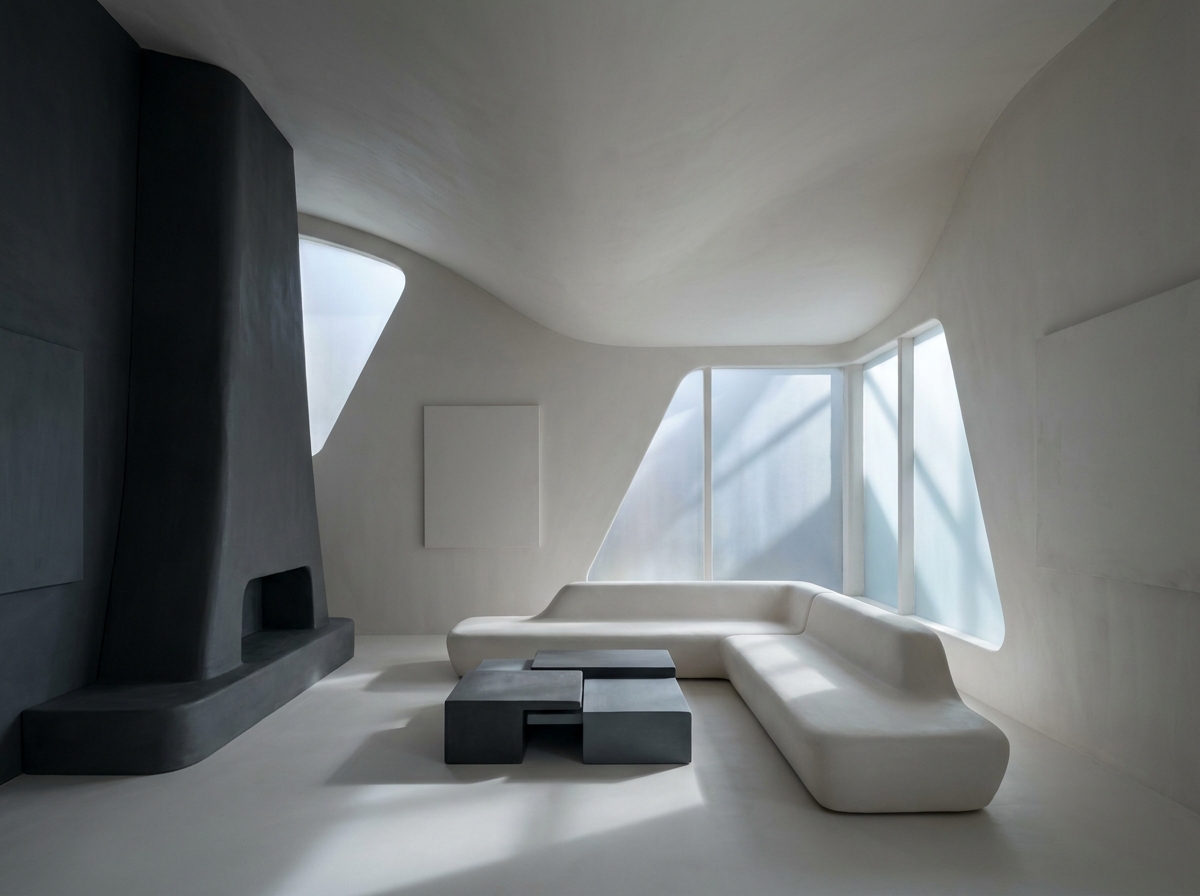
A clay model of an avant-garde living room of curved walls and asymmetric furniture (AI-generated)Your answers lean here
High resonance

The Visionary

Takes in complex visual information with ease and goes looking for more. A standard, purely practical room under-stimulates this mind and reads as sterile; its home has to carry a story and resemble no other.

Form & Geometry

Hybrid & Integrated: a strict line broken by one sculptural form

Pattern & Finish

Cultural & Expressive motifs on Random & Allover structures, such as wild veining

Color & Tone

Rich & Saturated, from the weight of The Nocturne to The Jewel Box

Light

Decorative & Expressive sources and Dynamic & Kinetic light that moves

Materials

Unlacquered brass, Calacatta Viola, hand-troweled tadelakt, reclaimed timber

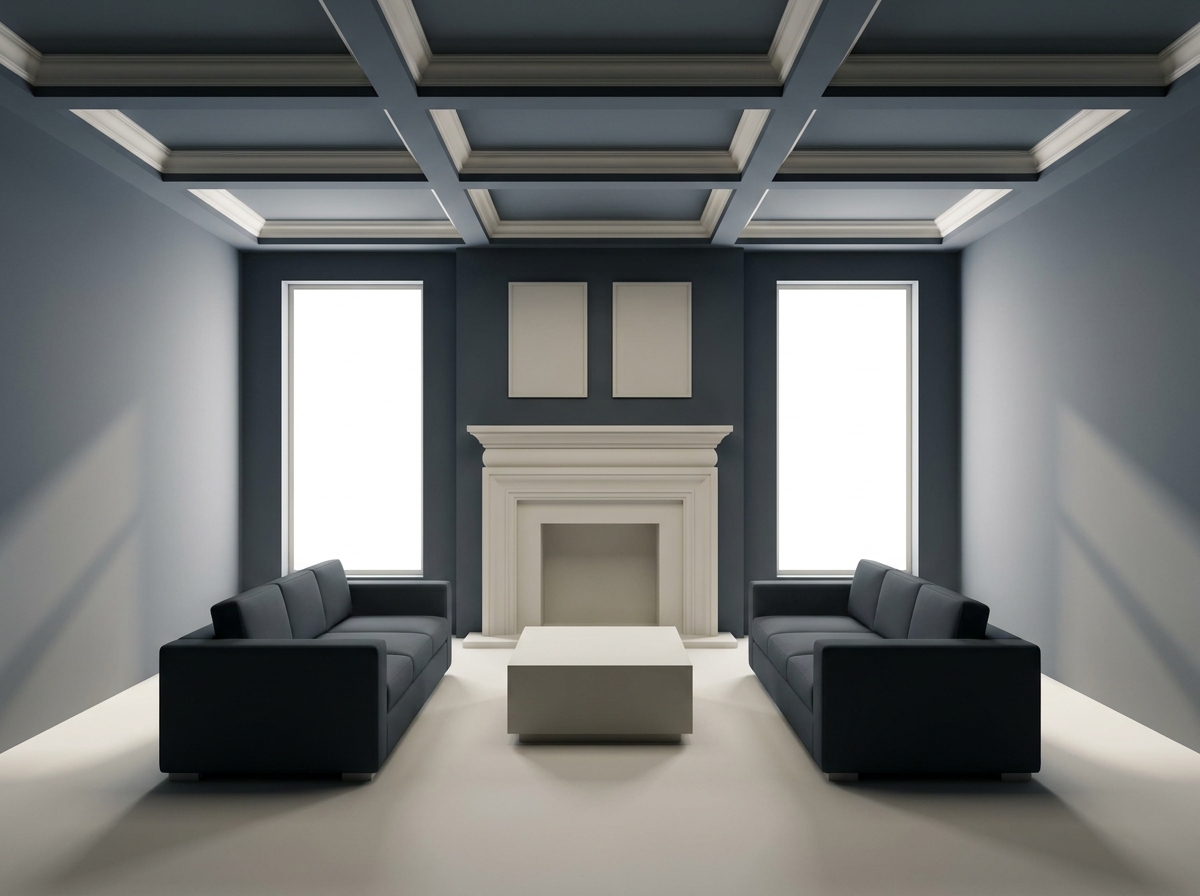
A clay model of a symmetrical traditional living room around a central fireplace (AI-generated)Your answers lean here
Low resonance

The Traditionalist

Values tradition, order and predictability. High complexity, aggressive novelty and asymmetry register as chaos; rest comes from rooms that read at once, built from proven materials to established standards.

Form & Geometry

Linear & Planar, Crisp & Machined: straight lines that read as order and safety

Pattern & Finish

Grid-Based & Symmetrical: a checkerboard floor, a stack-bond tile

Color & Tone

Tonal & Serene: low contrast that prevents sensory overload

Light

Daylight and Concealed & Integrated light, even and unobtrusive

Materials

Engineered quartz, polished nickel and chrome, rift-sawn oak, standard porcelain

04

How does one home serve both?

A Visionary and a Traditionalist often share one house. Lean it avant-garde, and the Traditionalist reads its novelty and asymmetry as chaos; lean it traditional, and it under-stimulates the Visionary.

The Shell & the Artifact

  • The Shell

    For the Traditionalist

    Plans, wall returns, baseboards, the main lighting grid and the large floors, held to Linear & Planar forms and Tonal color: an ordered, predictable base.

  • The Artifact

    For the Visionary

    Novelty in contained, high-impact pieces: a heavily veined marble island, one saturated powder room, an expressive vintage chandelier.

The result

The Traditionalist reads the room as ordered and safe, and accepts the island; the Visionary's eye settles on the marble, which supplies the stimulus this mind needs.

05

What can override the reading?

Architectural Provenance

The context

A strongly Visionary client may want an avant-garde interior inside a 1920s Spanish Colonial. Forcing it on that house breaks the architecture's integrity.

The adjustment

The novelty arrives through preservation: rare, historically accurate tiles and artisans who revive lost plaster techniques, inside the home's native geometry.

Intellectual property of Meridian Atelier

  1. The Method
  2. Neuroaesthetic Design

Openness

Definition: Openness, the first trait of Neuroaesthetic Design, measures a mind's appetite for novelty, complexity and abstraction, and sets how much narrative and asymmetry its home carries.

Authored byArian G.Principal & Design TheoristMeet the Principal

Where to go next

Together, the five traits give one profile of the mind a home serves.