MERIDIAN ATELIER · the Wordmark

The environmental sensitivity metric

Neuroticism

How much sensory load a mind can carry.How much its home must keep out.

What is Neuroticism in home design?

Neuroticism measures a mind's sensitivity to stress and stimulus, and sets how much visual noise, glare and unpredictability its home may hold.

The firm's Diagnostic reads it, and it overrides the others. A high reading calls for seamless, tonal, softly lit rooms; a low one carries contrast, gloss and drama.

01

What does Neuroticism measure?

One trait, read twice: as a measure of personality, and as a brief for a home.

In psychology

In psychometrics, Neuroticism (source, opens in a new tab) measures emotional stability and vulnerability to stress: high scorers react strongly to their surroundings, low scorers stay steady under chaos. Research on sensory-processing sensitivity, the depth with which a nervous system takes in stimulus, finds it overlapping in part with this trait (Aron and Aron, 1997 (source, opens in a new tab)).

In a home

In the firm's design rules, Neuroticism measures sensory friction and overrides the other traits. It sets the home's tolerance for visual noise, harsh light and spatial unpredictability; for a sensitive client, a poorly designed room acts as a stressor.

On a scale

Every mind sits somewhere along each trait, so the firm measures resonance: how strongly yours answers to Neuroticism. Two people in one home bring two readings, and the design resolves both.

02

How does the firm read Neuroticism?

Three questions from the Diagnostic, the conversation that opens every commission. Choose the answer closer to your own.

  1. 01

    The Contrast Test

    Entering a room of stark contrast, black walls against white marble or intense jewel tones, are you overwhelmed and tired, or energized?

  2. 02

    The Shadow Test

    A room of deep shadow cut by bright spotlights: does it make you tense and strain your eyes, or does it read as cinematic?

  3. 03

    The Layering Test

    Veined marble beside geometric tile under a carved wood ceiling: is that much competing texture exhausting to process, or artistically rich?

The Diagnostic asks these in conversation, and reads all five traits and the household with you.

How the Diagnostic works
03

What does each reading call for?

The two ends of Neuroticism, side by side: each profile, and the design it calls for.

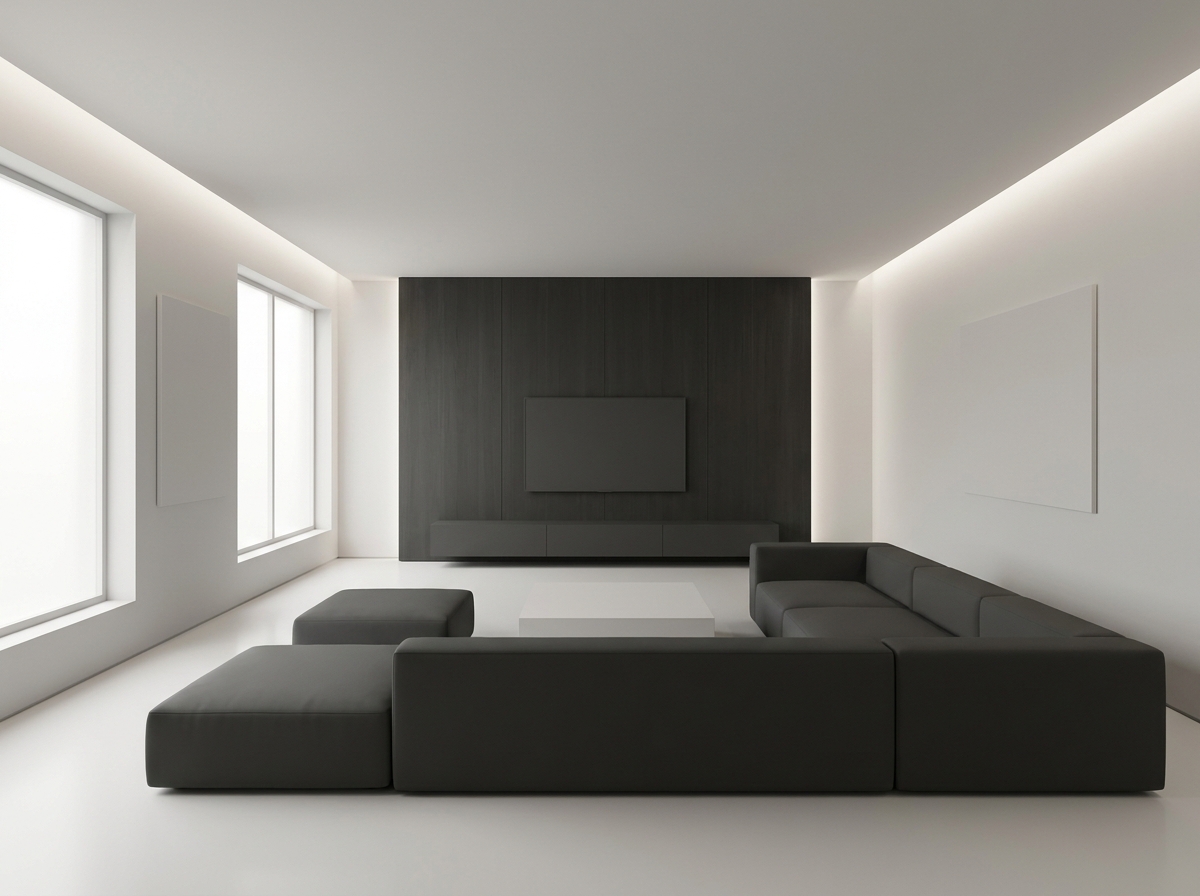
A clay model of a seamless living room in soft, diffused light (AI-generated)Your answers lean here
High resonance

The Hyper-Vigilant

Reacts strongly to its surroundings: visual and acoustic noise weigh on it, and the home is its first shield. For this mind, comfort is the complete absence of friction.

Form & Geometry

Monolithic & Seamless: no visible joinery or excess trim

Pattern & Finish

Minimal & Subtle: textures the eye can rest on

Color & Tone

Tonal & Serene: low chromatic contrast keeps the eye still

Light

Soft & Diffused over Matte surfaces: a shadowless wash

Materials

Matte finishes, acoustic plaster ceilings, soft-touch hardware, concealed technology

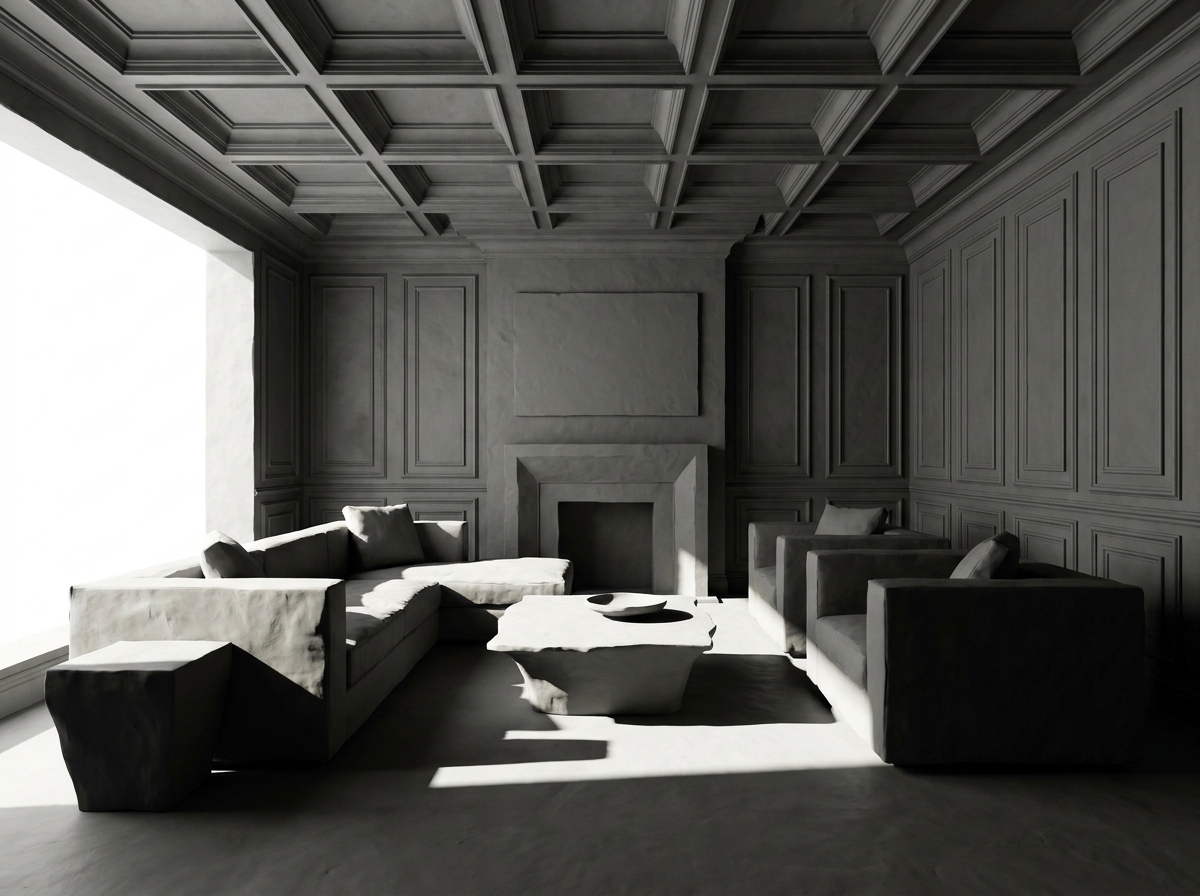
A clay model of a high-contrast room of hard, directional light and tense geometry (AI-generated)Your answers lean here
Low resonance

The Resilient

Has high emotional stability: sensory intensity barely registers. With a baseline this calm, the mind often needs drama, contrast and dense detail to stay engaged, and carries them with ease.

Form & Geometry

Articulated & Detailed or Ornamental & Intricate

Pattern & Finish

Graphic & Bold and Ornate & Complex

Color & Tone

Rich & Saturated, or the high contrast of The Monochromatic

Light

Hard & Directional over Gloss, with Decorative & Expressive sources

Materials

High-gloss lacquer, polished stone, exotic veined marble, crystal lighting

04

How does one home serve both?

When a Hyper-Vigilant partner shares a house with a Resilient one, the stakes are biological: a visually loud home keeps one of them in chronic stress.

The Sensory Threshold Protocol

  • The Primary Volume

    For the Hyper-Vigilant

    The great room, the main bedroom and its bath, the rooms that hold most of the day, kept tonal, seamless and softly lit.

  • The Contained Intensity

    For the Resilient

    Enclosed rooms of drama behind closed doors: a powder room, a formal dining room, a bar or a study, in saturated color and dense pattern.

The result

The need for peace overrides the wish for drama: the Hyper-Vigilant moves through calm main rooms, and the Resilient keeps rooms built to stimulate.

05

What can override the reading?

The External Environment

The context

A serene, tonal interior fails a Hyper-Vigilant client when the house stands on a loud thoroughfare or takes a harsh western sun: noise and harsh light from outside reach the rooms.

The adjustment

The exterior walls and windows take on the protection: budget moves from finishes to acoustic double glazing, sound insulation in the framing, and automated blackout and sheer shades on astronomic clocks.

Intellectual property of Meridian Atelier

  1. The Method
  2. Neuroaesthetic Design

Neuroticism

Definition: Neuroticism, the fifth trait of Neuroaesthetic Design and the one that overrides the others, measures a mind's sensitivity to sensory load, and sets how much visual noise, glare and unpredictability its home may hold.

Authored byArian G.Principal & Design TheoristMeet the Principal

Where to go next

Together, the five traits give one profile of the mind a home serves.