

Principle 04 · brightness, shadow and fixtures
Light
The principle that describes a room’s lighting: its brightness, its shadows and its fixtures.
What is Light?
In interior design, Light is the study of a room’s lighting: how bright it is, how it falls and how much of each fixture shows.
It leaves daylight’s amount to Architecture, the light’s color to Color & Tone and a surface’s shine to Pattern & Finish, three other principles.


 Choose this answerChoose this insteadYour answerOpen this questionClose this questionChange your answerOpenCloseChangeMore on this answerNext questionSee what it meansPause the moving lightPlay the moving lightone · two · three · four · five · six · seven · eight · nine · ten · eleven · twelveSee your answer in the room

Three questions about a room’s lighting
Choose one answer to each question: how bright a room is, how its light falls and how much of each fixture shows. Your answers build a drawing of one room, with a short note beside each change.
Level
How bright should a room be when it is in use: dim, comfortable, or bright?
Not answered yetYour answerDim & IntimateAmbient & ComfortableBright & LuminousDim & Intimate
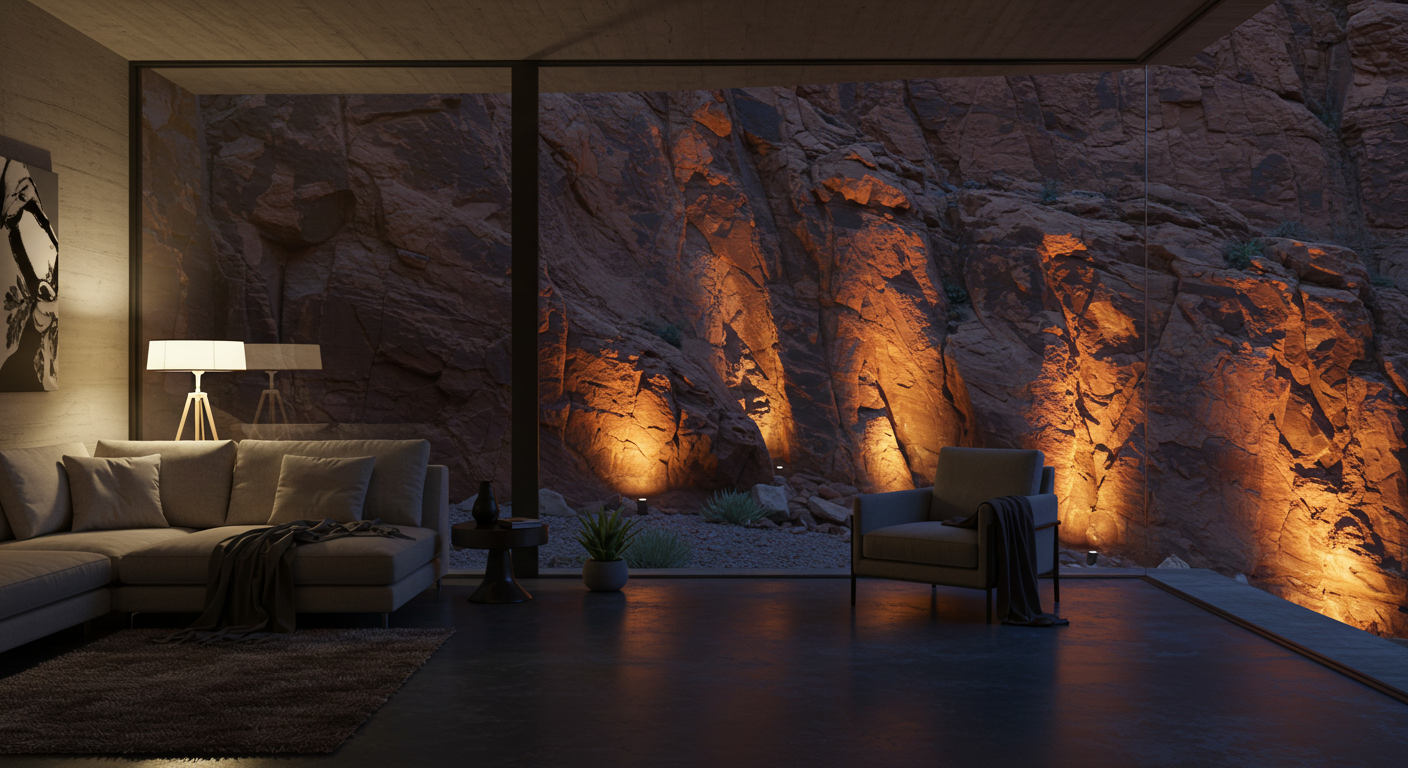
Under about 100 lux (source, opens in a new tab), a measure of the light falling on a surface: pools of light with soft shadow between them, as in a lounge in the evening.

Pools of light, walls in shadow
Pools of light on a table, like candlelight, walls falling into shadow, faces lit softly from the side; a lounge, a wine room or a media room in the evening.
At this level the light falls in pools with shadow between them; in a project, the fixtures keep the room under about 100 lux.
Ambient & Comfortable
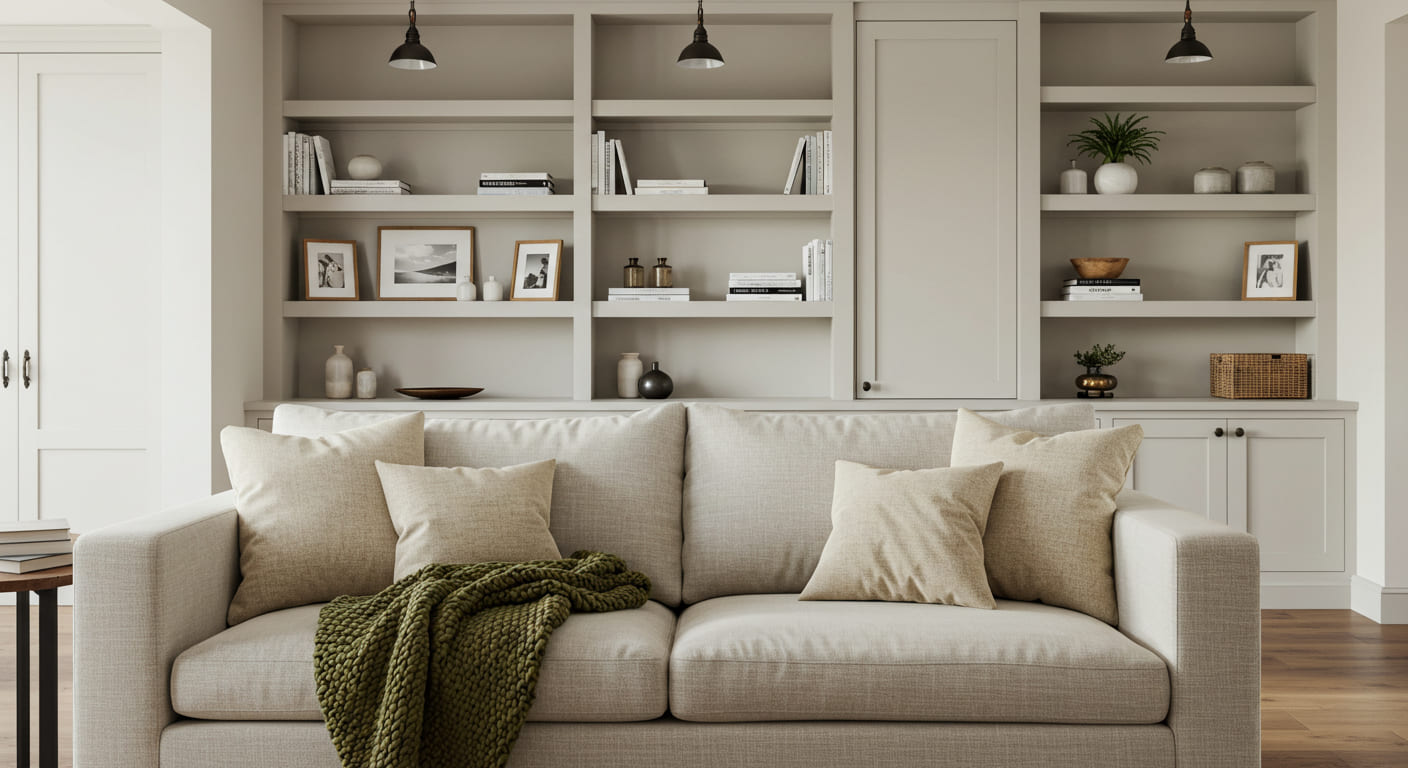
About 100 to under 300 lux: an even room with its walls lit, nothing glaring and no dark corner, as in a family room (source, opens in a new tab) on a weeknight.
Evenly lit walls, no dark corners
Walls lit evenly, nothing glaring, no dark corner; a family room on a weeknight, or everyday dining. “Ambient” here names an amount of light; a lighting plan’s ambient layer is its general, background light, whatever its amount.
At this level the walls stay lit to their corners; in a project, the fixtures keep the room between about 100 and 300 lux.
Bright & Luminous
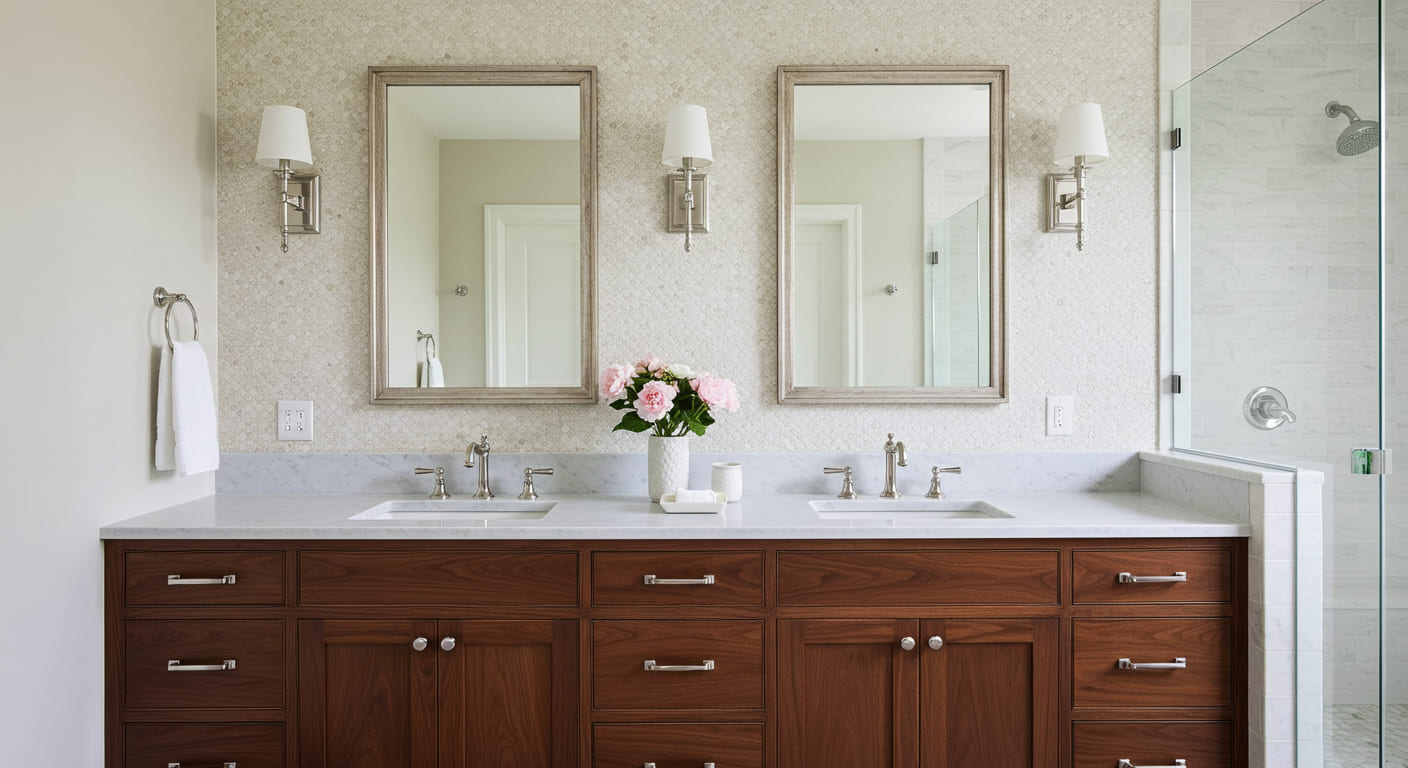
About 300 lux (source, opens in a new tab) and up: a fully lit room made for work, its colors true, as at a bathroom vanity or a kitchen counter.
Fully lit surfaces, true colors
Kitchen counters, a bathroom vanity, a dressing room for matching clothes, every surface lit for work and its colors true.
At this level every surface stands in full light, colors true; in a project, the fixtures give work surfaces about 300 lux or more.
A reading on a line belongs to the level above: 100 lux is Ambient & Comfortable.
Each space has its own level, the client’s target: a bedroom can sit dimmer than a kitchen. California’s 2025 energy code (source, opens in a new tab) requires wall dimmers for most new or altered lighting in living spaces, so a level is the light at full use, undimmed.
Lux measures the light reaching a surface: not a bulb’s lumens, the light it gives off, nor its Kelvin, the light’s color, set with the palette.
Light Quality
How does the light fall in a room: hard, soft, or moving?
Not answered yetYour answerHard & DirectionalSoft & DiffusedDynamic & KineticHard & Directional
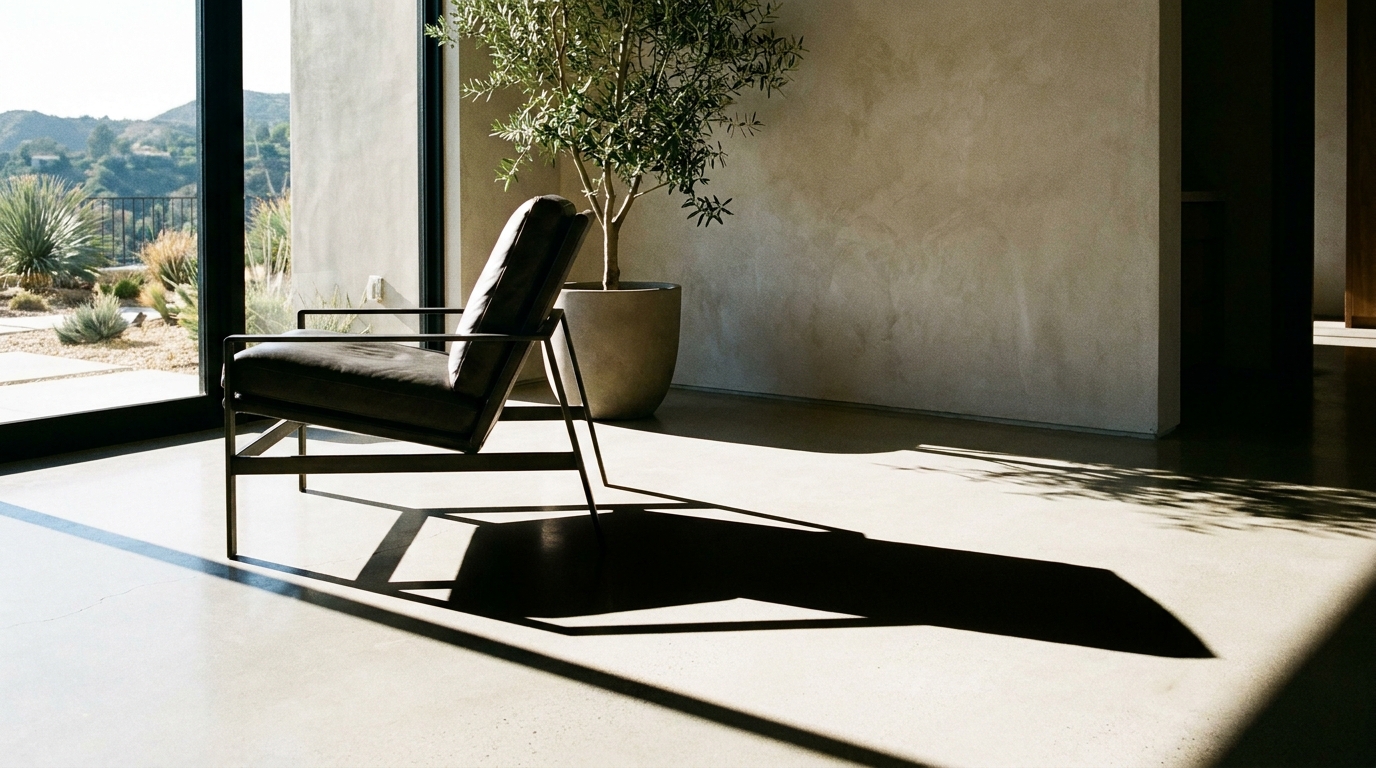
Light from one focused source, such as the sun or a spotlight: crisp shadows and strong light-and-dark contrast (source, opens in a new tab), as in a chair’s shadow on a sunlit floor.
Spotlit art and sun through glass
Narrow spotlights on art, direct sunlight through clear glass, crystal that breaks light into bright points, shadows with crisp edges and strong contrast between light and dark.
With this light every shadow has a crisp edge; in a project, it picks out a focal point, such as a painting.
California Modernism · Mid-Century Modern · Desert Modern · Hollywood Regency
Soft & Diffused
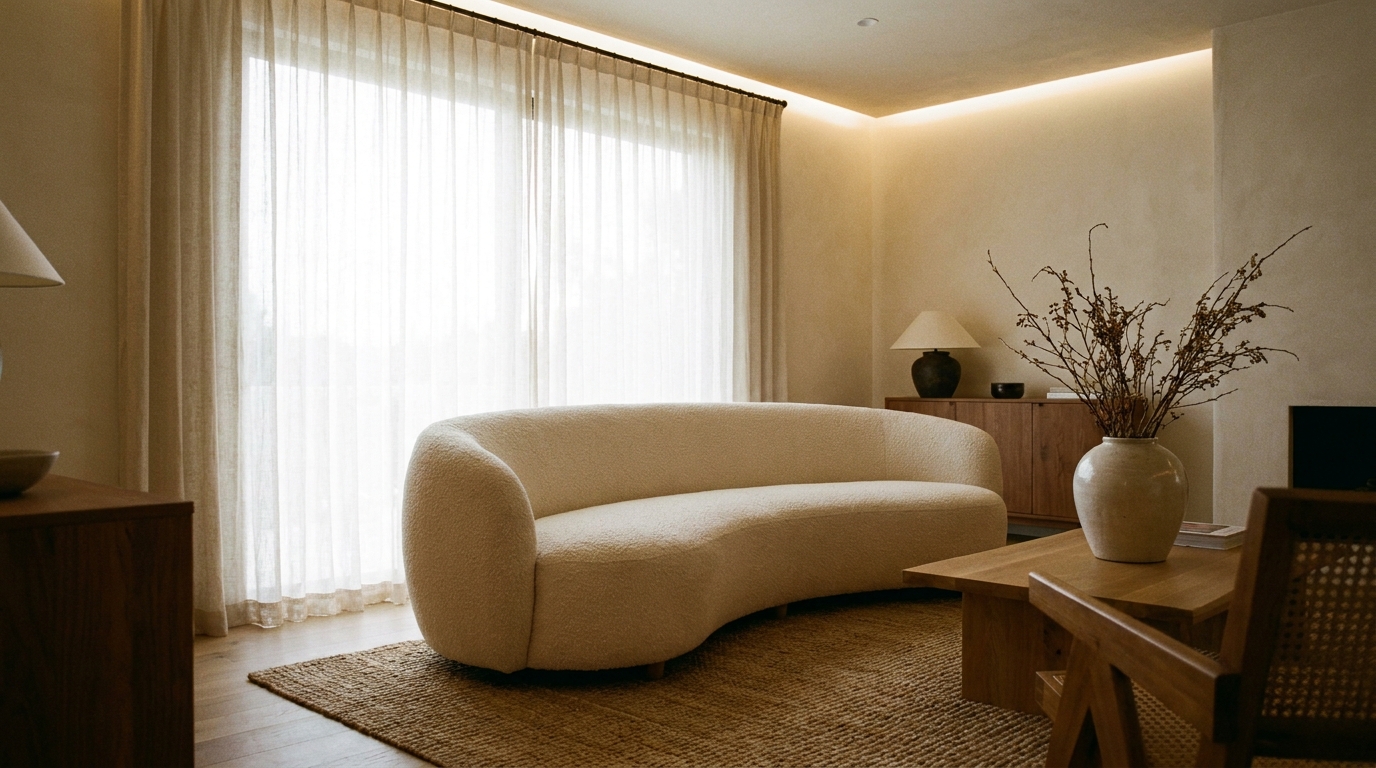
Light scattered or bounced before it reaches you: soft-edged shadows and light spread evenly, as in sunlight through sheer linen or paper shoji screens (source, opens in a new tab).
Sheer linen and frosted glass
Light bounced off the ceiling from a hidden ledge (a cove), frosted glass, sunlight through sheer linen or paper screens, shadows with soft, feathered edges.
With this light every shadow has a soft edge; in a project, it gives a room its even, general light.
Organic Contemporary · Transitional Classic · Japandi · Coastal Contemporary · Sensory Modernism
Dynamic & Kinetic
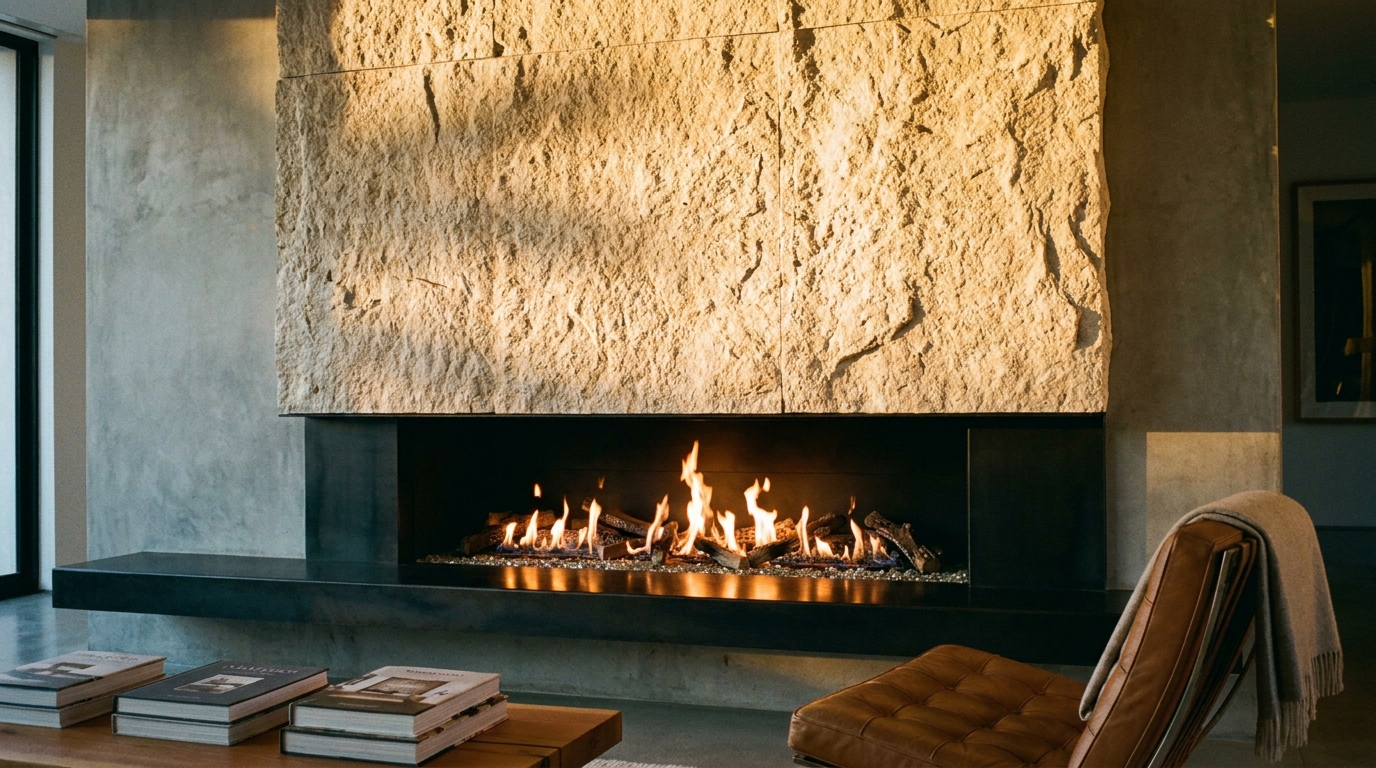
Light that moves or changes over time, as in the flames of a long, low fire or dappled sunlight (source, opens in a new tab) through leaves.
Flame, ripples and dappled shade
Sunlight dappled through the leaves of a tree, reflections from water rippling across a ceiling, the moving flame of a fireplace or a long, narrow fire pit.
With this light part of the room flickers or ripples; in a project, it comes from one element, such as a fireplace.
California Mediterranean · Wabi-Sabi · Axiom Modern
A low, grazing light shows a surface’s bumps and hollows, and light spread evenly hides them: Pattern & Finish’s Texture question uses this test. A surface that bounces light becomes a source of its own, and its pattern decides how: a plain surface carries daylight deeper into the room unchanged, a grid or grooves send it in straight lines, and veining or dense ornament breaks it apart.
Light Source
How much of each light fixture shows: none of it, a small plain opening, or the whole fixture?
Not answered yetYour answerConcealed & IntegratedDiscreet & RecessedDecorative & ExpressiveConcealed & Integrated
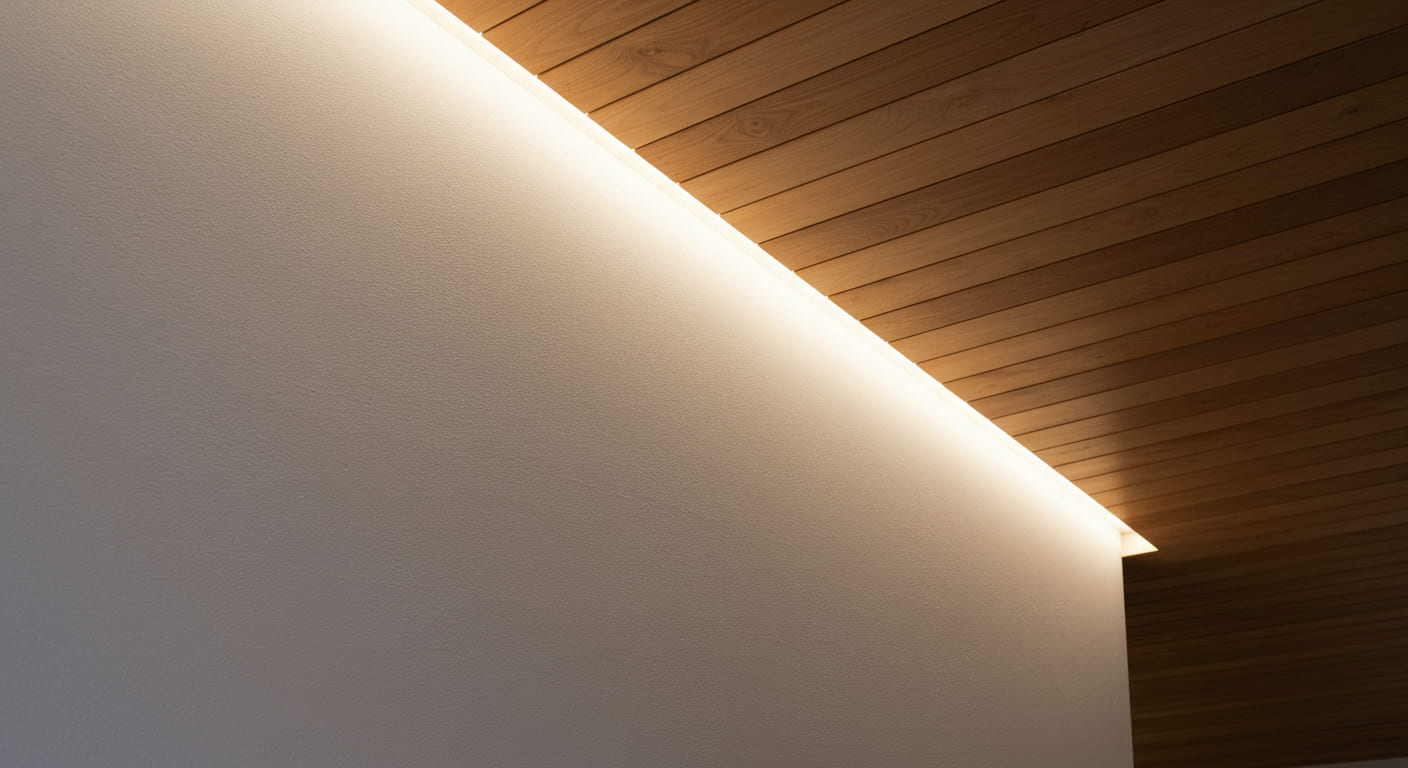
A fixture hidden in the architecture, so you see its light but no lit opening or lens, as in a ceiling cove (source, opens in a new tab) that hides its lamp in a recess.
Coves and light grazing walls
Ceiling coves with a knife-thin edge, hidden lights that graze a wall, a strip of light at the foot of the cabinets, shielded light under wall cabinets, lit niches and lit grooves between surfaces.
With this answer you see light and no lit opening or lens; in a project, ceilings, walls or cabinets hold the hidden fixtures.
Organic Contemporary · Japandi · Wabi-Sabi · Desert Modern · Sensory Modernism · Axiom Modern
Discreet & Recessed
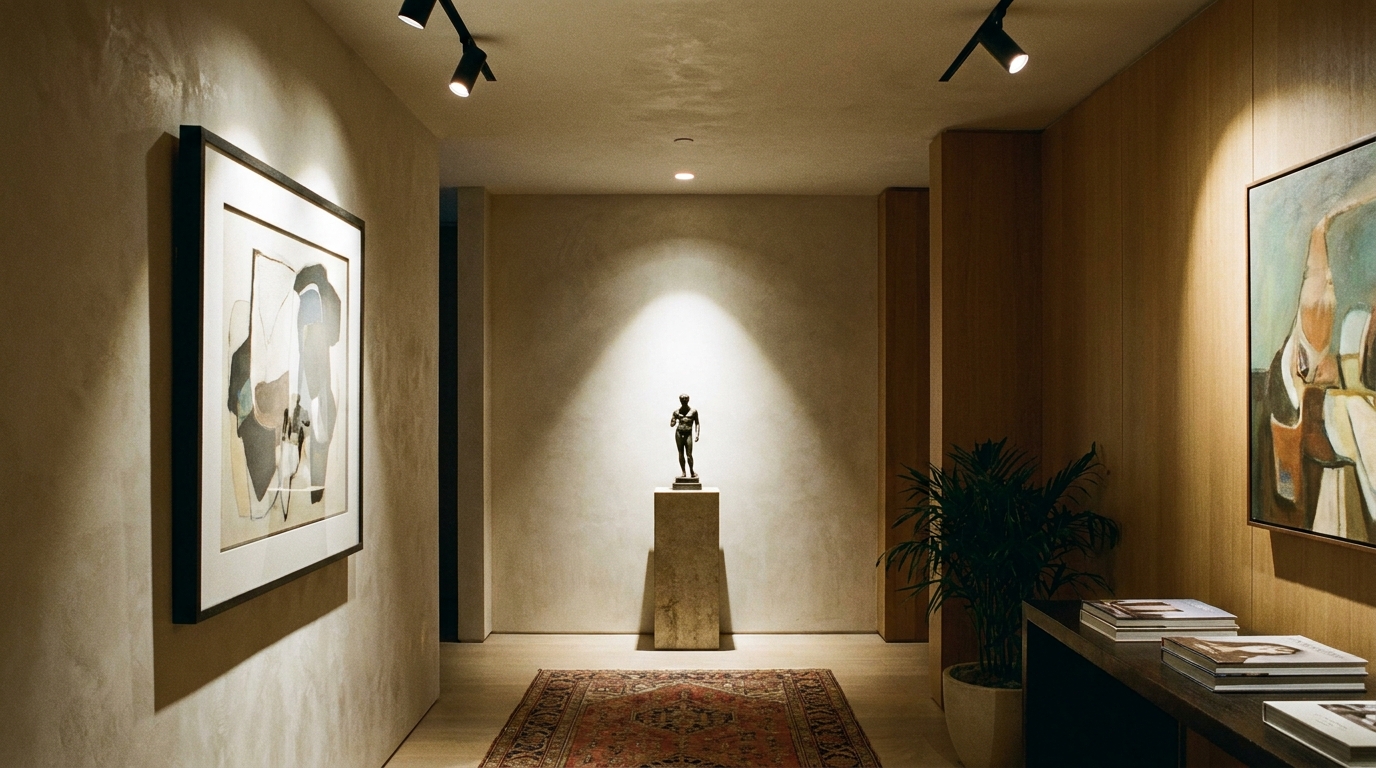
A small, plain opening or spotlight head: you can see it, but nothing in it draws the eye, as in recessed downlights (source, opens in a new tab) or spotlights on a track.
Downlights and track spotlights
Recessed downlights, pinholes with no visible rim, slots of light set level with the ceiling, spotlight heads on a track or a single stem, small plain cylinders on the ceiling.
With this answer you see small, plain openings; in a project, they add no shape, pattern or color beyond a thin rim.
California Modernism · Coastal Contemporary
Decorative & Expressive
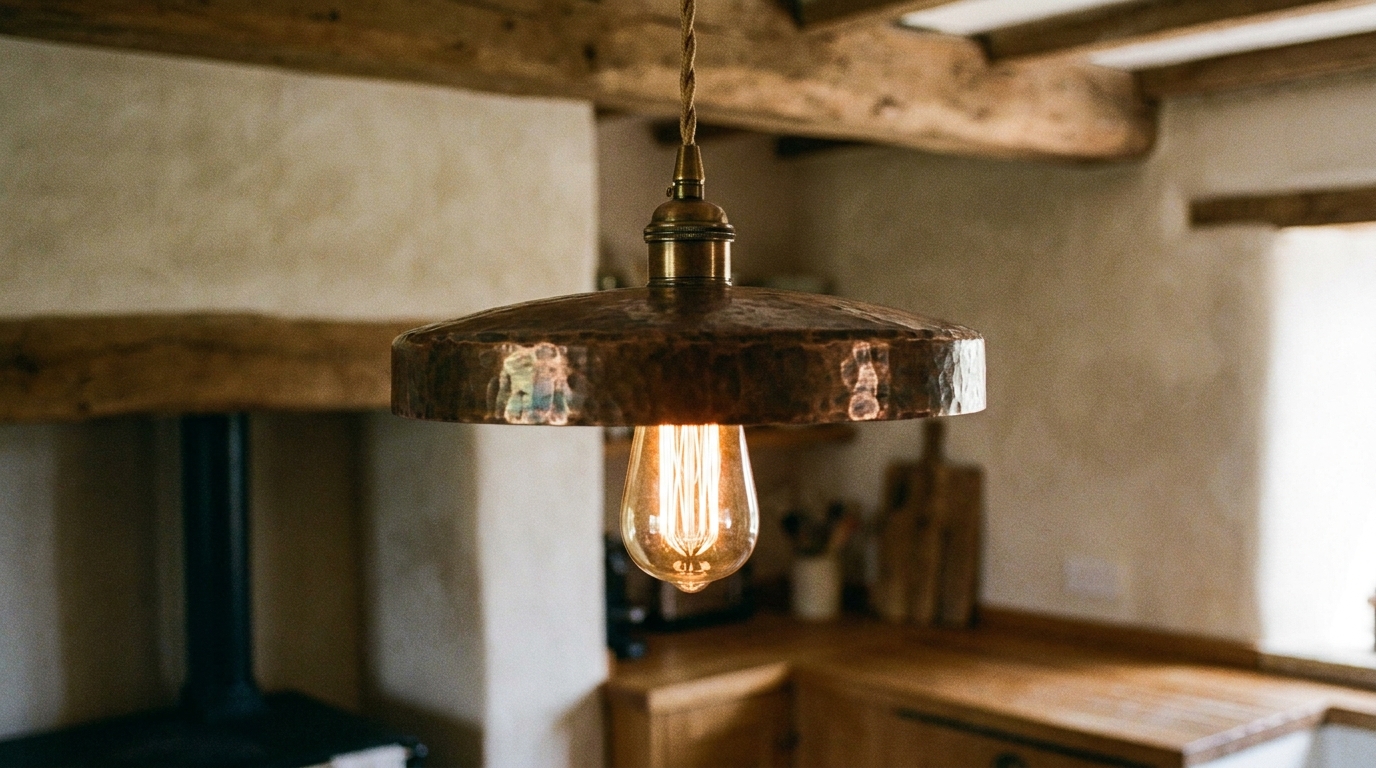
A fixture on show as an object in its own right, a focal point of the room, as in a hammered bronze pendant or a crystal chandelier (source, opens in a new tab).
Chandeliers, pendants and sconces
Crystal chandeliers, pendants, wall lights on jointed arms, table and floor lamps, decorative fixtures set flat against the ceiling, lanterns.
With this answer you see the fixture itself; in a project, its shape, pattern and color join the room’s design, as furniture’s do.
Transitional Classic · California Mediterranean · Mid-Century Modern · Hollywood Regency
From where you stand or sit, can you see the fixture’s lit opening or lens?
- NoConcealed & Integrated
- Yes
Is the fixture itself something to look at, its form part of the design?
- NoDiscreet & Recessed
- YesDecorative & Expressive
Each light fixture takes one of these answers: a pendant is Decorative & Expressive. A slot of light set level with the ceiling shows its lit lens, so it counts as Discreet & Recessed.
The room drawn from your answers
What your answers mean
Answer all three questions to see what your answers mean for a project.
- Dim & IntimateAmbient & ComfortableBright & Luminous
At this level the light falls in pools with shadow between them; in a project, the fixtures keep the room under about 100 lux.
At this level the walls stay lit to their corners; in a project, the fixtures keep the room between about 100 and 300 lux.
At this level every surface stands in full light, colors true; in a project, the fixtures give work surfaces about 300 lux or more.
- Hard & DirectionalSoft & DiffusedDynamic & Kinetic
With this light every shadow has a crisp edge; in a project, it picks out a focal point, such as a painting.
With this light every shadow has a soft edge; in a project, it gives a room its even, general light.
With this light part of the room flickers or ripples; in a project, it comes from one element, such as a fireplace.
- Concealed & IntegratedDiscreet & RecessedDecorative & Expressive
With this answer you see light and no lit opening or lens; in a project, ceilings, walls or cabinets hold the hidden fixtures.
With this answer you see small, plain openings; in a project, they add no shape, pattern or color beyond a thin rim.
With this answer you see the fixture itself; in a project, its shape, pattern and color join the room’s design, as furniture’s do.
In a project, the firm mixes more than one kind of light in a room: the light audit below shows why, with two rooms that use one kind alone.
Your answers point toYour answers come closest toEach style below matches both your Light Quality and Light Source answers; Level is set space by space.
Each style below matches both your Light Quality and Light Source answers; Level is set space by space.
No style matches both your Light Quality and Light Source answers; this one matches {n} of them.
No style matches both your Light Quality and Light Source answers; these match {n} of them.
None of the firm’s styles matches either of your answers. The styles are starting points; the firm can design any combination.
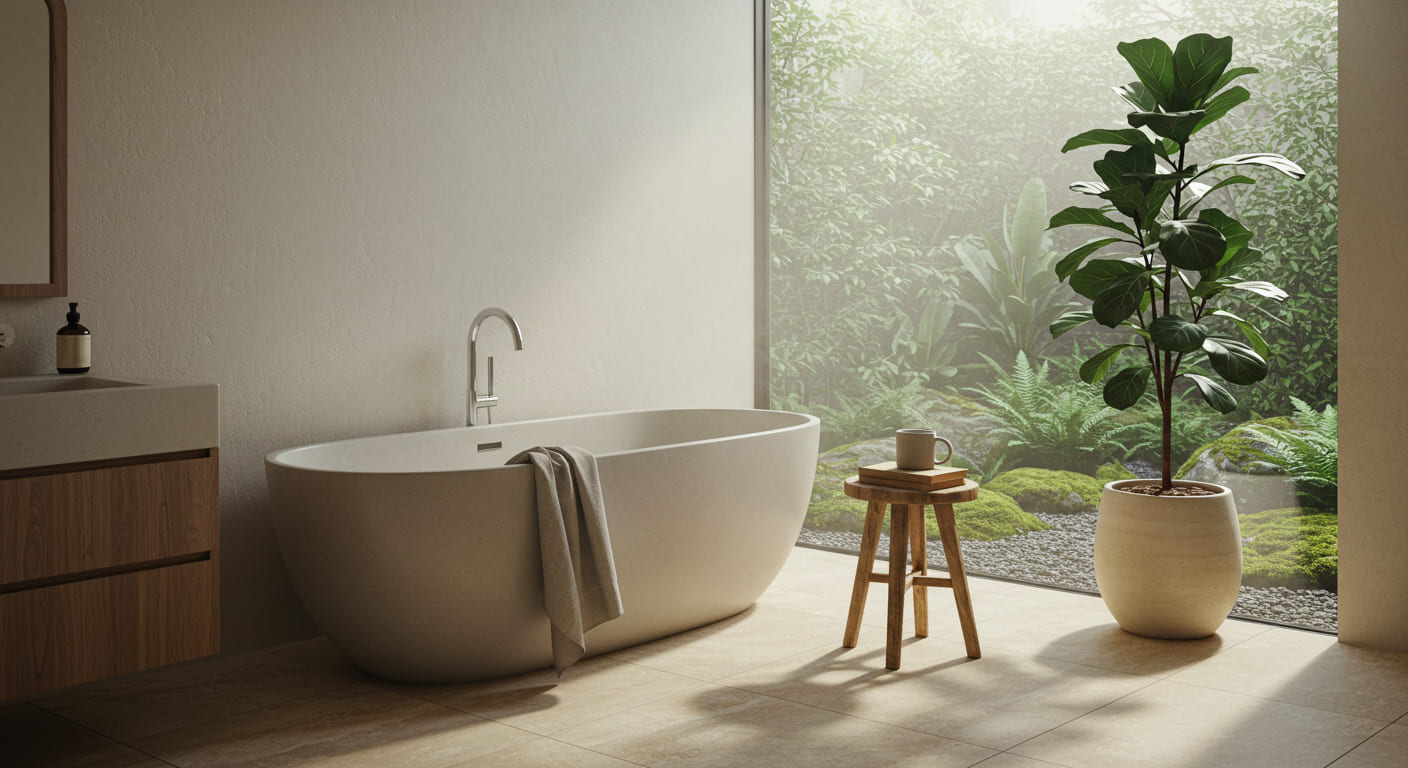

Organic Contemporary
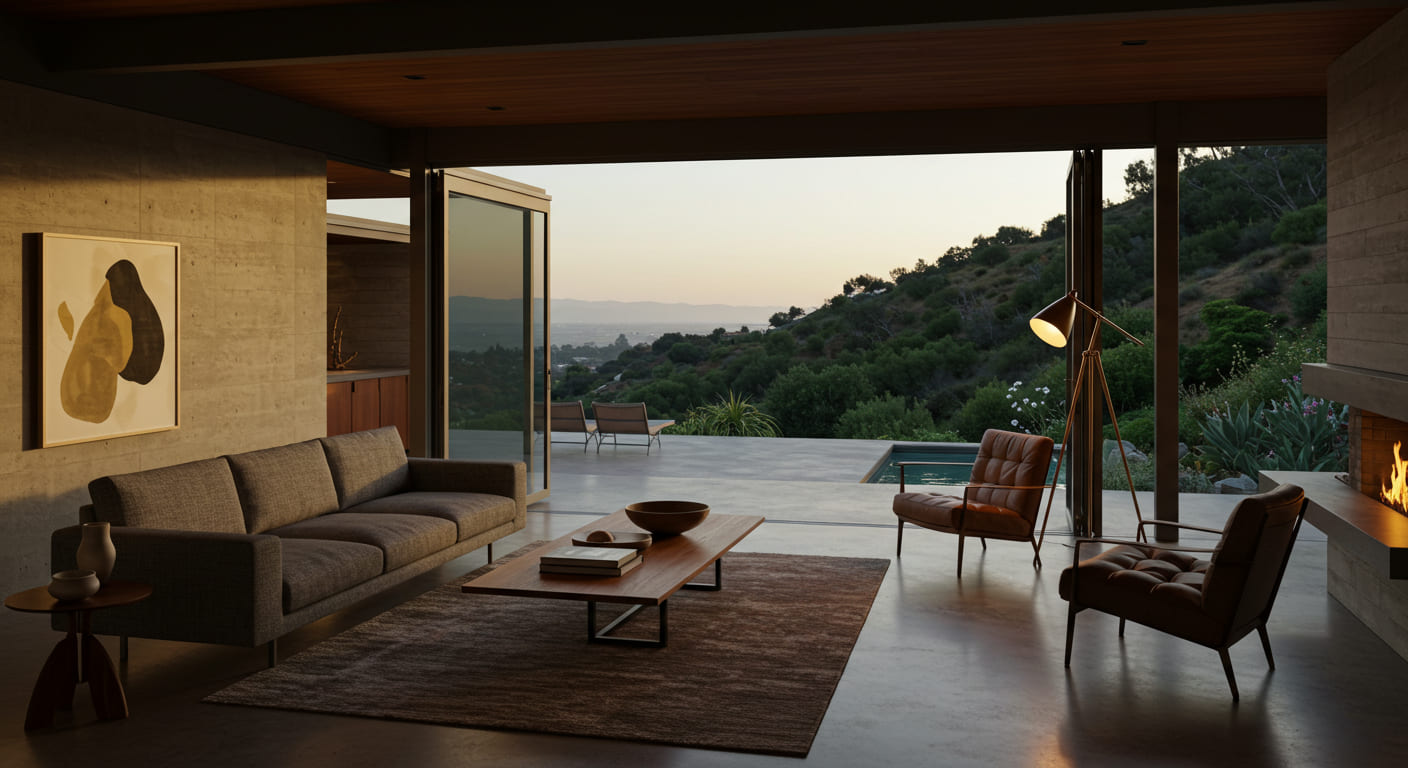

California Modernism
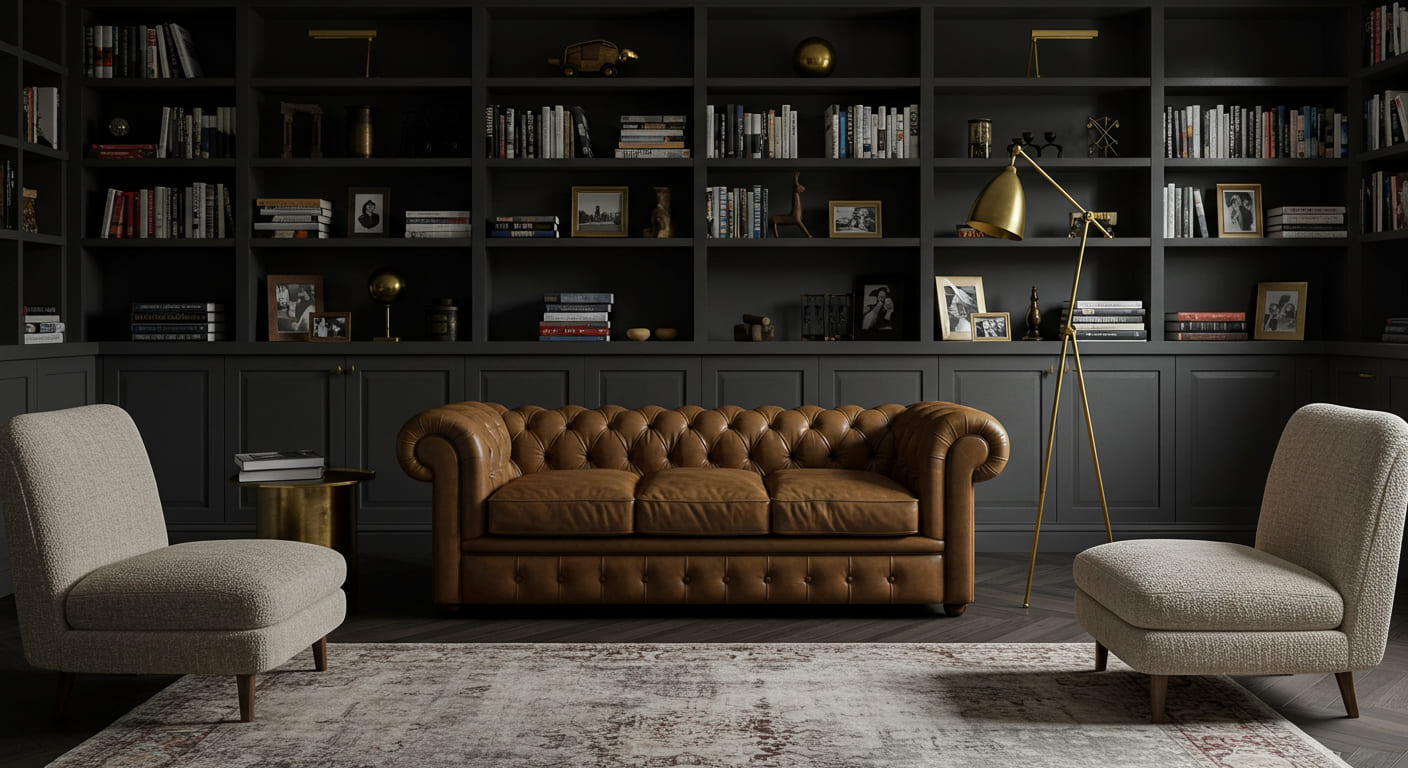

Transitional Classic
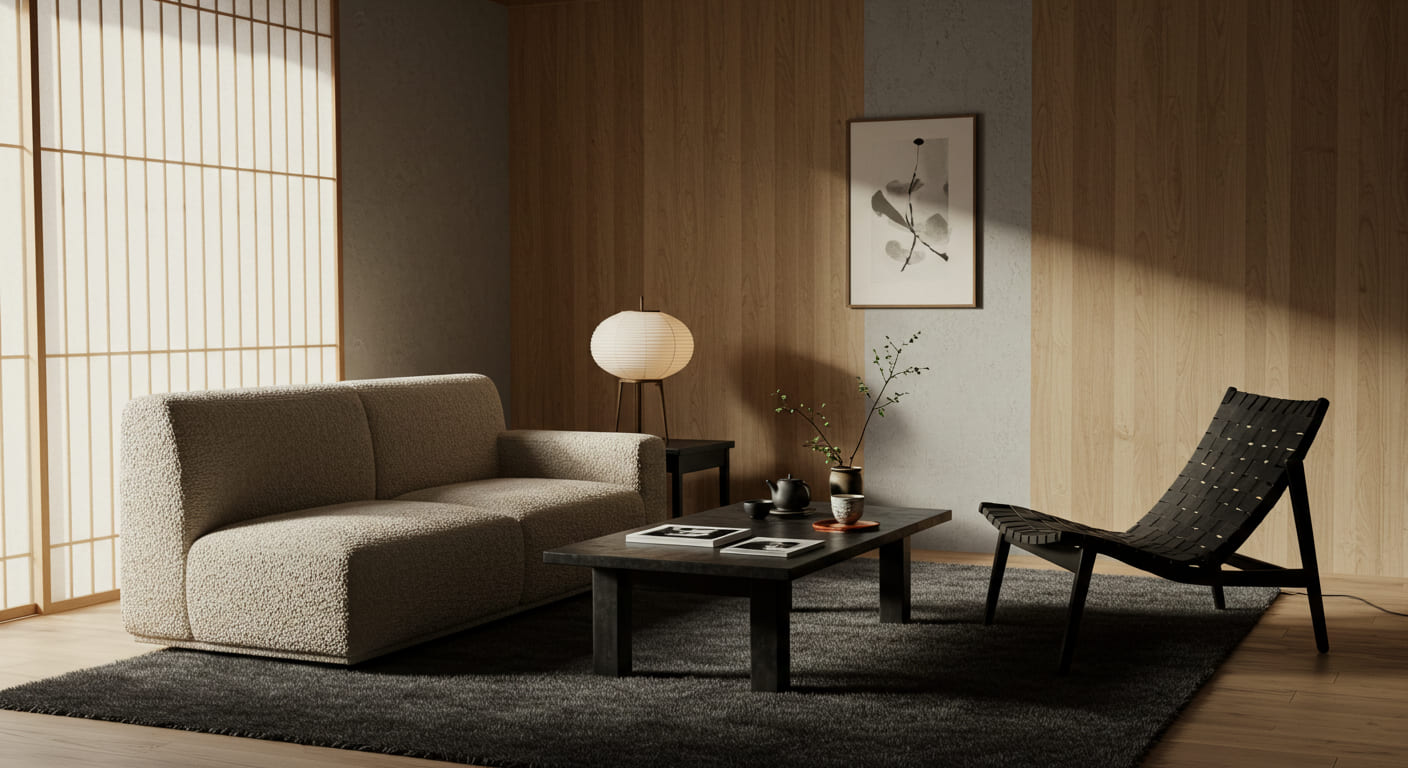

Japandi
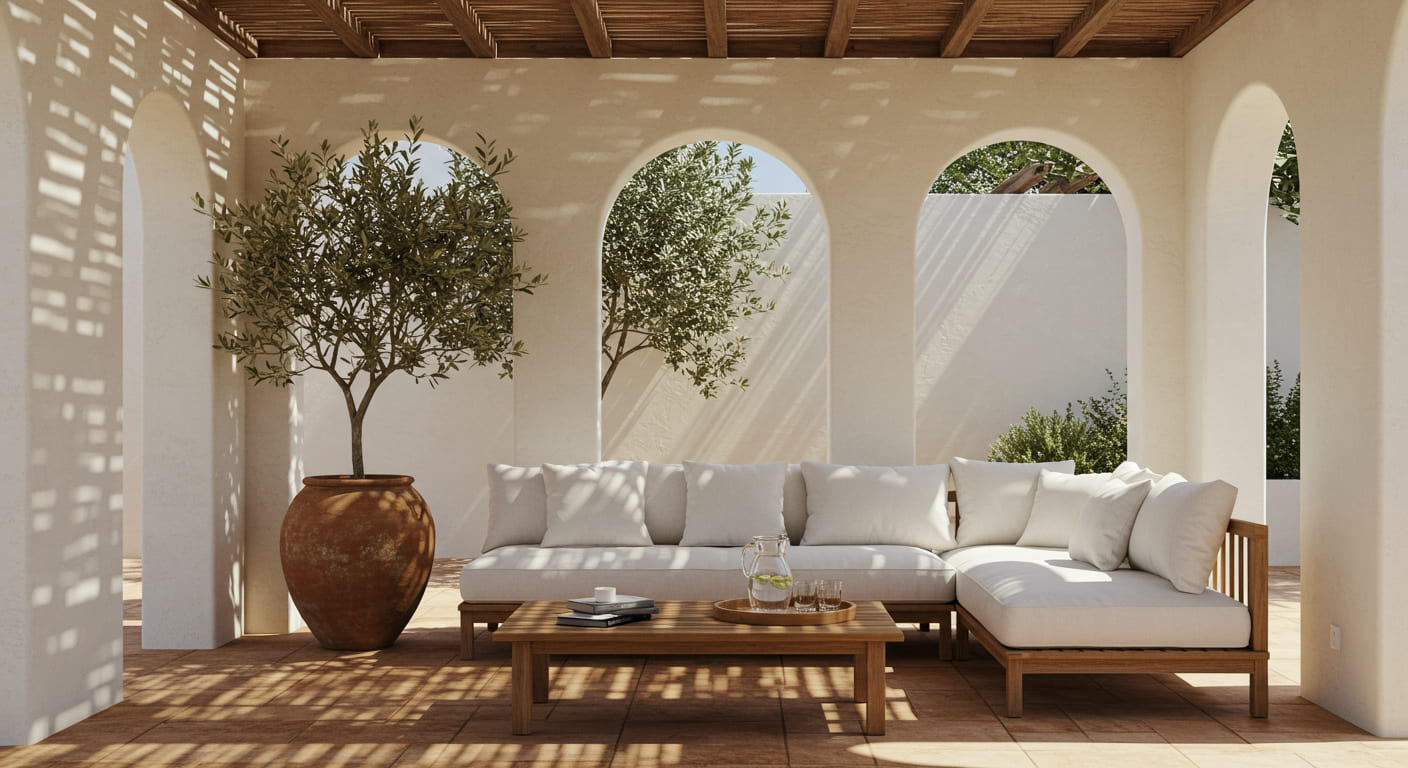

California Mediterranean
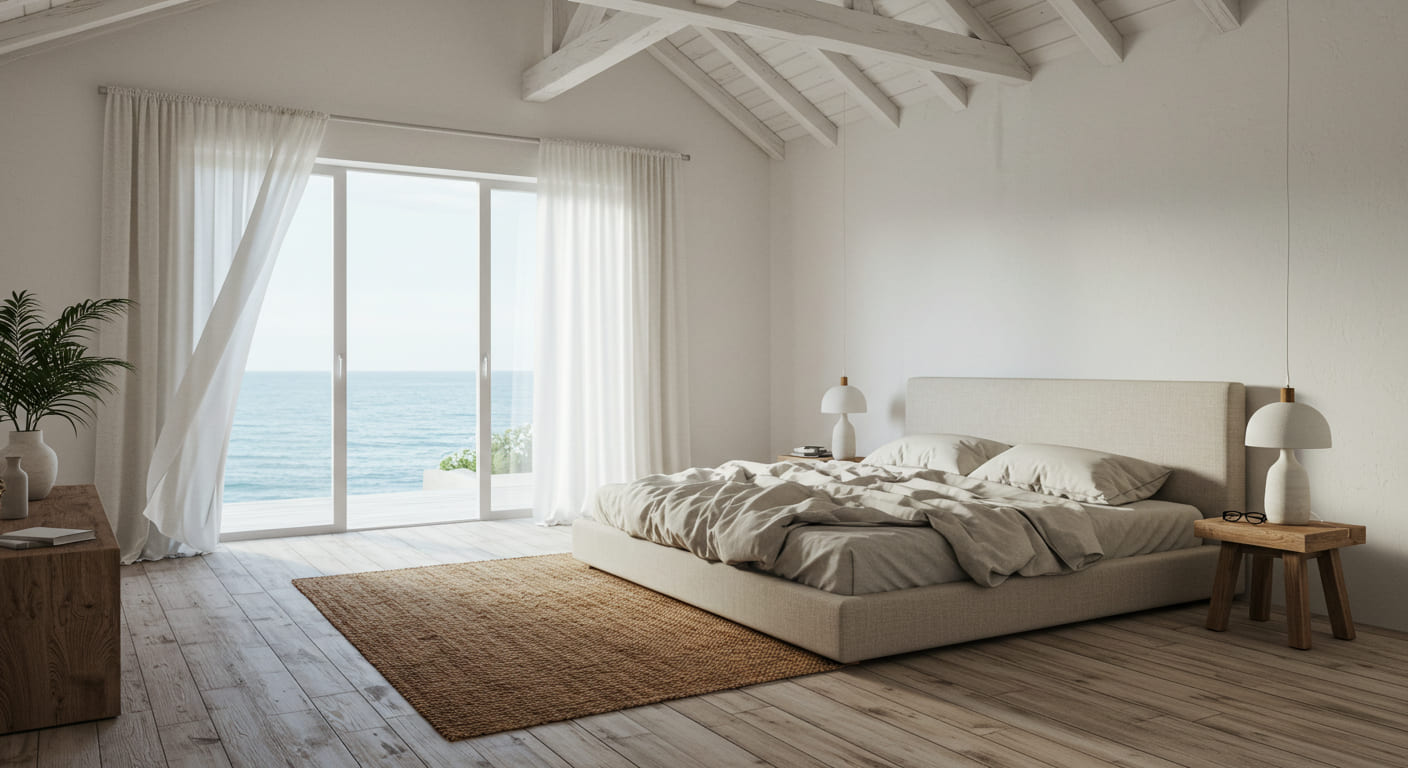

Coastal Contemporary
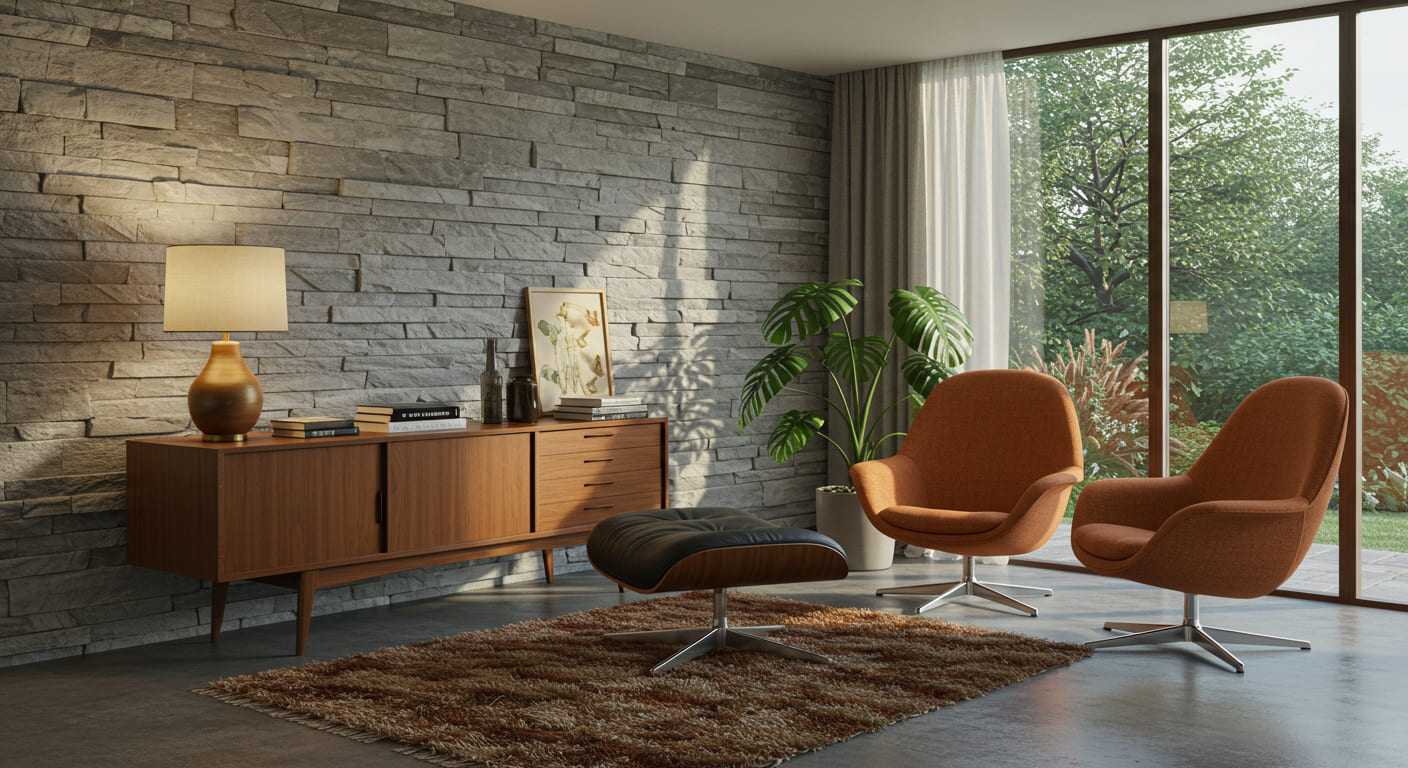

Mid-Century Modern
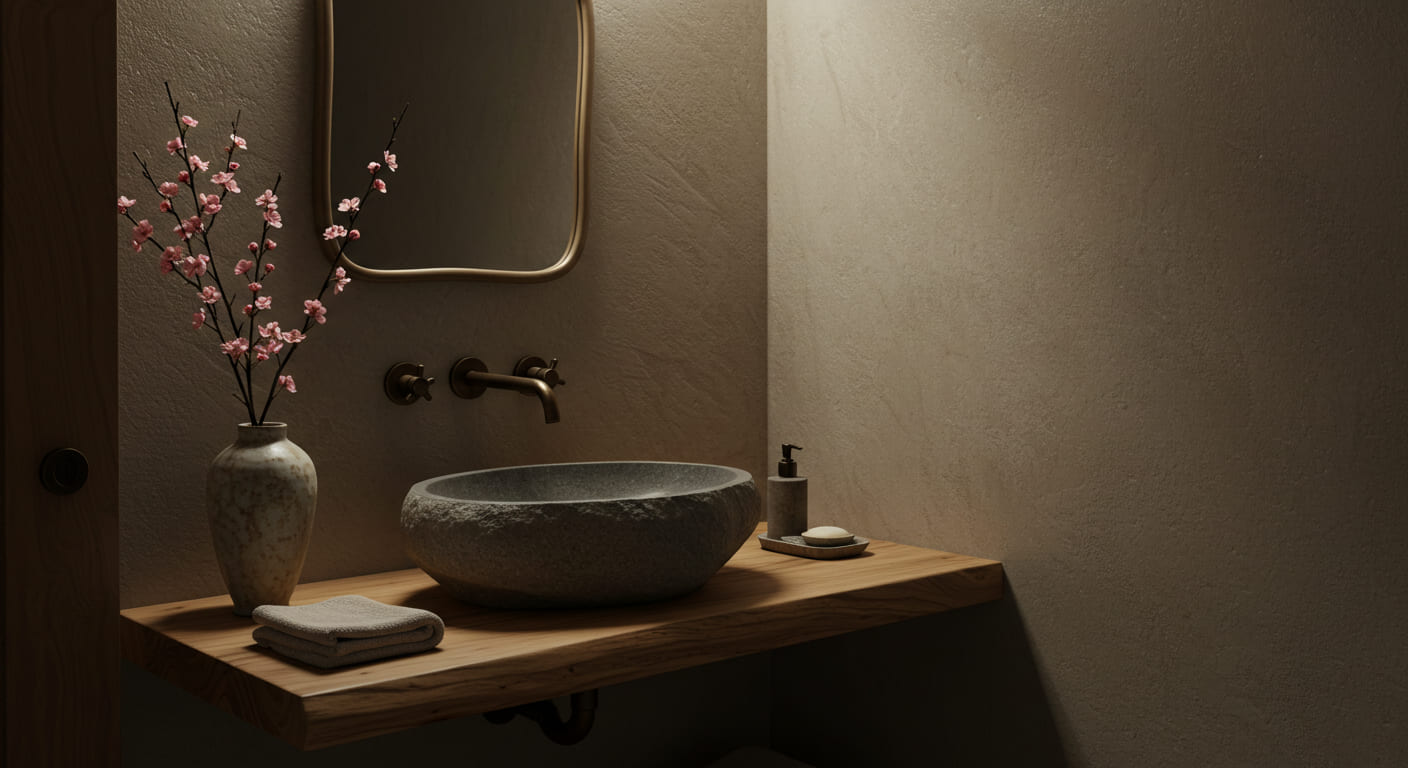

Wabi-Sabi
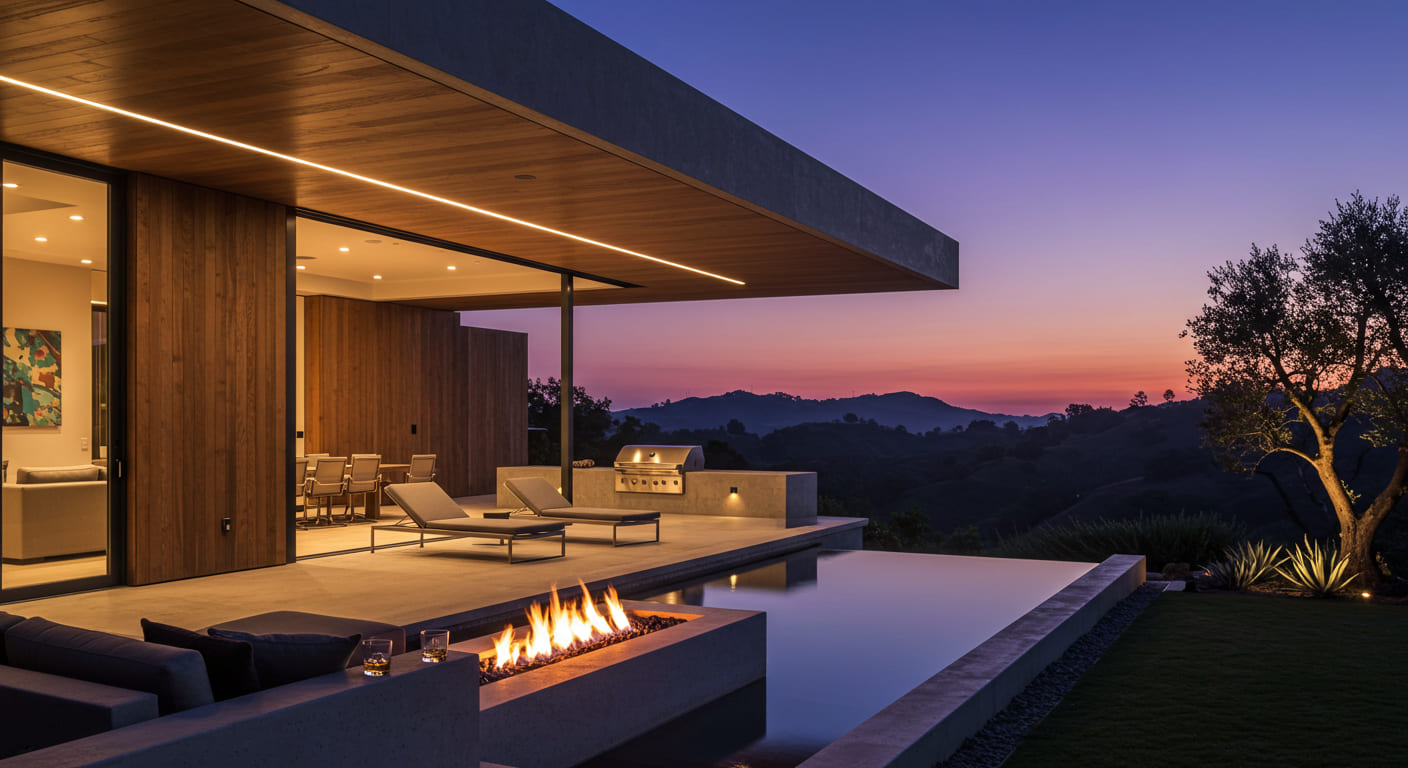

Desert Modern
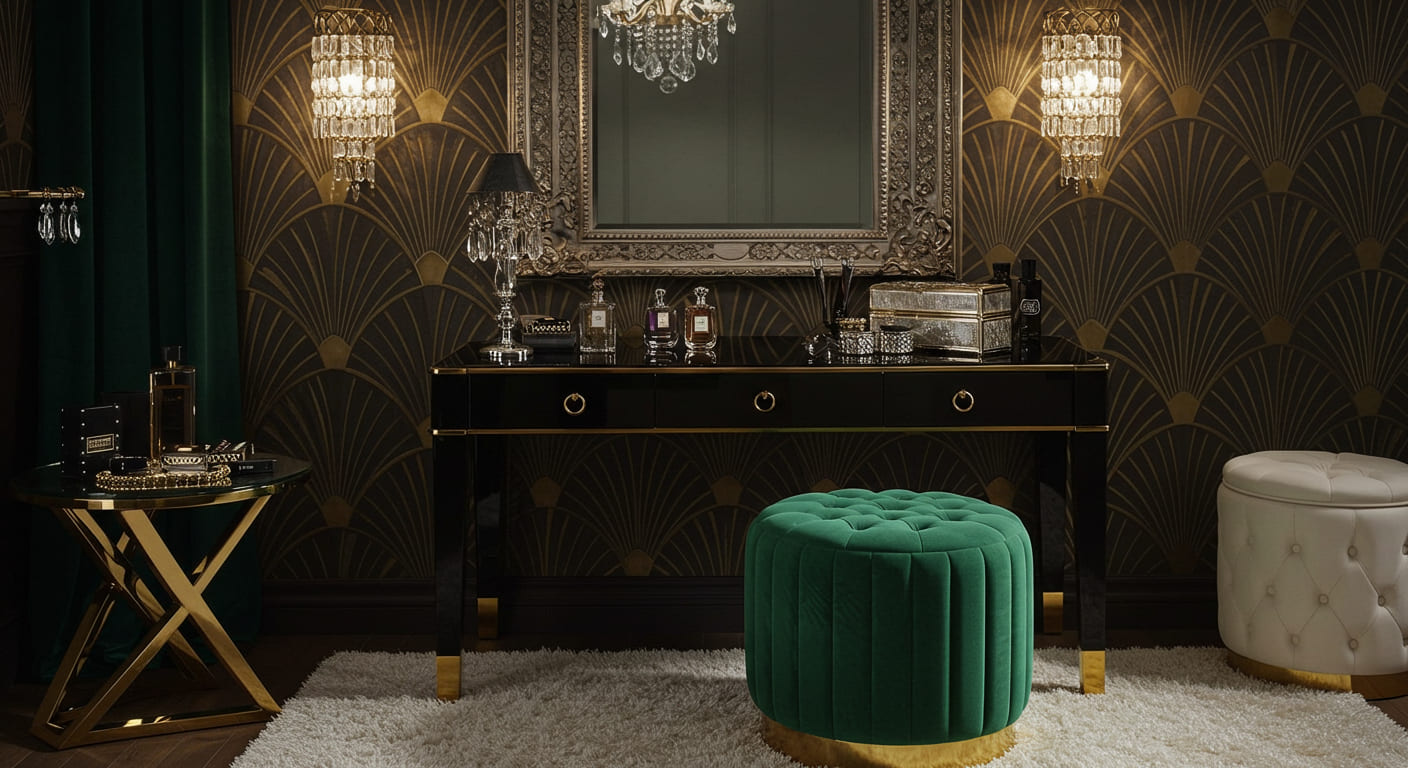

Hollywood Regency
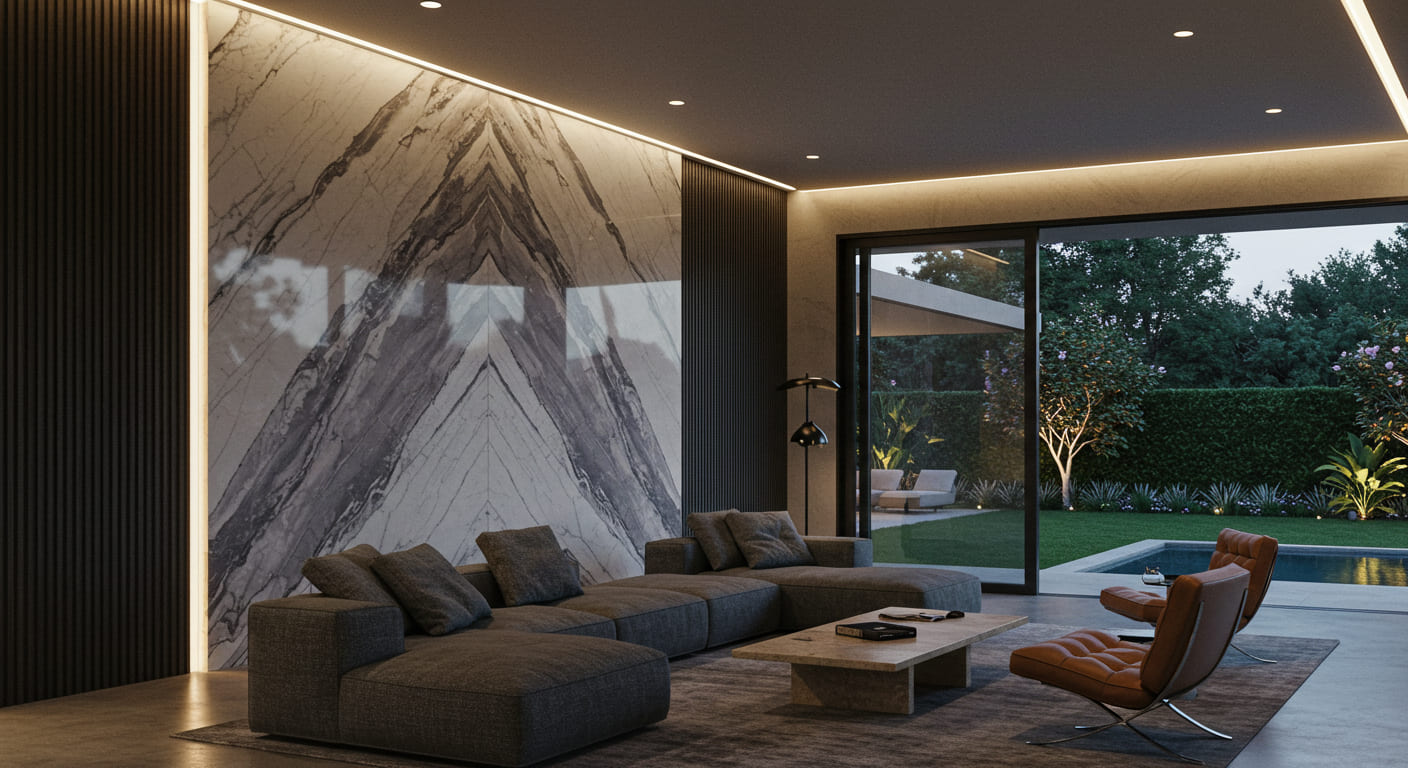

Sensory Modernism
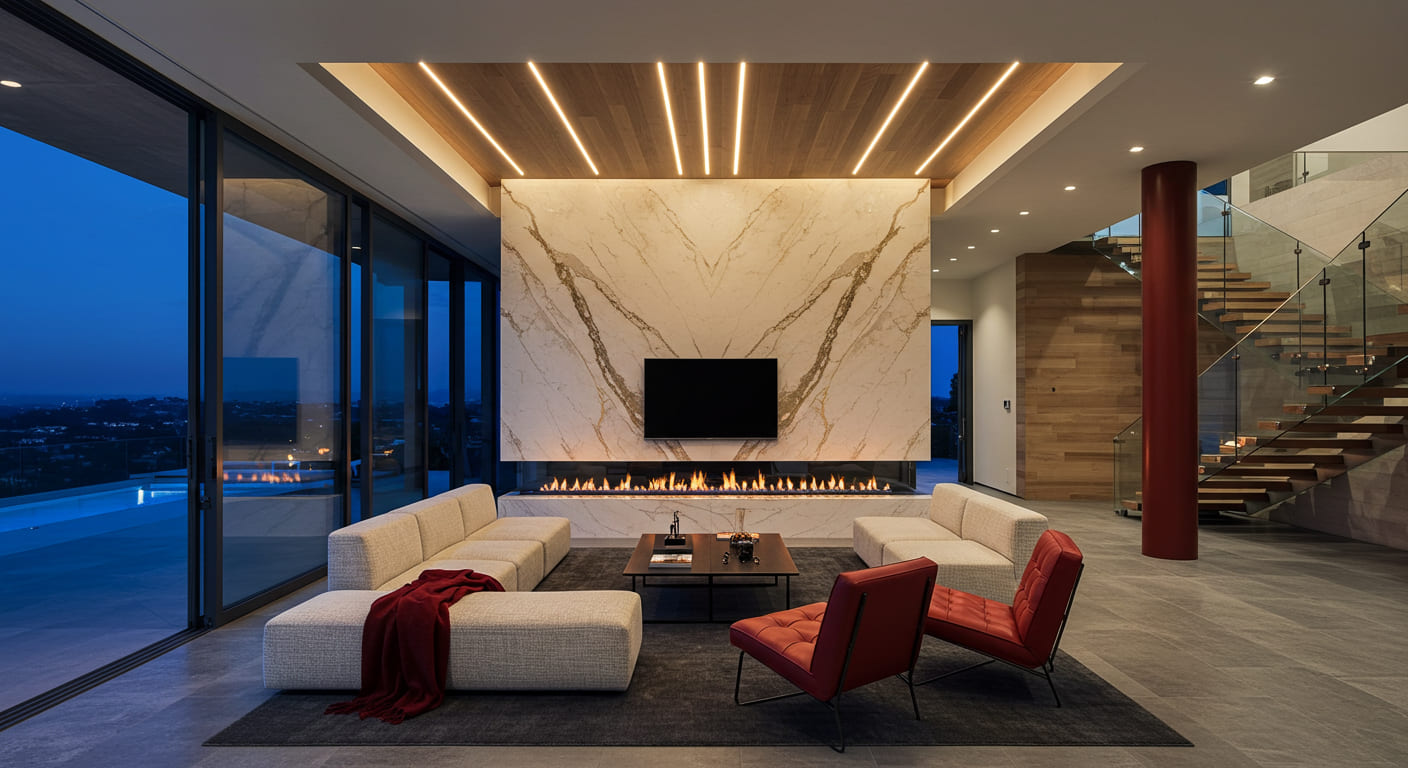

Axiom Modern
{k} more styles match as many:
One more style matches as many:
Fixing harsh or flat lighting
When a room’s lighting looks harsh or flat, the firm runs a light audit: it answers the three questions above for that room, checks the light’s color and names the fix. Two complaints the firm hears show how.
Two complaints and their fixes
Kitchen lighting that looks harsh and clinical
- The complaint
“My kitchen feels like an operating room.”
- What the firm finds
Level: Bright & Luminous, the client’s own target for a working kitchen. Light Quality: Hard & Directional, with harsh shadows. Light Source: only Discreet & Recessed, a grid of downlights. Color: a cool white, 4000 kelvin (K), throughout.
- The fix
Layer the light: Decorative & Expressive pendants over the island give a focal point; Concealed & Integrated light under the cabinets fills the counters’ shadows. Keep each light’s color inside the palette’s Color Temperature range.
Living room lighting that looks flat at night
- The complaint
“It feels boring at night.”
- What the firm finds
Light Quality: all Soft & Diffused, with no contrast. Light Source: one kind only, even light from ceiling coves, Concealed & Integrated.
- The fix
Add contrast: Discreet & Recessed spotlights put Hard & Directional light on the art, for focal points. A fireplace or a wall of candles adds Dynamic & Kinetic light that moves.

Intellectual property of Meridian Atelier
- The Studio
- Design Fundamentals
Light
Definition: Light, the fourth of the six principles in the firm’s Design Fundamentals, is the study of a room’s lighting: how bright it is, how it falls and how much of each fixture shows.


From principle to project
A commission puts this principle to work with the other five.
The Service Offerings explains how a commission runs, from the first conversation through design, documents and construction, and which services you can choose.
See the servicesWhere to go next
Each of the six principles has its own page, and this is the fourth.


Or go back

