MERIDIAN ATELIER · the Wordmark

The empathy and harmony metric

Agreeableness

How much warmth a mind seeks.Whether its home reads as soft or sharp.

What is Agreeableness in home design?

Agreeableness measures a mind's pull toward empathy and harmony, and sets how soft and warm its home reads to hand and eye.

The firm's Diagnostic reads it. A high reading calls for eased edges, warm light and inviting materials; a low one, for crisp lines, high contrast and machined surfaces.

01

What does Agreeableness measure?

One trait, read twice: as a measure of personality, and as a brief for a home.

In psychology

In psychometrics, Agreeableness (source, opens in a new tab) measures a person's leaning toward empathy, cooperation and harmony, against skepticism and analytical distance. Touch carries into judgment: in one experiment, people seated in hard chairs moved less from their first offer in a negotiation than people seated in soft ones (Ackerman, Nocera and Bargh, 2010 (source, opens in a new tab)).

In a home

In the firm's design rules, Agreeableness sets a home's warmth, to the touch and to the eye. It decides whether the architecture reads as soft, welcoming and forgiving, or as sharp, stark and monumental.

On a scale

Every mind sits somewhere along each trait, so the firm measures resonance: how strongly yours answers to Agreeableness. Two people in one home bring two readings, and the design resolves both.

02

How does the firm read Agreeableness?

Three questions from the Diagnostic, the conversation that opens every commission. Choose the answer closer to your own.

  1. 01

    The Tactile Test

    When you touch your home's surfaces, should they be soft, warm and forgiving, or carry the cold precision of polished stone, glass and steel?

  2. 02

    The Formality Test

    A guest spills red wine at your table. Is your first concern the guest's embarrassment, or the porous marble counter?

  3. 03

    The Edge Test

    Do rooms with rounded, eased edges settle you, or do you prefer the razor-sharp precision of exact right angles?

The Diagnostic asks these in conversation, and reads all five traits and the household with you.

How the Diagnostic works
03

What does each reading call for?

The two ends of Agreeableness, side by side: each profile, and the design it calls for.

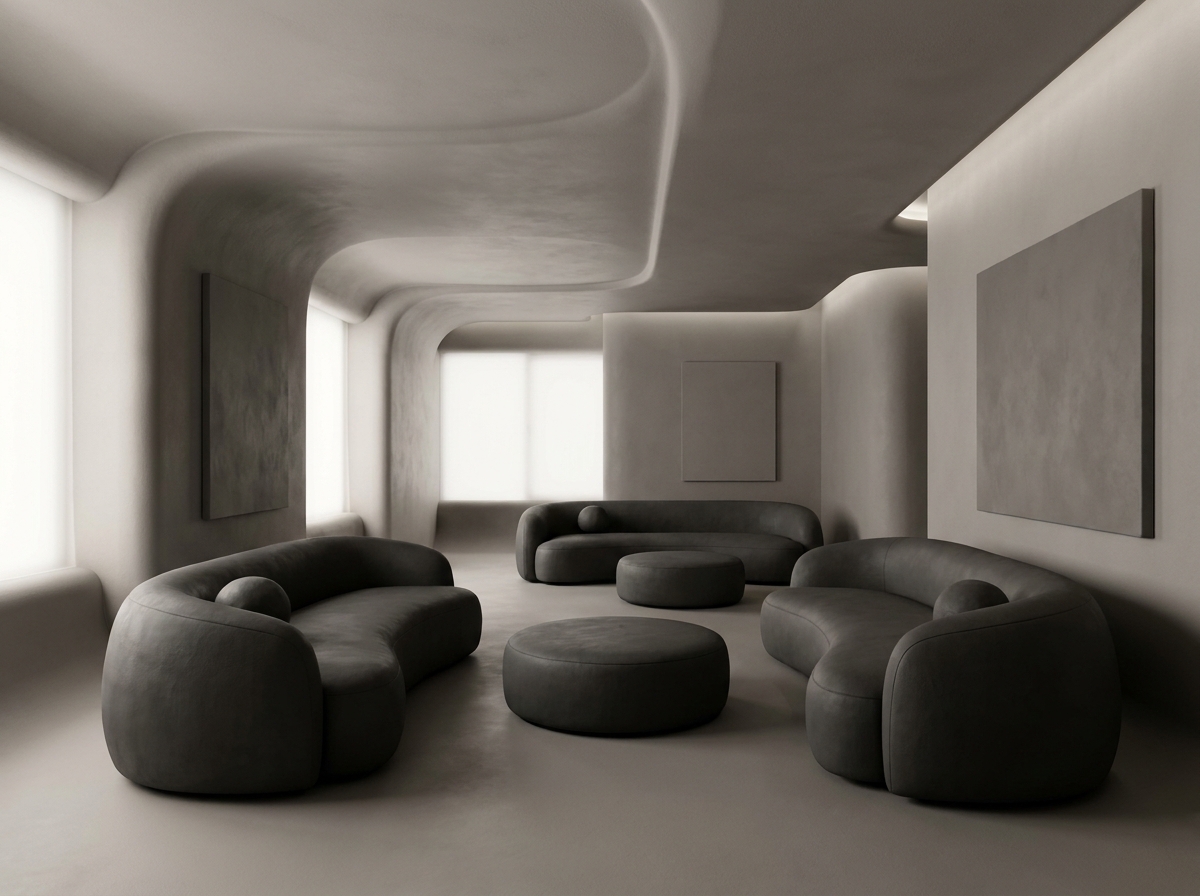
A clay model of a soft, curved living room with plush, rounded furniture (AI-generated)Your answers lean here
High resonance

The Harmonizer

Values connection, comfort and warmth above all, and sees the home as a host that puts people at ease. Sterile, sharp or imposing rooms register as hostile to this mind.

Form & Geometry

Soft & Hand-Formed and Curvilinear & Sculptural: no sharp edge to guard against

Pattern & Finish

Organic & Natural textures, a link to the living world

Color & Tone

Balanced & Grounded: warm woods, terracotta, soft beige

Light

Soft & Diffused over Satin surfaces, at 3000K or warmer

Materials

Tumbled stone, unlacquered brass, heavy linen, wool bouclé

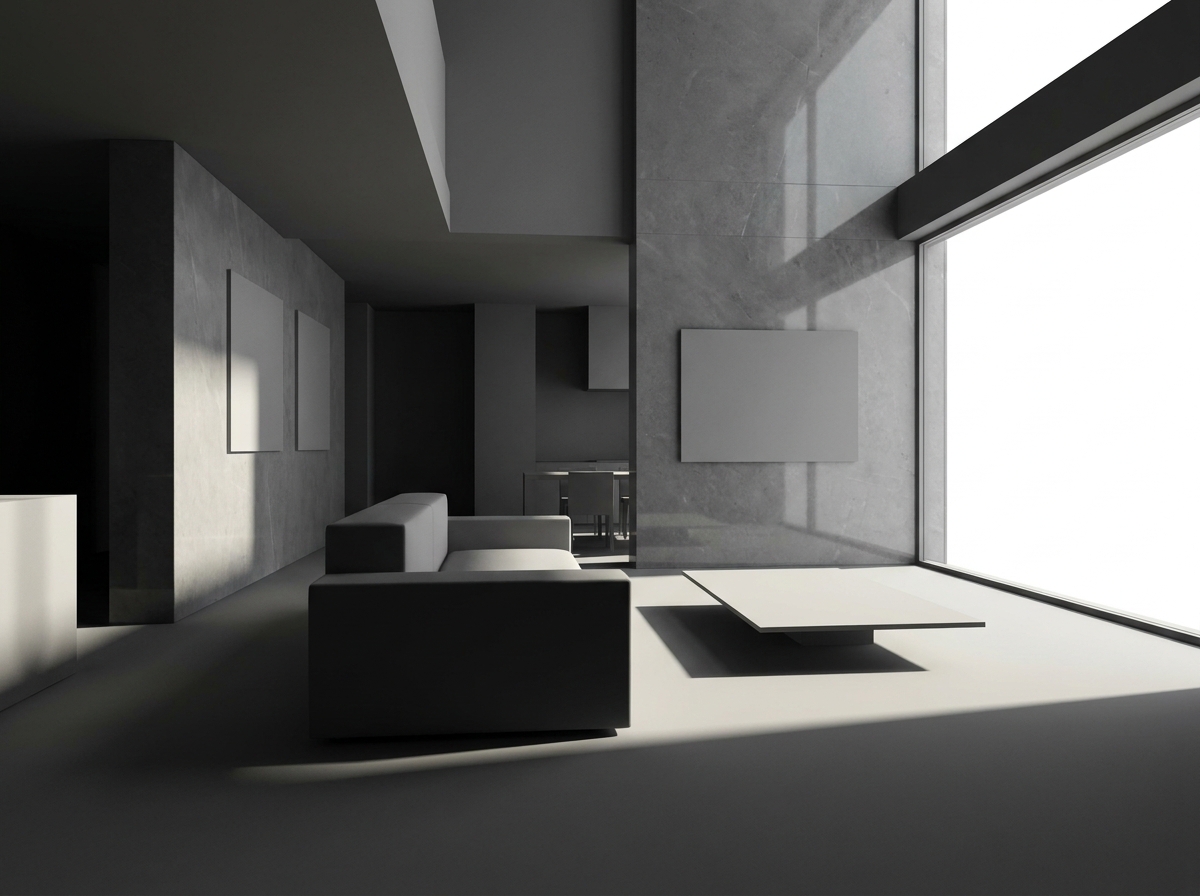
A clay model of a stark living room of sharp edges and rigid furniture (AI-generated)Your answers lean here
Low resonance

The Analyst

Values logic, precision and objective standards, and sees the home as a statement of capability. Overly soft or sentimental rooms read to this mind as undisciplined.

Form & Geometry

Crisp & Machined and Linear & Planar: precision in every line

Pattern & Finish

Geometric & Structural

Color & Tone

The Monochromatic or Rich & Saturated: stark contrast, deep hues

Light

Hard & Directional over Gloss surfaces, running cooler

Materials

Polished chrome, glass, high-gloss lacquer, cold-rolled steel

04

How does one home serve both?

A Harmonizer and an Analyst ask opposite things of one house: sharp, machined rooms read to the Harmonizer as cold and sterile, and soft ones read to the Analyst as too casual and loose.

The Core & the Comfort

  • The Core

    For the Analyst

    The envelope, the flooring, the millwork and the massing, executed in machined materials with sharp architectural lines.

  • The Comfort

    For the Harmonizer

    Everything the hand meets: deep seating, rugs, brushed hardware and fixtures, and strictly warm light at 2700K.

The result

The Analyst respects the rigor of the bones; the furnishings, the light and the surfaces the hand meets every day serve the Harmonizer.

05

What can override the reading?

Material Fragility

The context

A Harmonizer often wants porous, delicate warmth, such as honed marble, untreated wood and white linen, and hosts often. Under heavy use these stain and scratch, and the stress that follows breaks the harmony the client chose them for.

The adjustment

Warmth arrives through materials that forgive: performance fabrics with the hand of linen, and brushed quartzites with the softness of limestone and the durability of granite.

Intellectual property of Meridian Atelier

  1. The Method
  2. Neuroaesthetic Design

Agreeableness

Definition: Agreeableness, the fourth trait of Neuroaesthetic Design, measures a mind's pull toward empathy and harmony, and sets how soft, warm and forgiving its home reads to the hand and the eye.

Authored byArian G.Principal & Design TheoristMeet the Principal

Where to go next

Together, the five traits give one profile of the mind a home serves.