

Principle 01 · shape, construction and edges
Form & Geometry
The principle that describes the shape of every piece in a home, and of the house itself.
What is Form & Geometry?
Form & Geometry is the study of an object in space: its shape, its line, its volume and its edge.
It is the first of the three principles of Matter, which describe what makes up a design: its shape, its surface and its color.


 Choose this answerChoose this insteadYour answerOpen this questionClose this questionChange your answerExamples and stylesExamplesNot answered yetNext questionSee your project’s form
Three questions about your project’s form
Choose one answer to each question. The drawing below changes as you answer, and each answer’s picture shows what it looks like in a home.
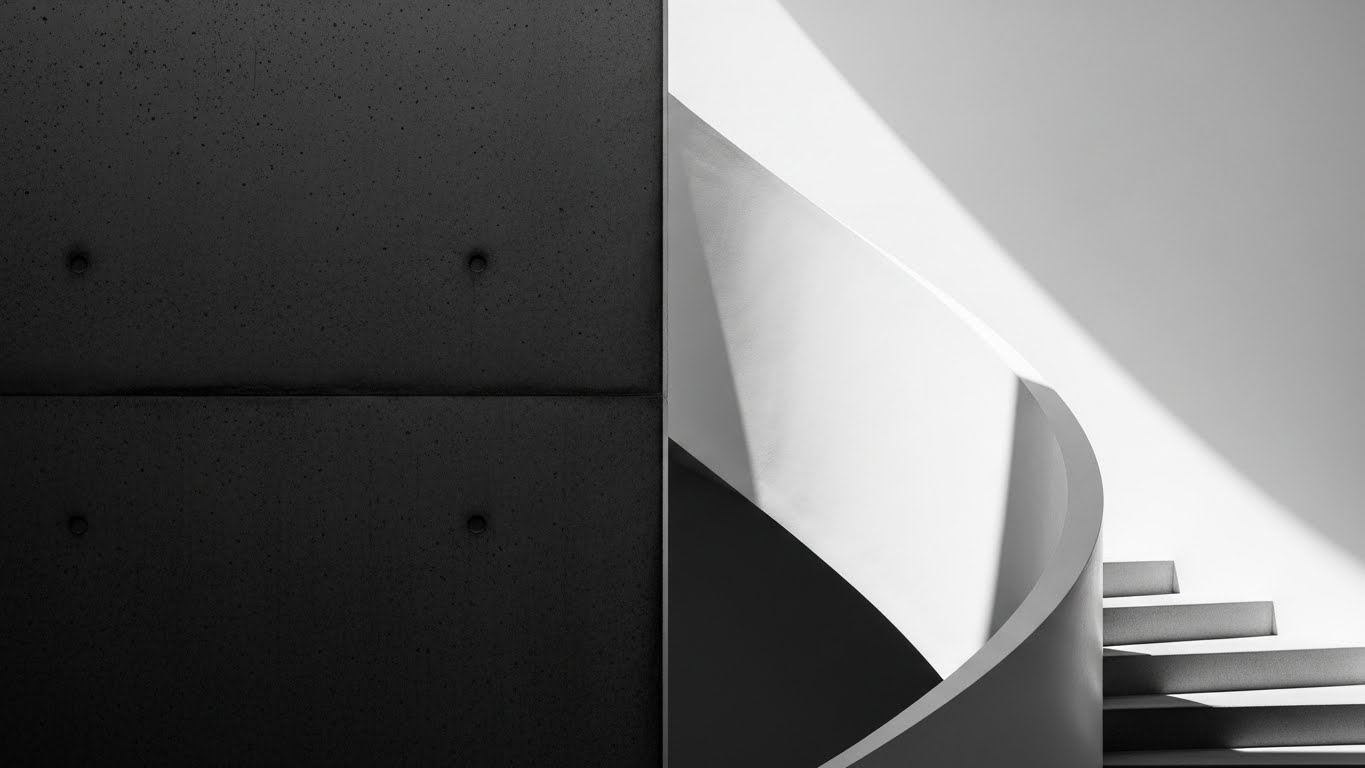
Geometric Language
What shape is it: straight, curved, or both?
Linear & PlanarCurvilinear & SculpturalHybrid & IntegratedLinear & Planar
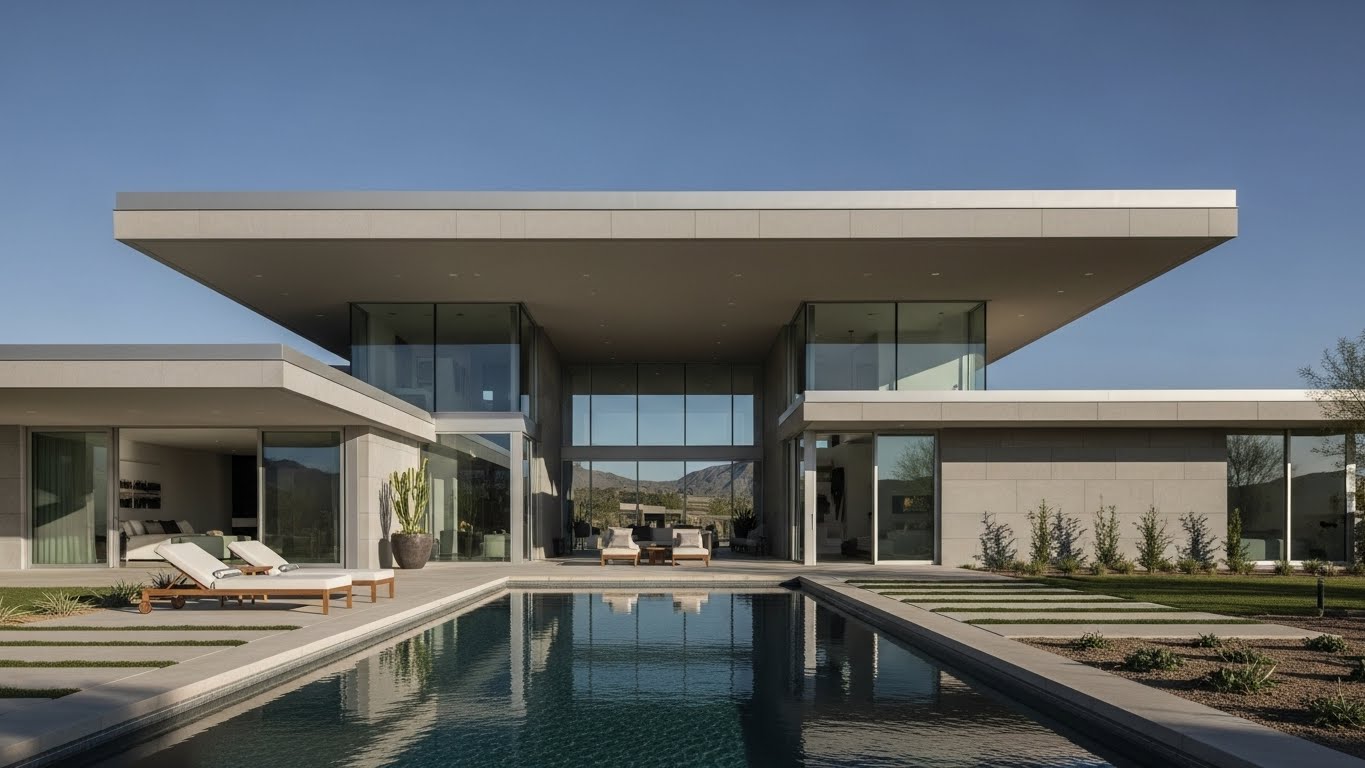
Straight lines, right angles and flat planes, as in a flat roof (source, opens in a new tab) over a rectangular pool.

Box shapes and flat roofs
Box-shaped volumes, sharp corners, long horizontal lines, rooms laid out on a grid, roofs and floors that reach out past their supports.
Straight lines lead the eye along steady, predictable paths, so the room looks clear, stable and efficient.
California Modernism · Desert Modern · Coastal Contemporary · Japandi
Curvilinear & Sculptural
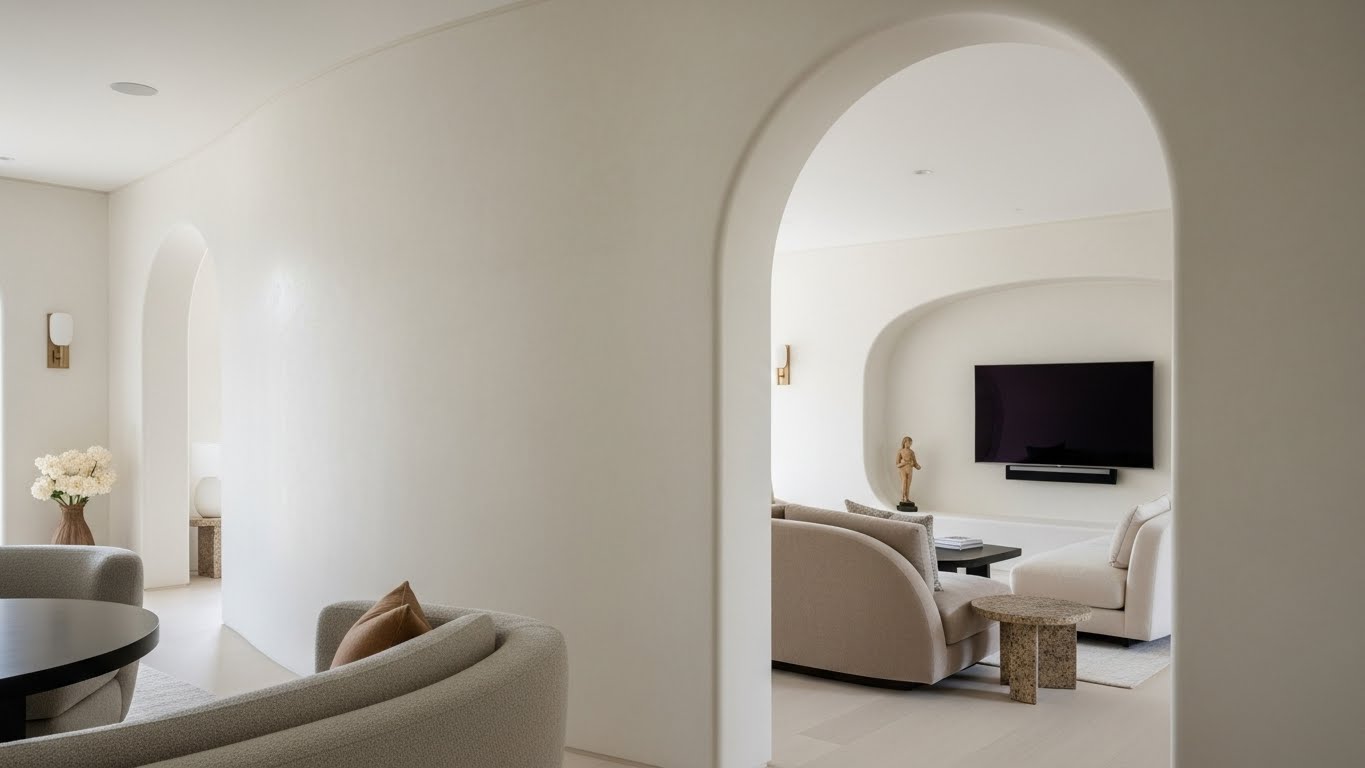
Arcs, circles and rounded volumes, as in an arched doorway (source, opens in a new tab) or a curved plaster wall.
Arched doorways and spiral stairs
Arched doorways, spiral stairs, rounded furniture, drum-shaped tables, walls that curve in an S.
Curves keep the eye moving with no corner to stop it, so the room looks soft and enclosing.
Organic Contemporary · California Mediterranean · Hollywood Regency · Wabi-Sabi
Hybrid & Integrated
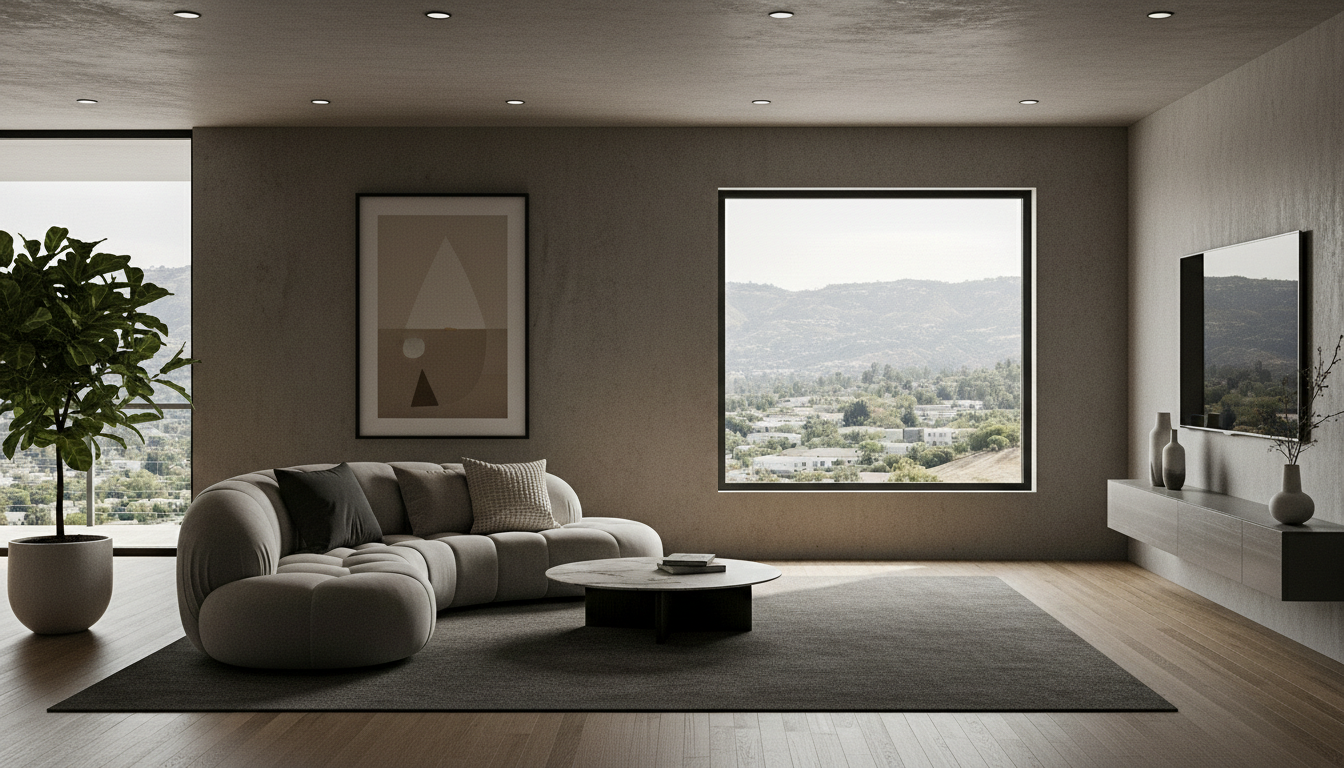
Straight and curved forms set together on purpose, as in a curved sofa (source, opens in a new tab) in a straight-walled room.
A round stair in a square hall
A round staircase in a square hall; a straight-walled room softened by a curved sofa; a crisp doorway cut into a soft plaster wall.
The eye moves between straight and curved lines, so the room looks lively, as if gathered over years.
Transitional Classic · Sensory Modernism · Axiom Modern · Mid-Century Modern
Level of Articulation
How is it built: as one piece, as visible parts, or with ornament?
Monolithic & SeamlessArticulated & DetailedOrnamental & IntricateMonolithic & Seamless
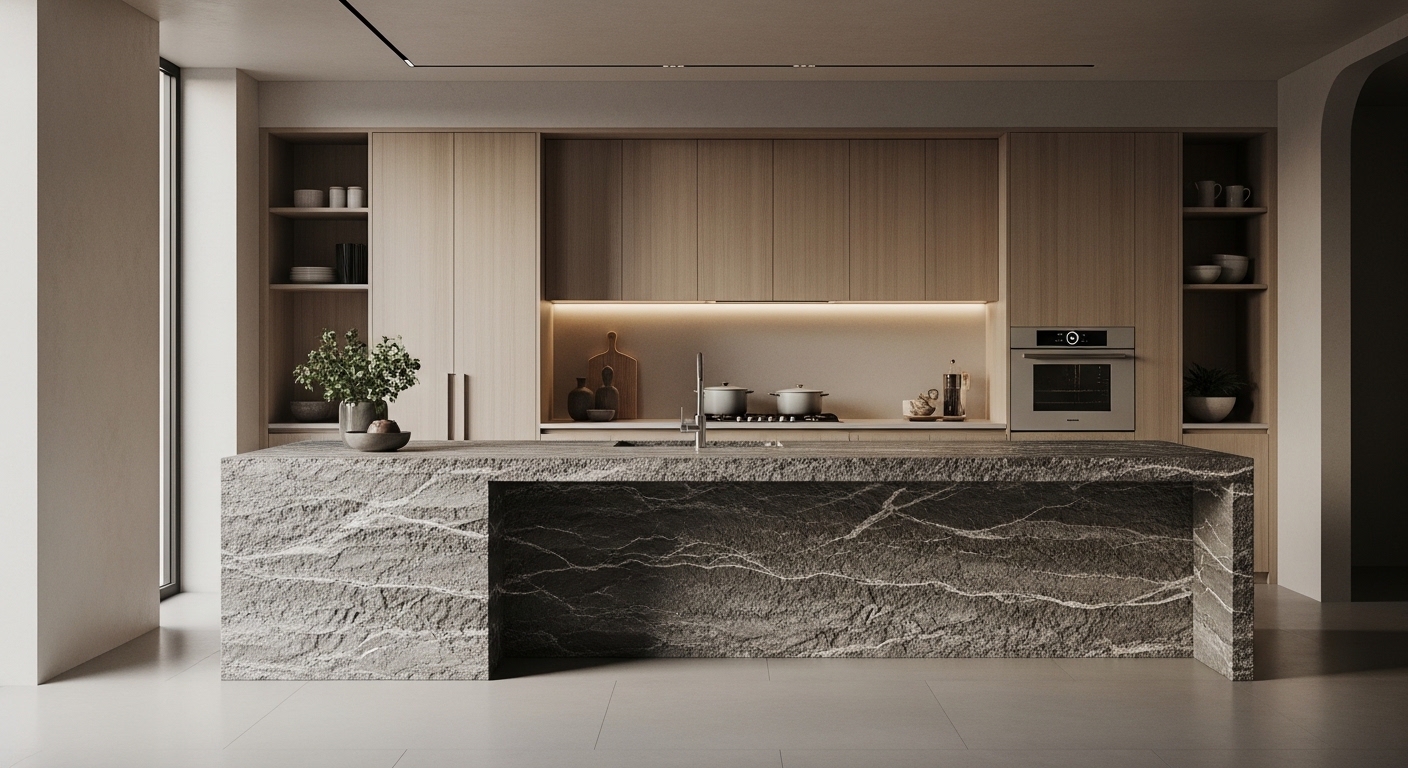
One piece, with no visible joint or seam, as in a kitchen island cut from one stone (source, opens in a new tab).
Stone islands with no seam
Stone islands whose top runs down to the floor, plaster walls with no baseboard, concrete floors, sinks made in one piece with the counter, hidden handles and hinges.
With no joint or seam to look at, the eye rests on the material itself, which is why modern design favors it.
Organic Contemporary · Sensory Modernism · Wabi-Sabi · Axiom Modern · Desert Modern
Articulated & Detailed
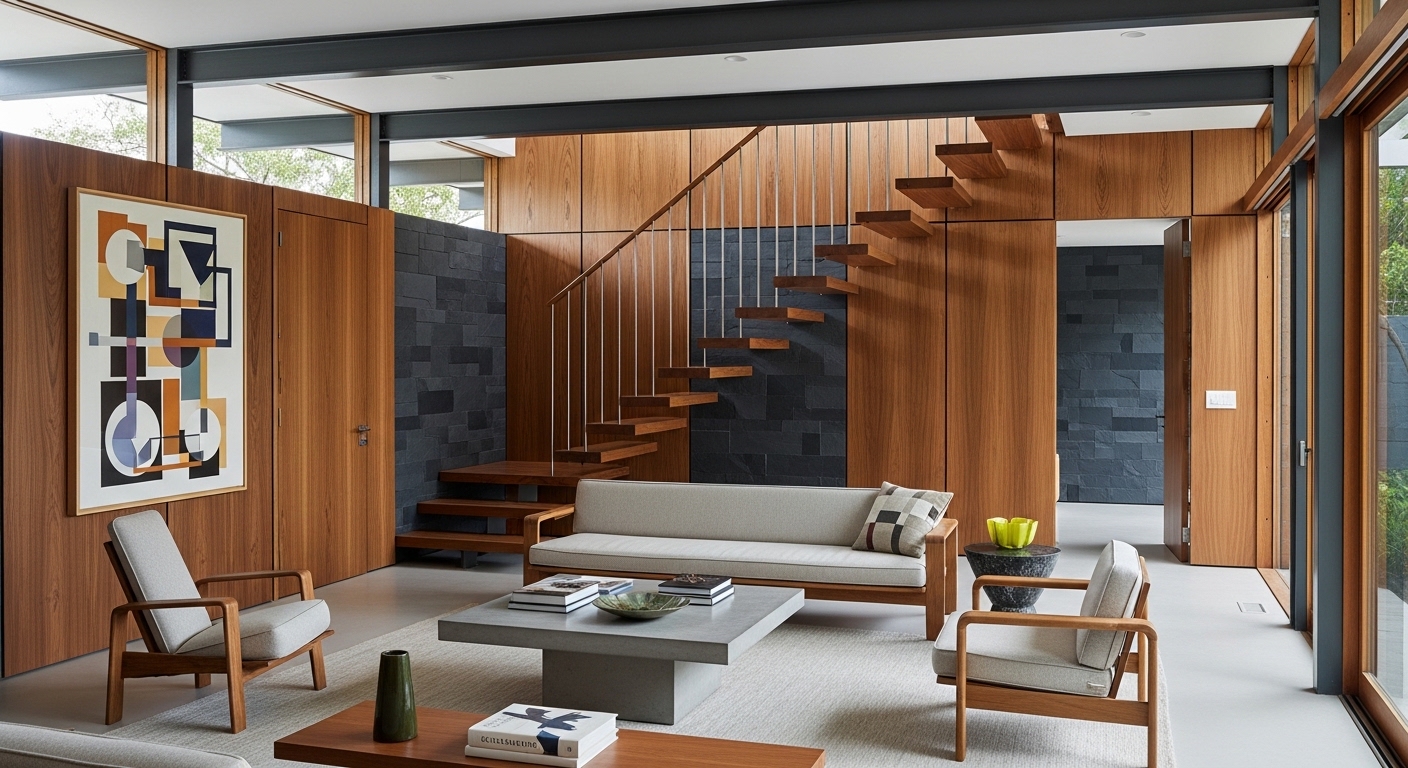
Parts and joints left in view, as in exposed beams (source, opens in a new tab) or an open timber stair.
Exposed beams and visible joints
Exposed beams, furniture joints left in view, paneled doors and cabinets, windows divided into panes, brickwork.
Visible joints show how the maker assembled the piece, so the room looks honest and crafted, and recalls tradition.
Mid-Century Modern · Japandi · California Modernism · Coastal Contemporary
Ornamental & Intricate
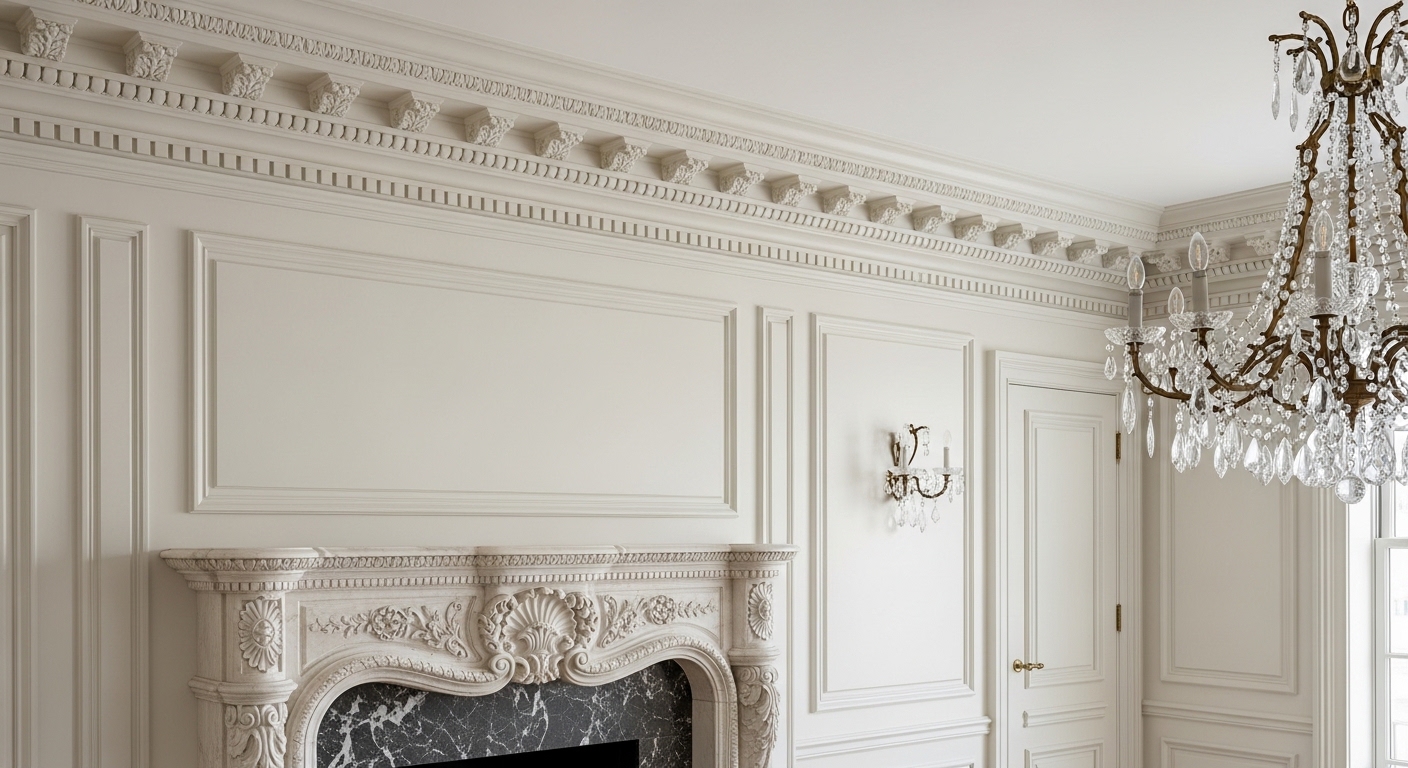
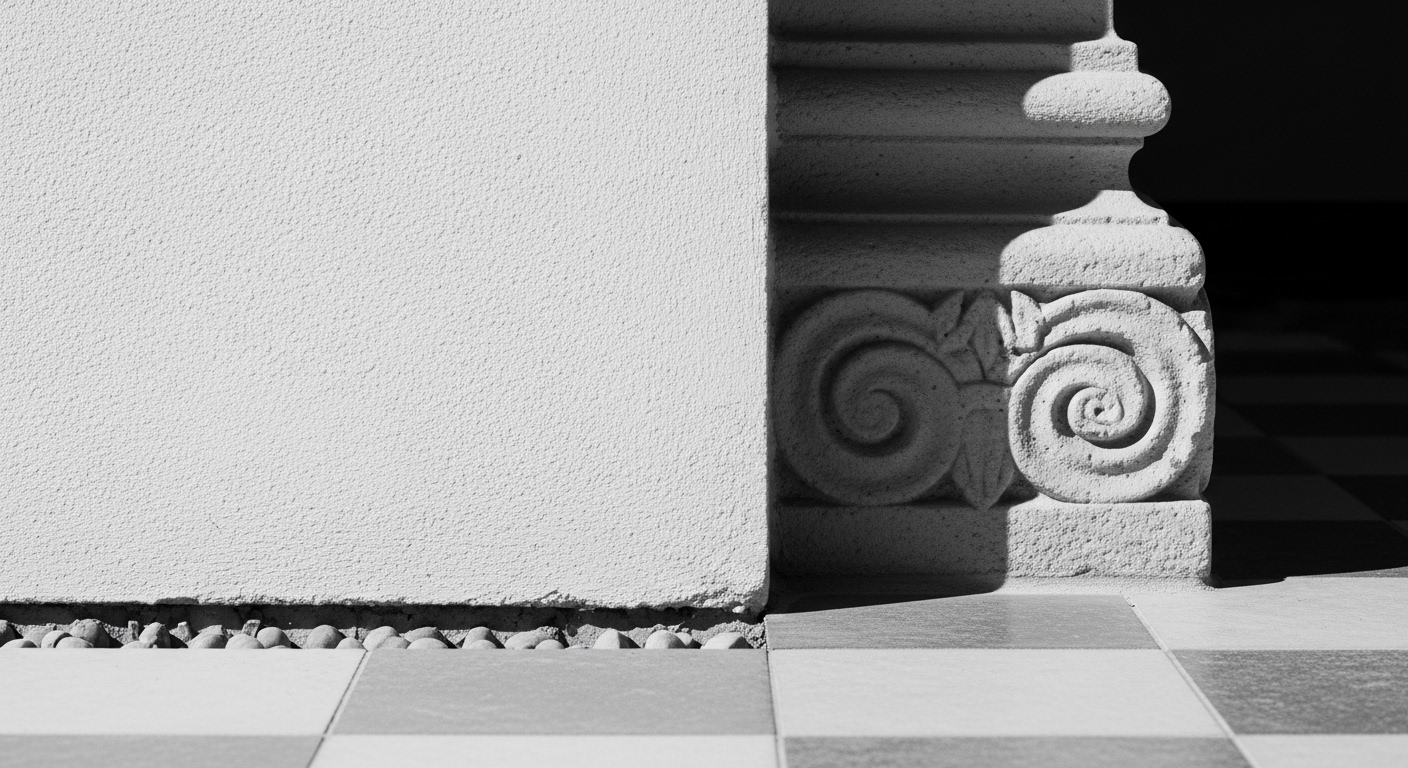
Decoration beyond what the structure needs, as in crown molding or a carved mantel (source, opens in a new tab).
Carved moldings and fluted columns
Carved moldings, fluted columns, buttoned upholstery, lathe-shaped legs, raised ornament fixed to walls or furniture.
Decorative detail recalls historic styles and gives the eye more to look at, so the room looks rich and layered.
Hollywood Regency · Transitional Classic · California Mediterranean
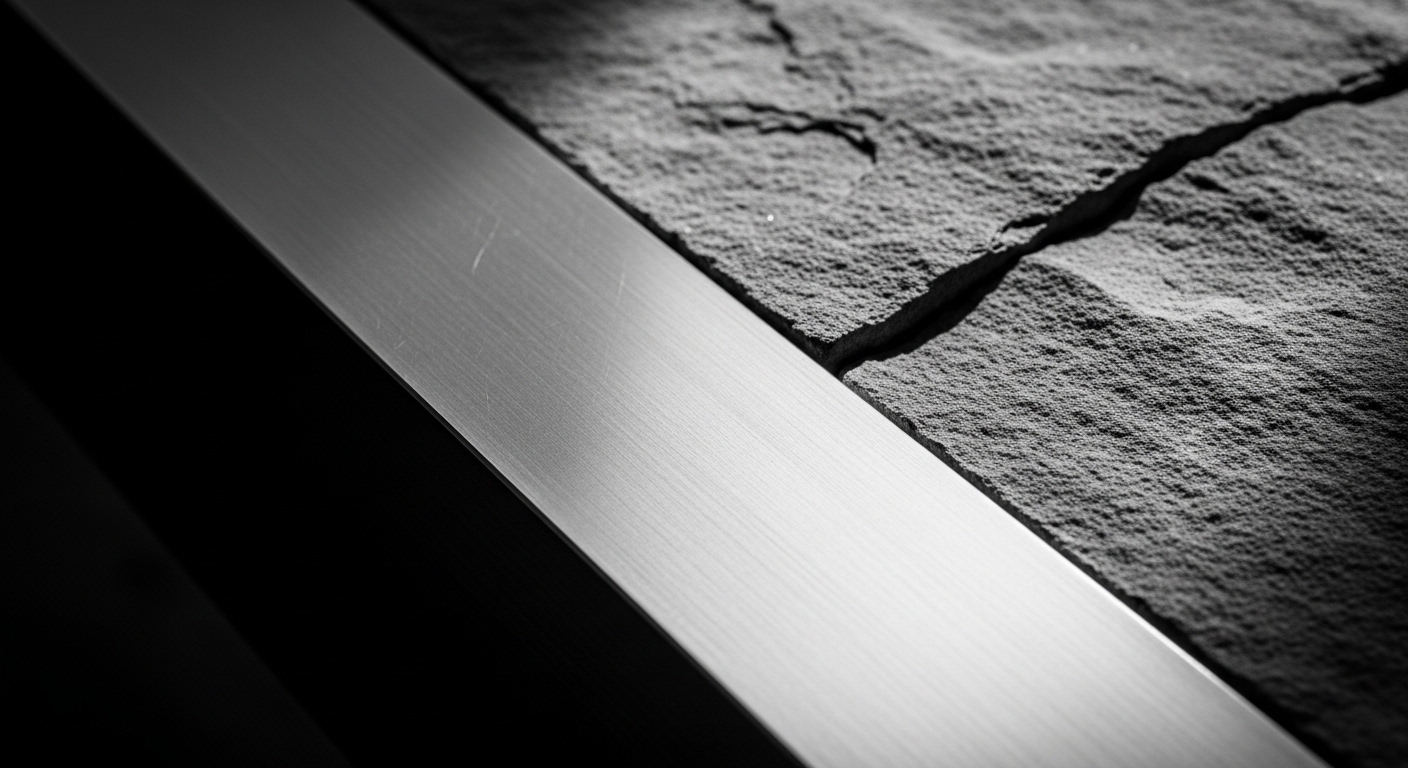
Edge & Profile
What are its edges like: sharp, rounded, or rough?
Sharp & SquareRounded & SoftenedRough-HewnSharp & Square
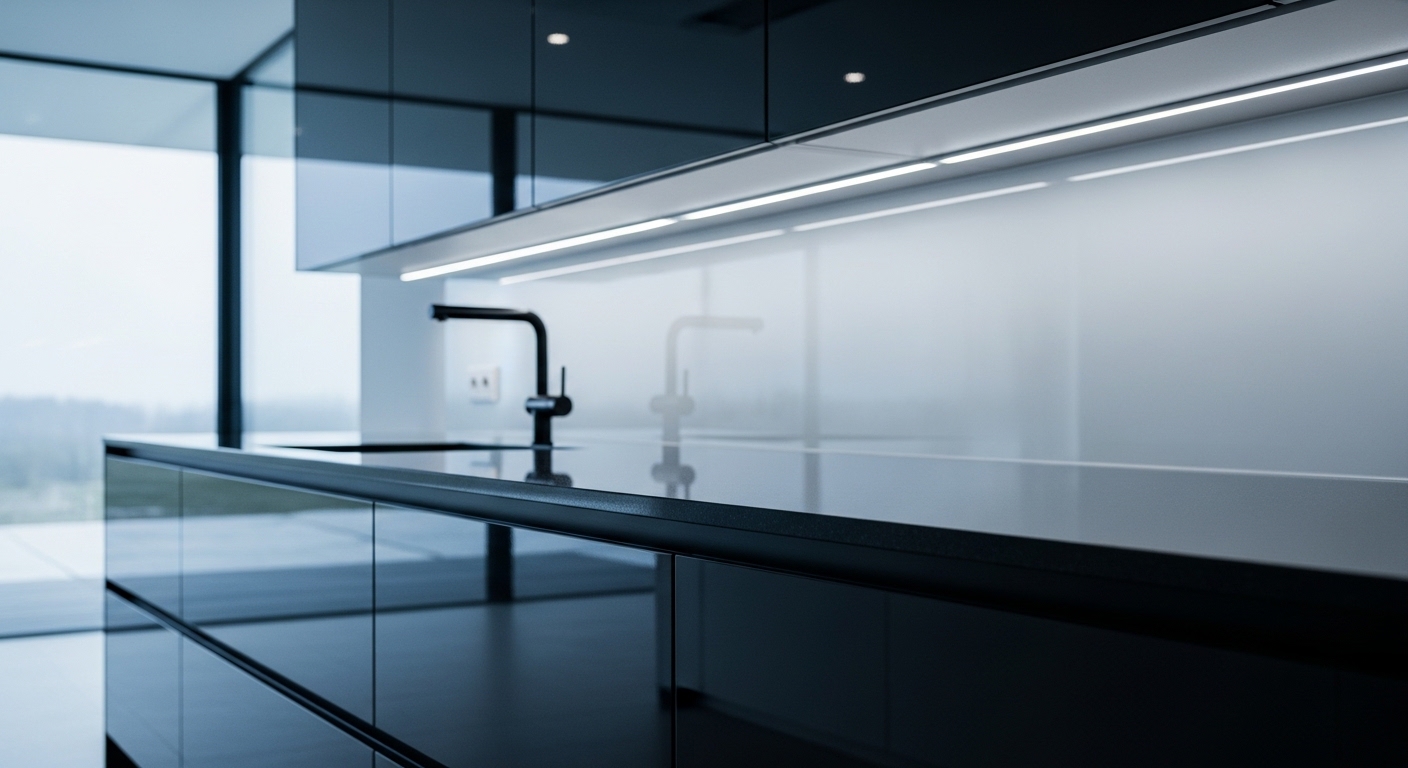
Surfaces that meet in a single crisp line (source, opens in a new tab), as in a knife-edge stone counter.
Counters with knife-sharp edges
A stone island whose top and sides meet in one sharp line, laser-cut steel, a square wall corner, a thin shadow gap where a wall meets the floor.
An edge rounded by 1/8 inch or less still counts as sharp; once the rounding shows as a curve, it is Rounded & Softened.
California Modernism · Desert Modern · Hollywood Regency · Axiom Modern
Rounded & Softened
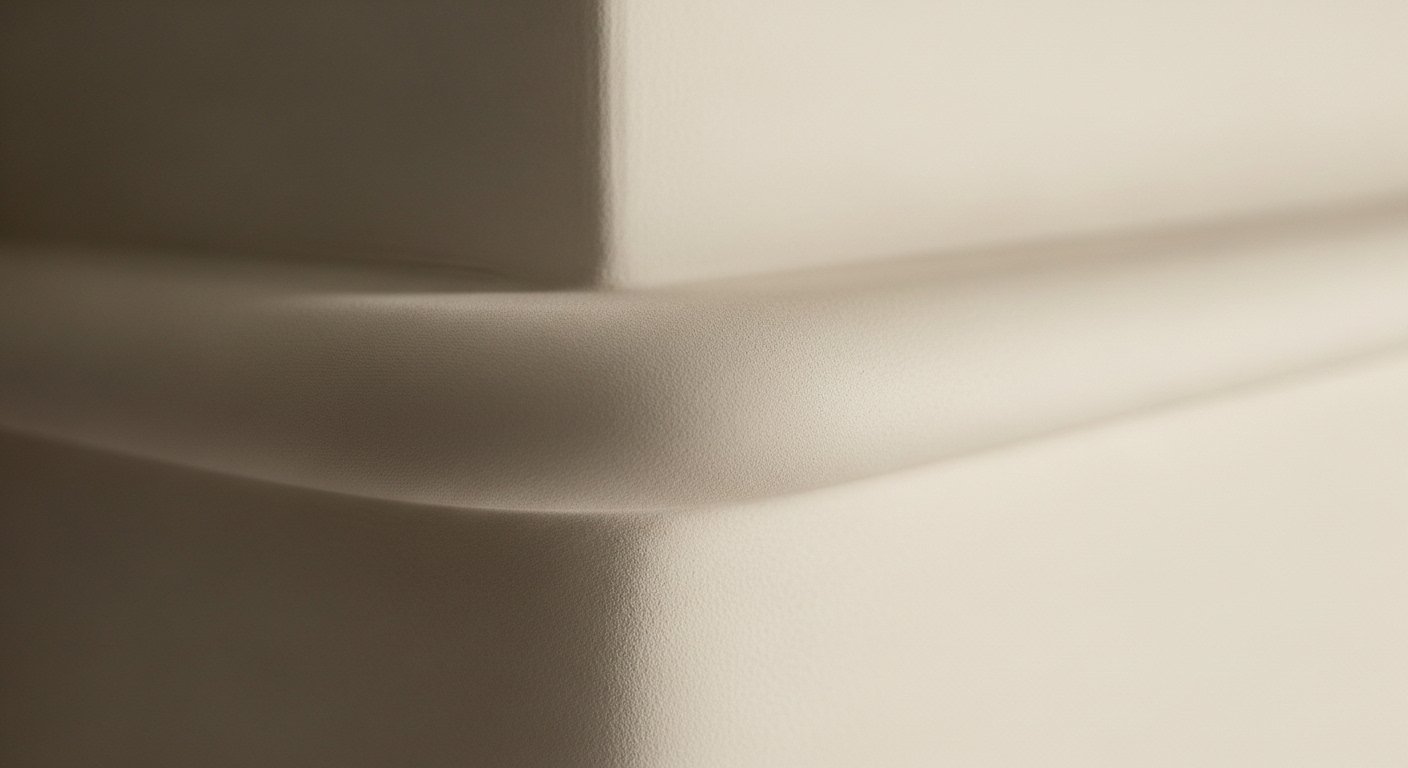
Edges rounded or molded (source, opens in a new tab) on purpose, even along their whole length, as in a plaster corner rounded smooth.
Counters with rounded front edges
A counter with a rounded front edge, rounded wall corners, tiles with cushioned edges, an oak tabletop with rounded edges, a cabinet door with curved edges, a rounded plaster niche.
Once an edge stops following an even line or curve, it counts as Rough-Hewn.
Organic Contemporary · Transitional Classic · Japandi · Coastal Contemporary · Mid-Century Modern · Sensory Modernism
Rough-Hewn
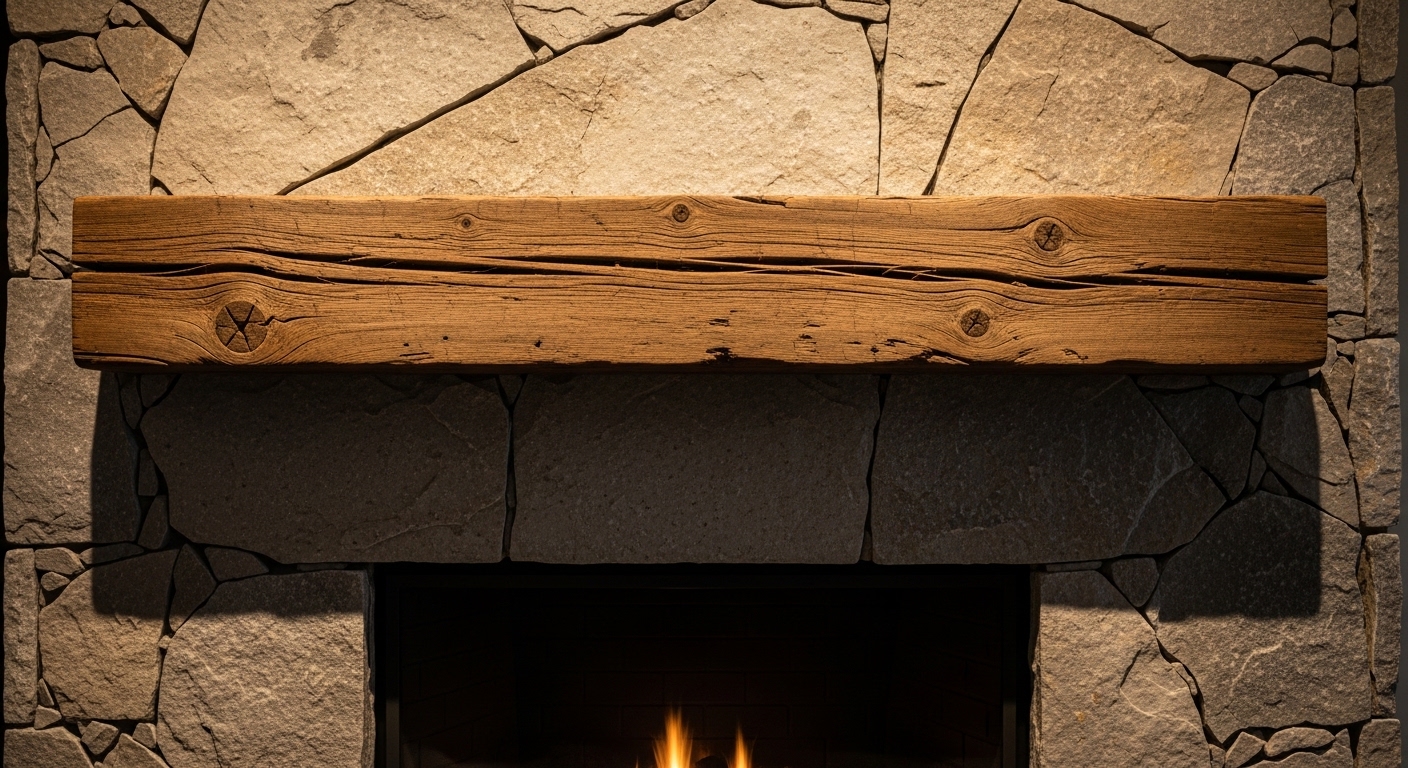
An uneven edge, left natural or shaped by hand, as in split stone (source, opens in a new tab) or a hand-cut timber mantel.
Chiseled edges and hand-cut beams
A chiseled stone edge, a stone wall cap with a split edge, a wood slab with its natural edge, a beam shaped by hand, handmade tile with uneven edges.
A sharp or a rounded edge keeps the same line or curve from end to end; a rough-hewn edge changes along its length, even on a smooth slab.
California Mediterranean · Wabi-Sabi
Your project’s form
- Geometric LanguageLinear & PlanarCurvilinear & SculpturalHybrid & Integrated
- Level of ArticulationMonolithic & SeamlessArticulated & DetailedOrnamental & Intricate
- Edge & ProfileSharp & SquareRounded & SoftenedRough-Hewn
The firm asks these three questions of every piece in a home, and of every inspiration picture a client brings.
Answer all three questions to see the styles your answers point to.
Your answers point toYour three answersOne of the firm’s complete styles; it shares all three of your answers.
Two of the firm’s complete styles; each shares all three of your answers.
None of the firm’s styles has all three of your answers. The styles are starting points; the firm can design any combination.
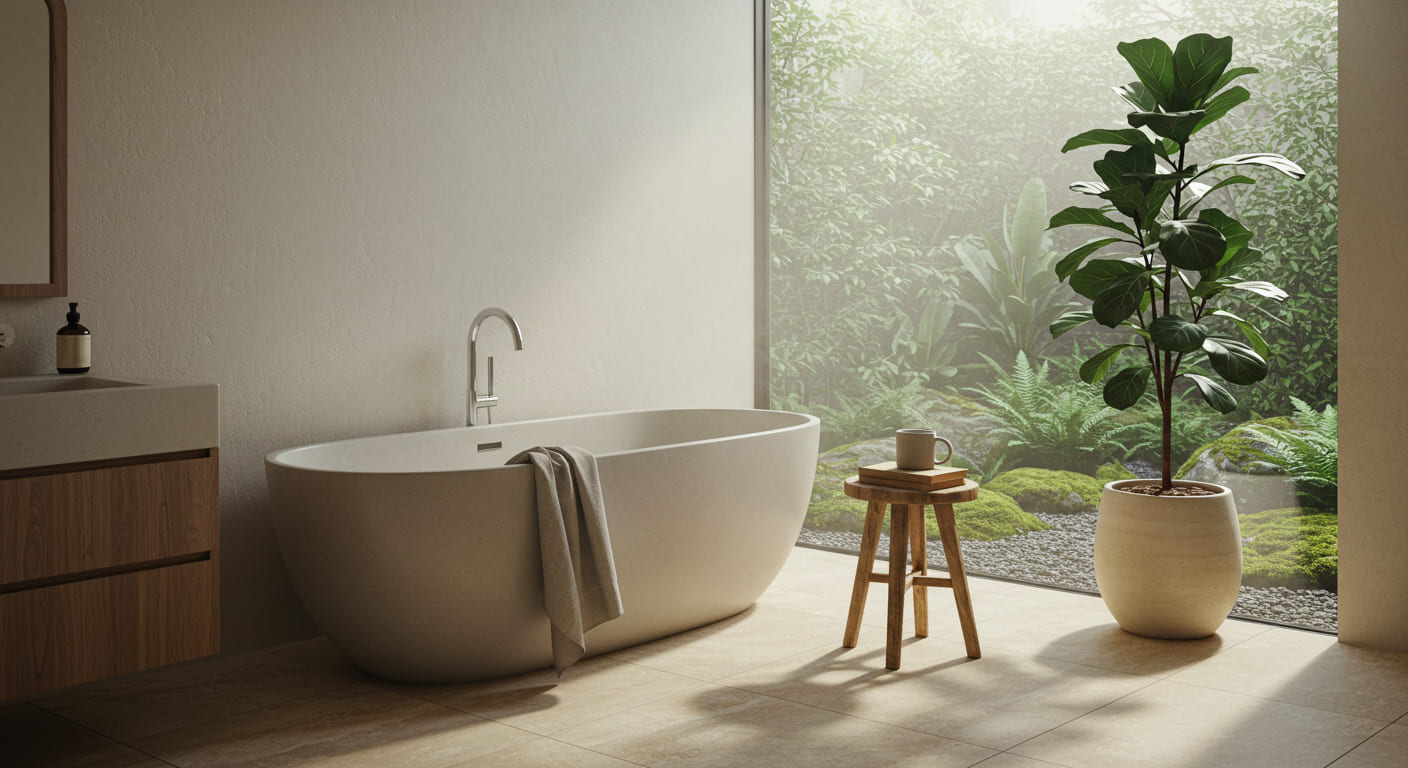

Organic Contemporary
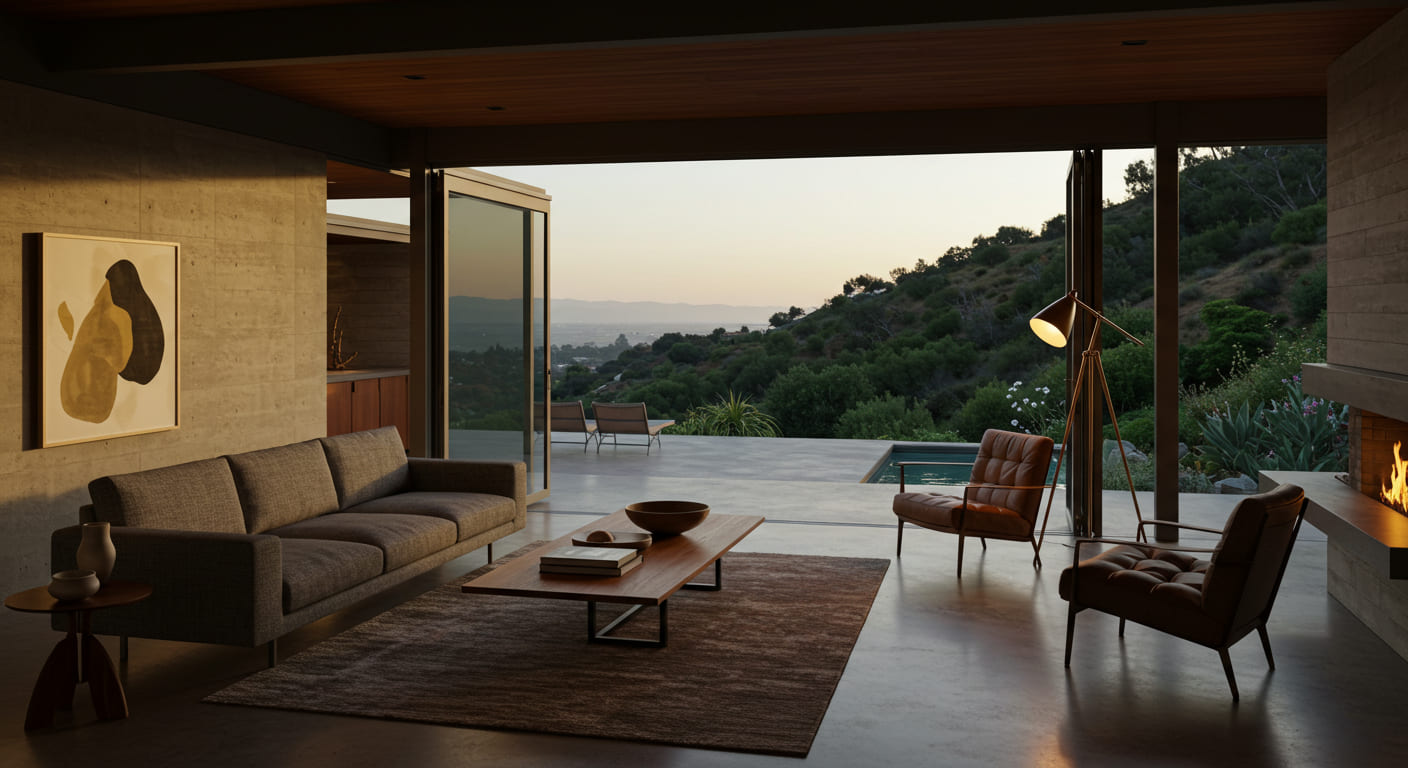

California Modernism
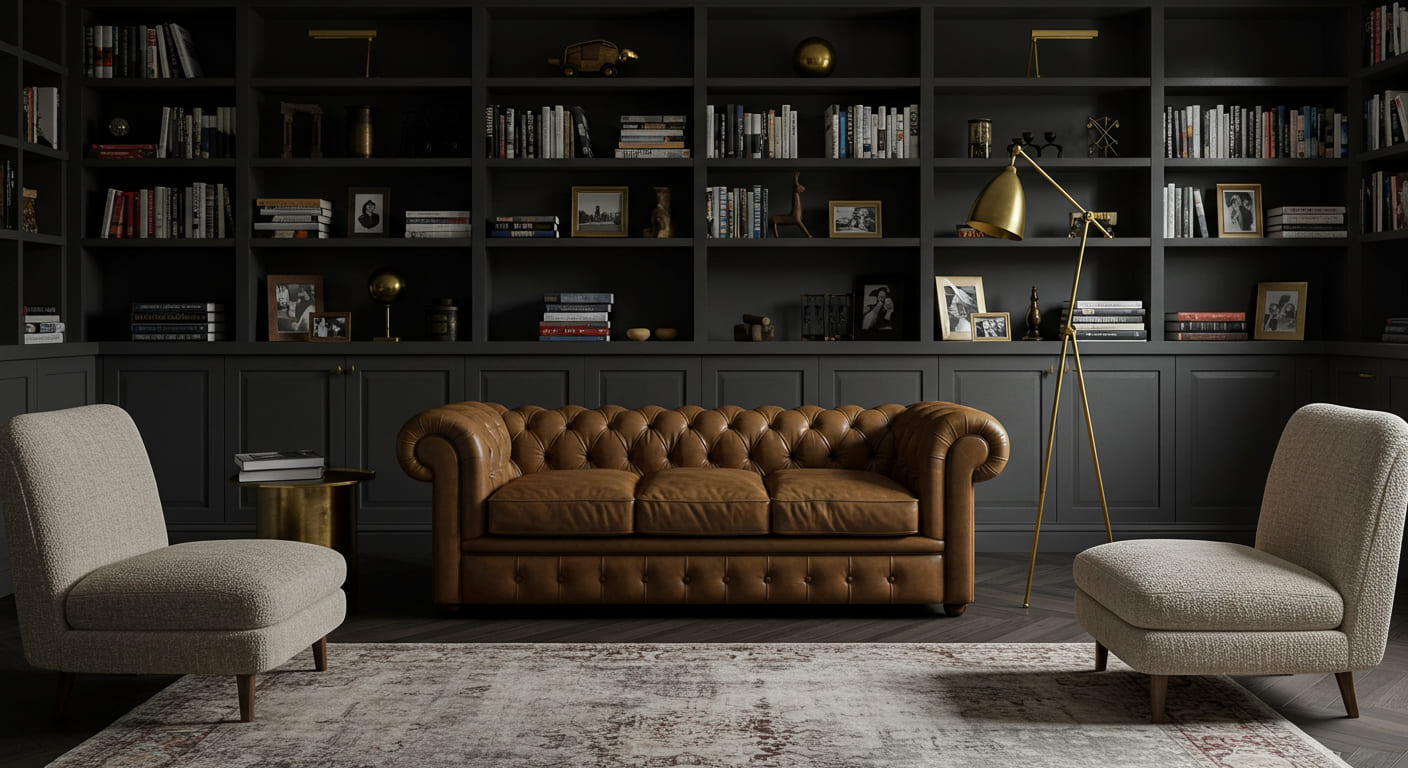

Transitional Classic
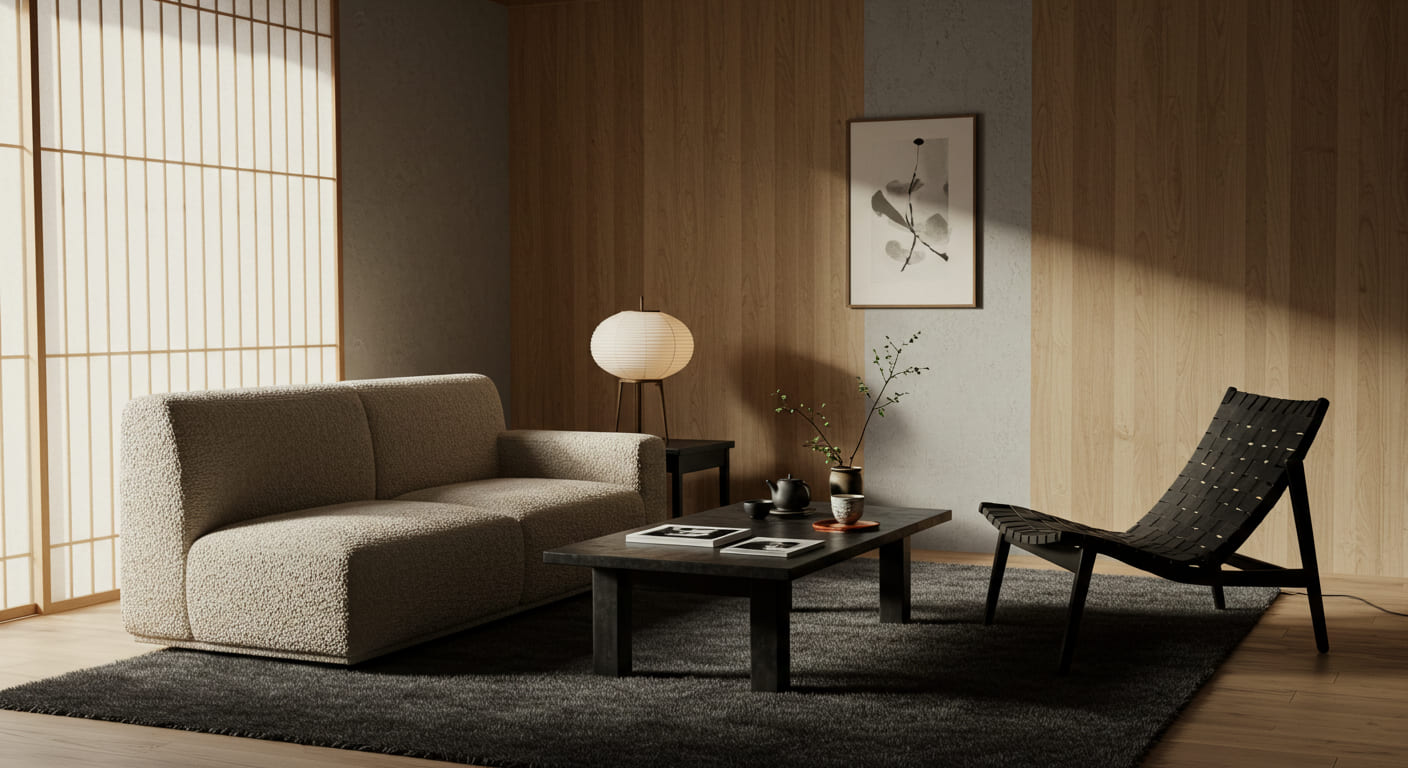

Japandi
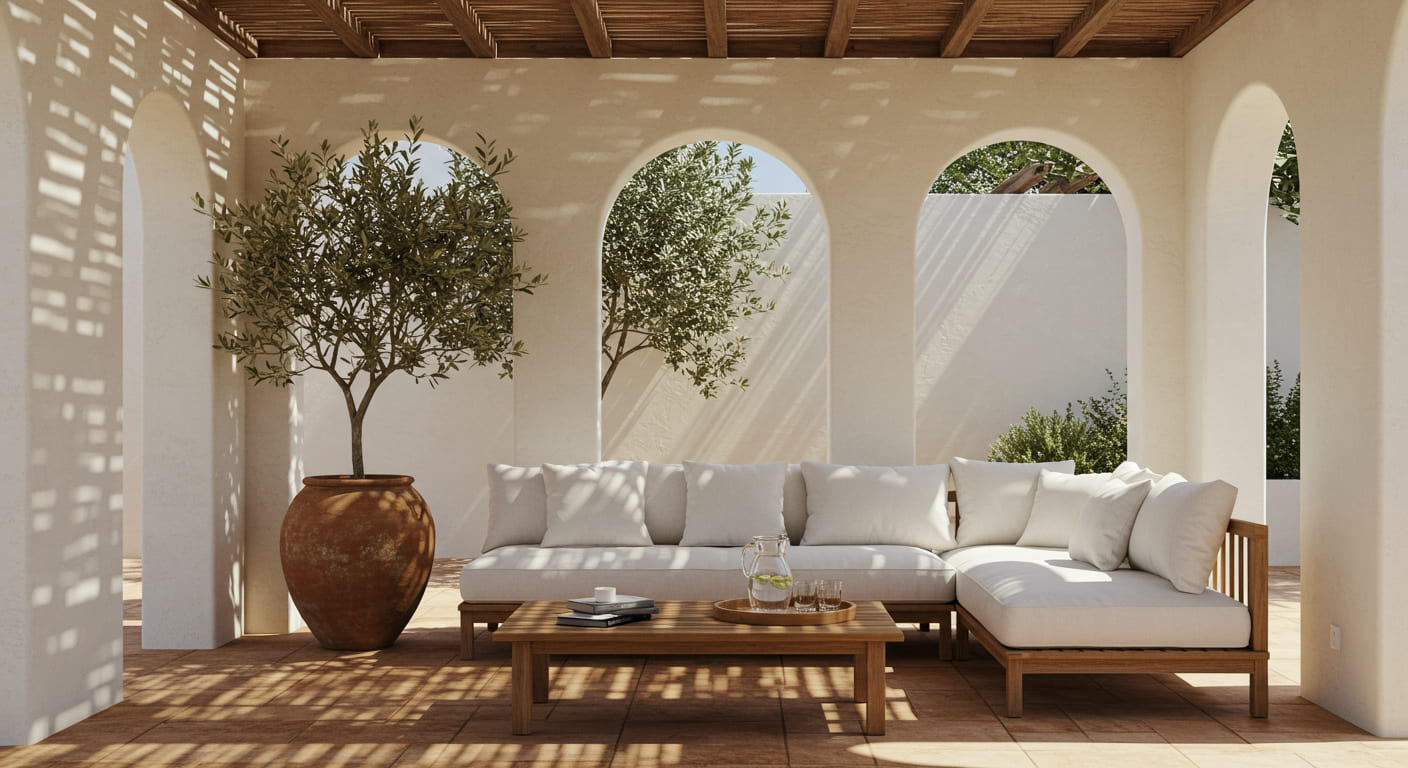

California Mediterranean
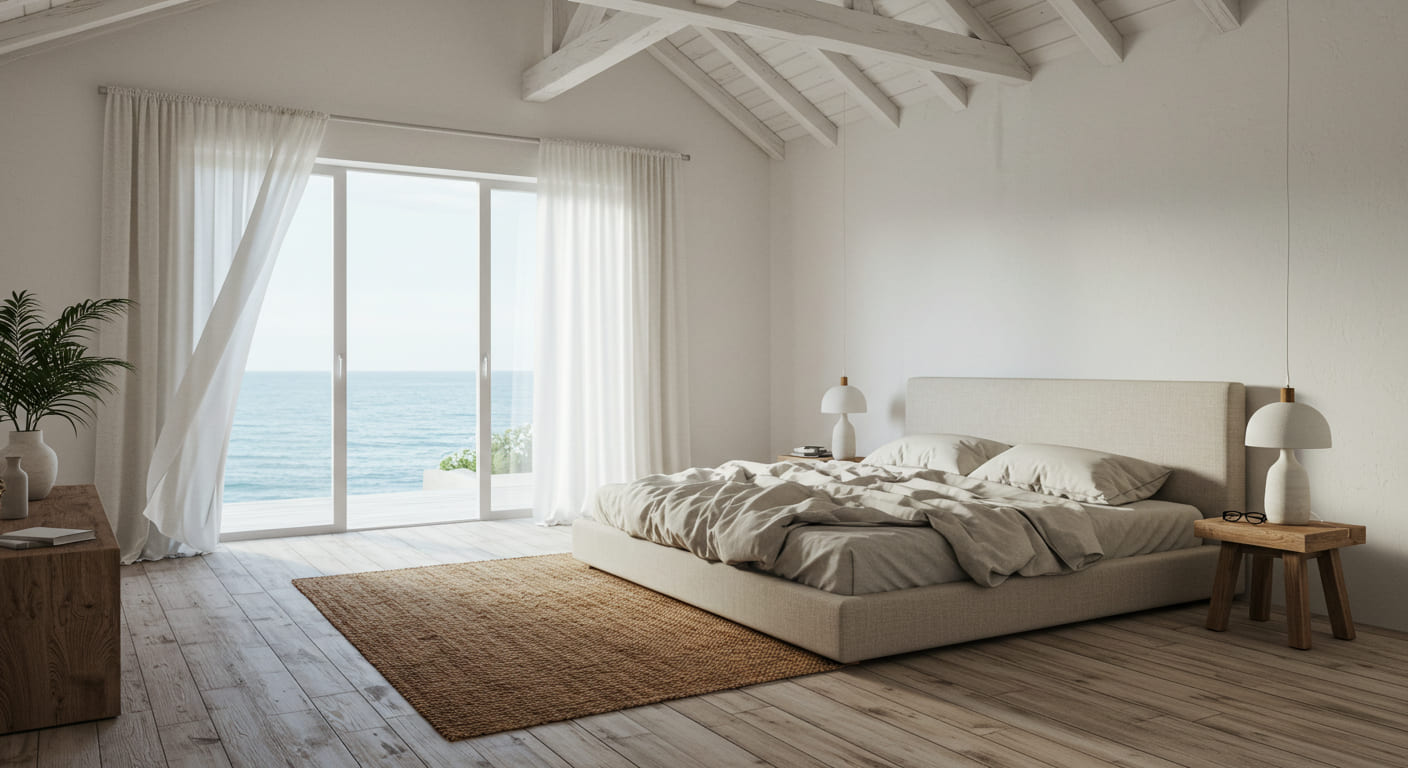

Coastal Contemporary
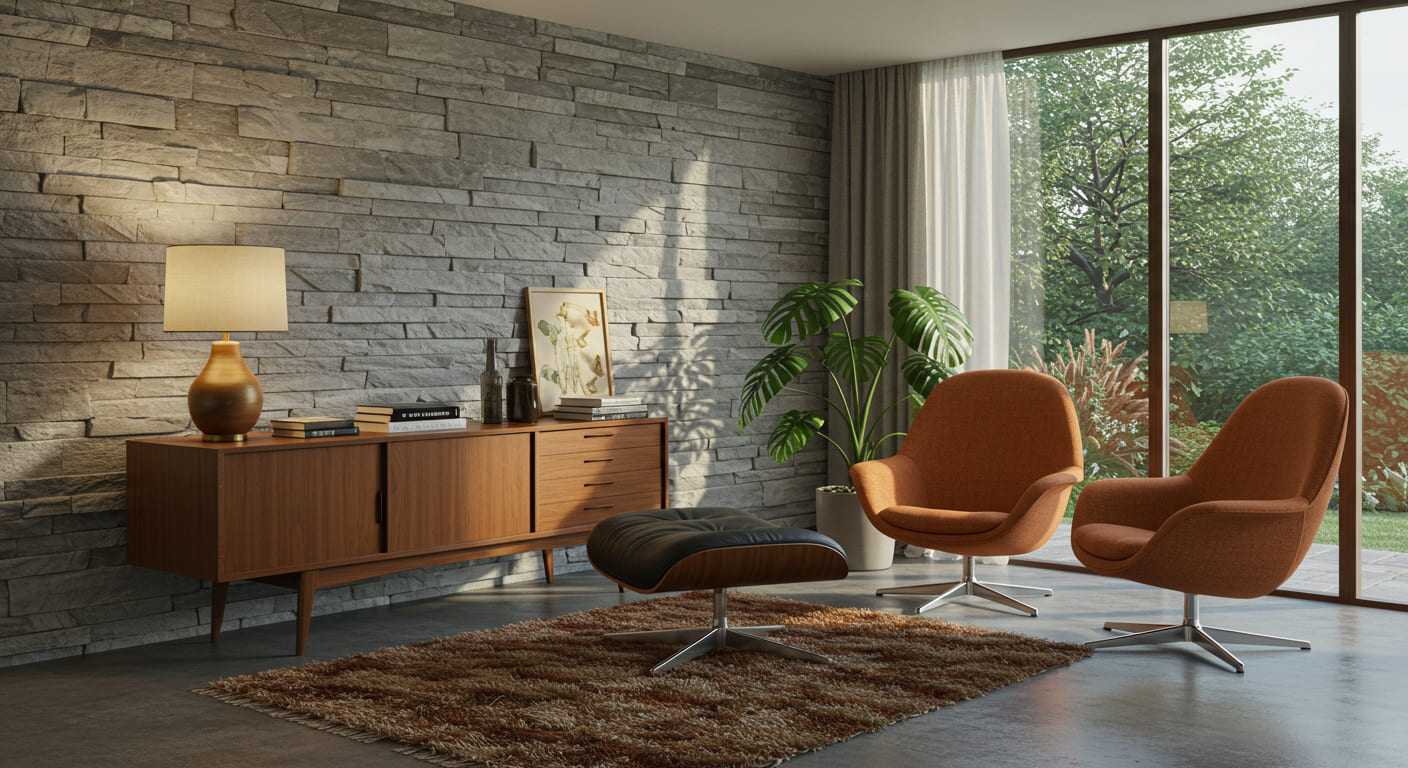

Mid-Century Modern
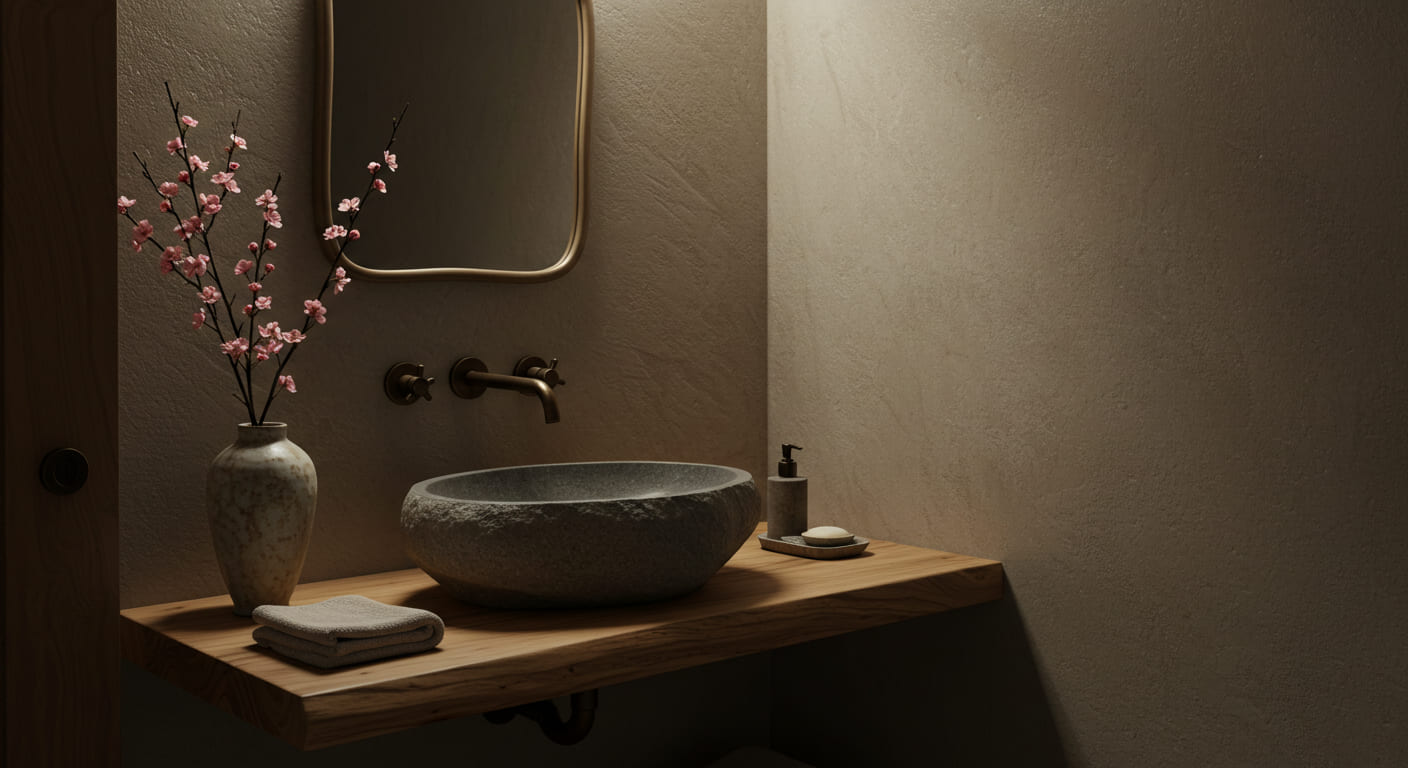

Wabi-Sabi
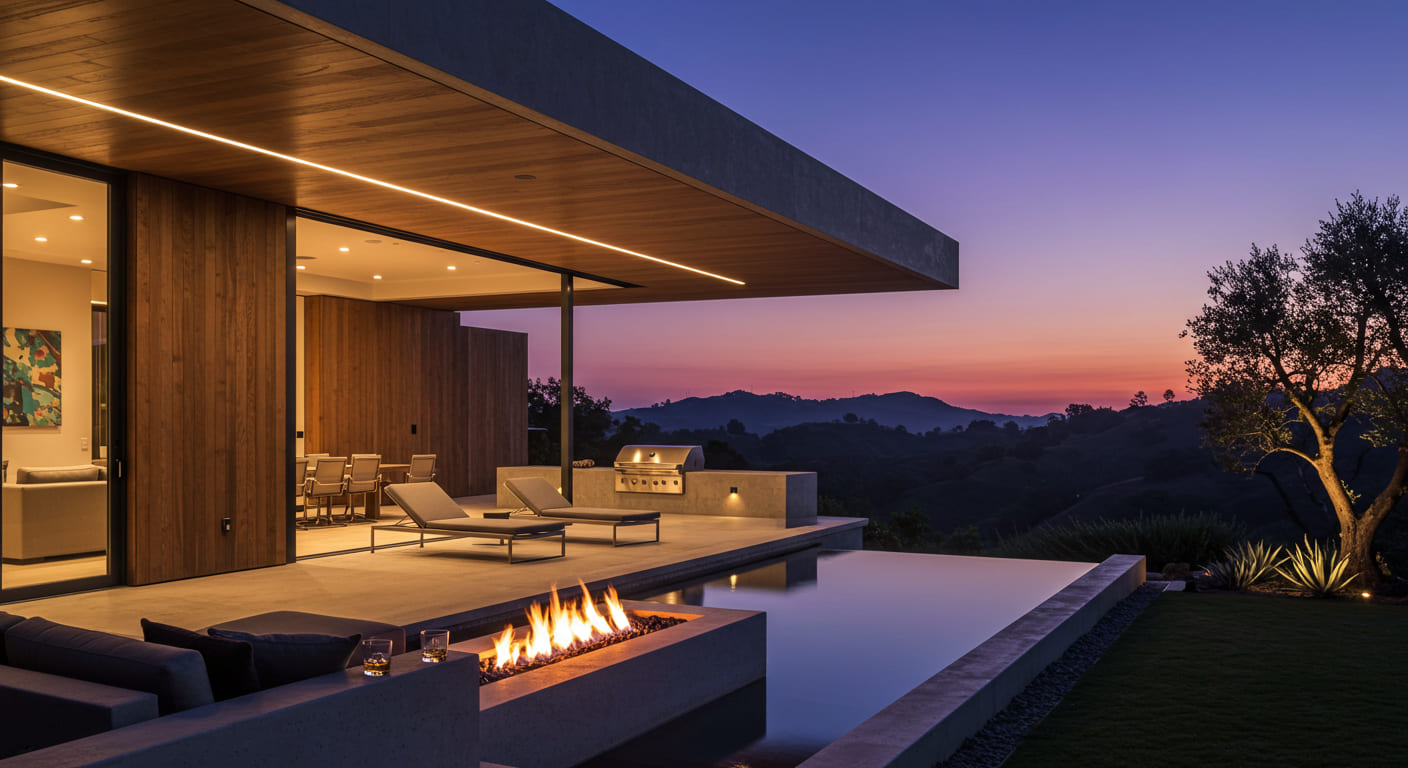

Desert Modern
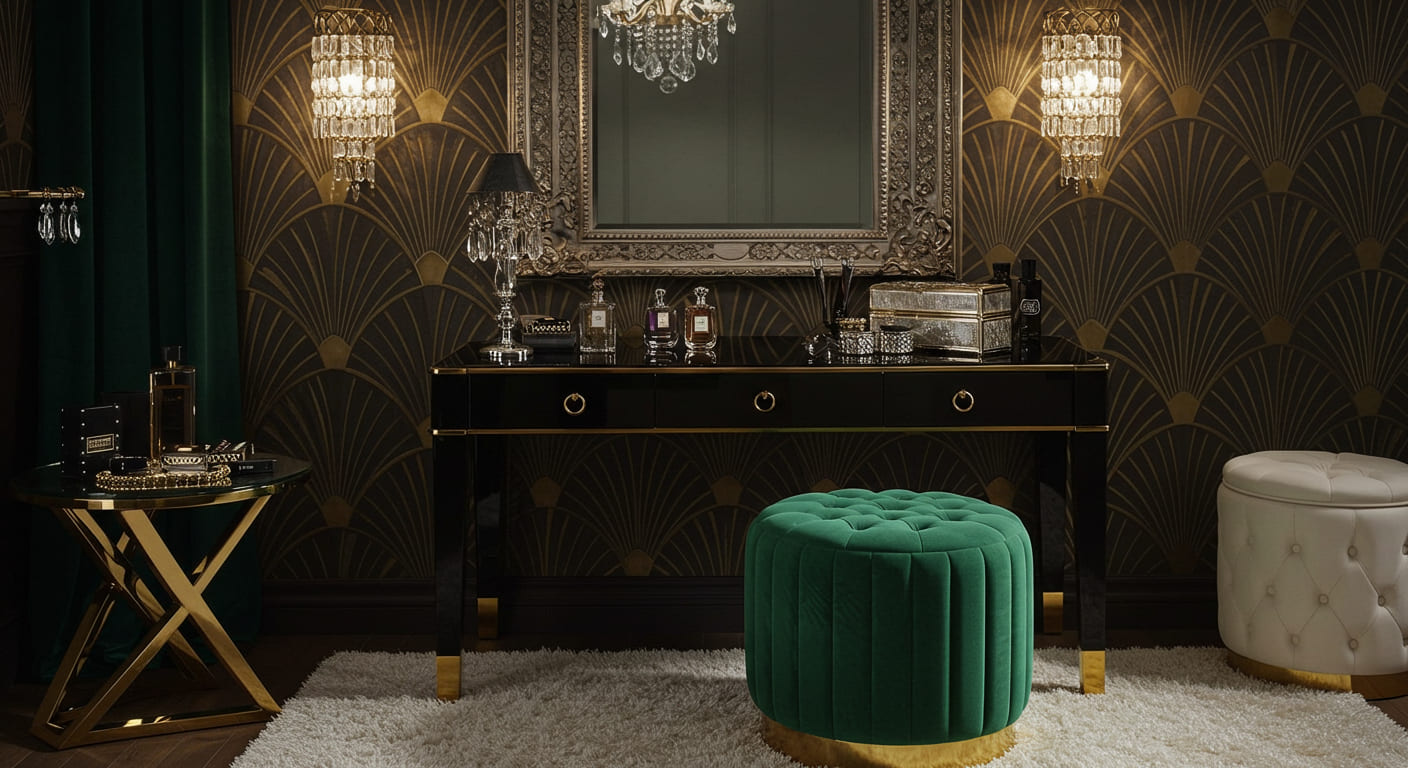

Hollywood Regency
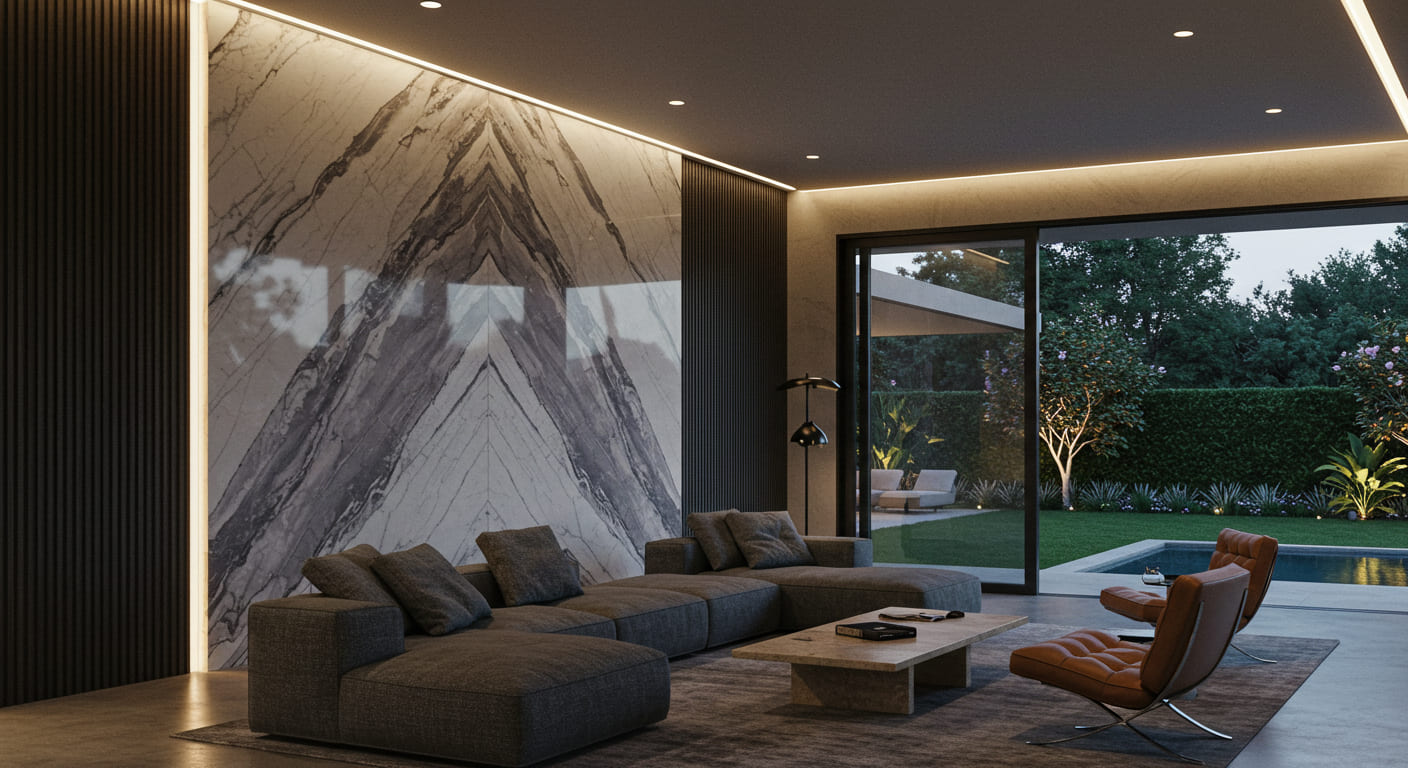

Sensory Modernism
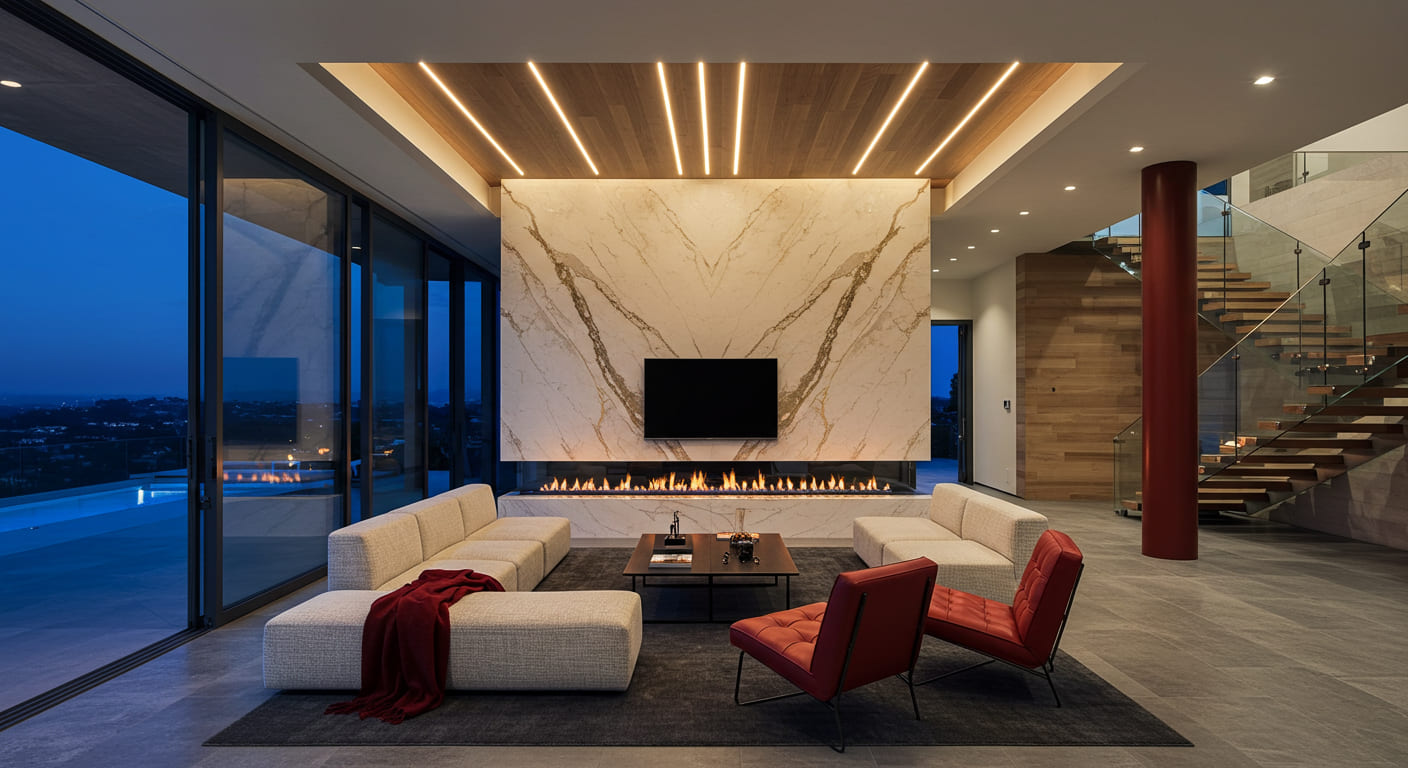

Axiom Modern
Your first two answers choose the styles; your edge answer changes only the drawing.

Intellectual property of Meridian Atelier
- The Studio
 Design Fundamentals
Form & Geometry
Definition: Form & Geometry, the first of the six principles of the Design Fundamentals, is the study of an object in space: its shape, its line, its volume and its edge.


From principle to project
A commission puts this principle to work with the other five.
The Service Offerings explains how a commission runs, from the first conversation through design, documents and construction, and which services you can choose.
See the servicesWhere to go next
Each of the six principles has its own page, and this is the first.


Or go back

