O
N | The Method | N-A Cognitive Architecture | Opennes
Openness
The measure of baseline tolerance for avant-garde novelty, cultural complexity, and architectural abstraction.
The Trait Interpretation
The Clinical Definition
In psychometrics, Openness to Experience quantifies an individual’s willingness to engage with the unknown. It measures cognitive bandwidth for processing complex stimuli, appreciation for abstract art, and inherent intellectual curiosity. According to peer-reviewed research in the psychology of architectural aesthetics, this trait directly dictates how the brain categorizes visual novelty and spatial complexity—processing it either as a highly engaging, positive stimulus, or as chaotic, threatening noise.
Architectural Translation
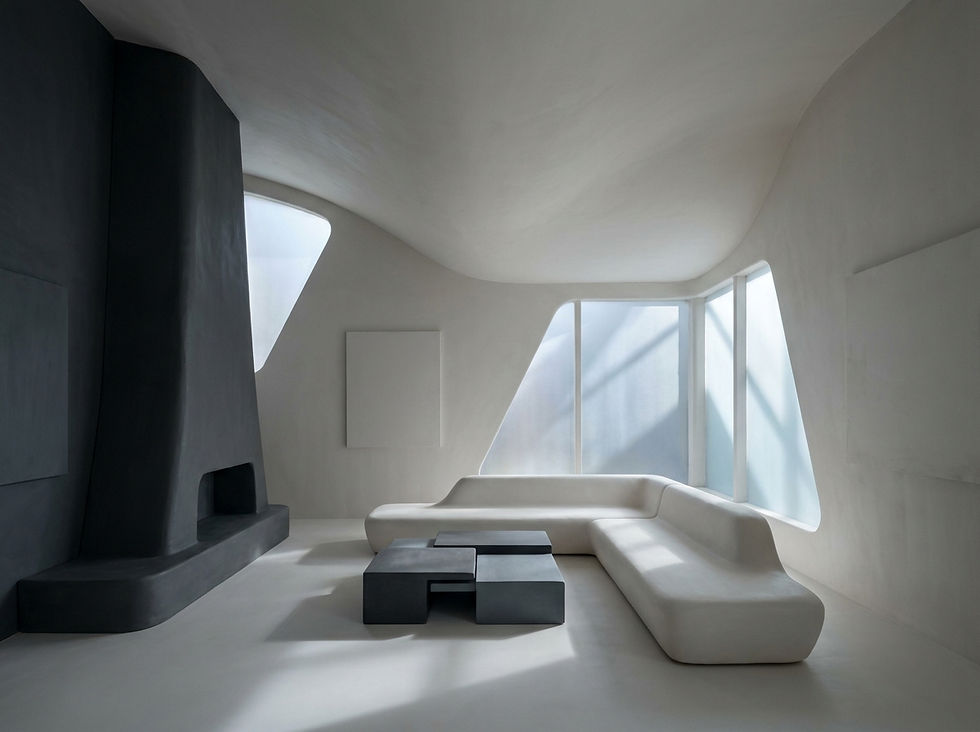
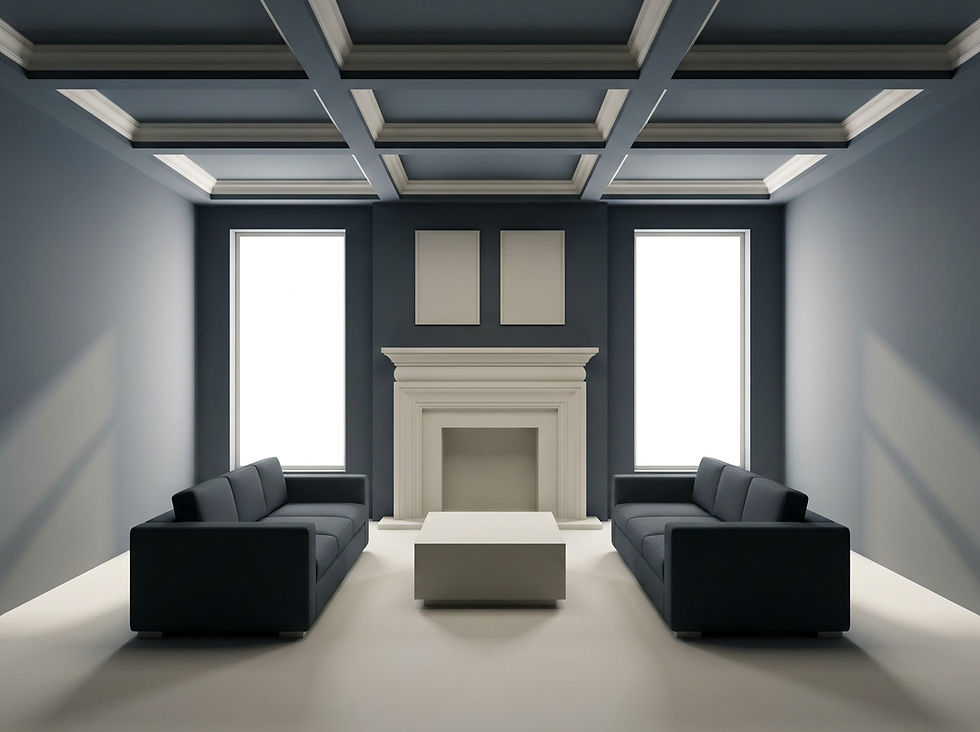
In the Meridian Engine, Openness dictates the spatial necessity for narrative depth versus absolute predictability. We translate this psychological metric to govern a design’s reliance on historical precedent. It defines whether the architecture must challenge the inhabitant intellectually through complex, asymmetrical forms and living finishes, or provide a highly legible, secure sanctuary utilizing rigid grids and machined surfaces.
States of resonance
Human psychology does not exist in a binary of absolute light or dark; it operates on a frequency. We utilize the term Resonance because we are measuring the vibration of a client’s mind against the structural vibration of a room. No personality is exact. By diagnosing whether you resonate highly or lowly with Openness to Experience, we calculate the precise architectural approximations required to regulate your nervous system.
TIER ONE
High Resonance
"The Visionary"
The Resonance Profile
Individuals exhibiting High Resonance in Openness possess exceptional cognitive bandwidth for processing visual information. They actively seek environments that provoke thought, challenge structural norms, and tell a story. A purely utilitarian, highly predictable, or "safe" space under-stimulates their nervous system, resulting in feelings of sterility or boredom. They require a home characterized by deep cultural narrative, complex material interactions, and the presence of the avant-garde to feel fully actualized within their sanctuary.
Self-Discovery Inquiries
Review the following scenarios. Answering "Yes" or agreeing with the first option in these statements indicates a High Resonance with Openness, signaling a biological need for visual complexity:
The Patina Test: When specifying an unlacquered brass fixture that will tarnish and change color over time—do you view this 'living finish' as a beautiful, authentic story of age, or does it feel dirty and damaged?
The Art Test: Do you naturally gravitate toward abstract, conceptual art that requires intense interpretation, rather than literal, representational landscapes that are immediately understood?
The Hospitality Test: When traveling, do you seek out avant-garde boutique hotels with unconventional layouts, rather than the structured, predictable luxury of an established heritage brand?
Aligned Design Principles
The Meridian Engine™ design principles required to mathematically solve for the High Openness Resonance mind.
Aligned Aesthetic Compositions
The curated compositions that best align with the High Openness Resonance mind.

Form & Geometry
Geometric Language:
Level of Articulation:
Surface Character:

Pattern & Application
Pattern Source:
Pattern Structure:
Pattern Character:

Light & Atmosphere
Light Source:
Light Quality:
Light Temperature:
%20A%20serene%20Wabi-Sabi%20bathroom%20featuring%20a%20carved%20river%20stone%20sink%2C%20a%20live-edge%20cypress%20v.jpg)
%20A%20glamorous%20Hollywood%20Regency%20dressing%20room%20featuring%20a%20black%20lacquered%20vanity%2C%20an%20em.jpg)
TIER TWO
LOW Resonance
"The Traditionalist"
The Resonance Profile
Individuals exhibiting Low Resonance prioritize pragmatism, historical tradition, and environmental predictability. Their nervous system instinctively categorizes high visual complexity, aggressive novelty, or extreme asymmetry as exhausting chaos. To achieve sanctuary, they require environments that are immediately legible. The architecture must utilize proven, time-tested materials and established geometric standards to create a feeling of absolute security, order, and cognitive rest.
Self-Discovery Inquiries
Review the following scenarios. Answering "Yes" or agreeing with the first option in these statements indicates a Low Resonance with Openness, signaling a biological need for structural predictability:
The Permanence Test: Do you prefer finishes like engineered quartz and polished chrome that look exactly the same on day one thousand as they did on day one, avoiding materials that age, scratch, or alter?
The Symmetry Test: When viewing a room where furniture and architectural focal points are asymmetrical or intentionally off-center, do you feel an immediate, visceral urge to "fix" or align them?
The Precedent Test: Do you find more comfort in homes that clearly follow established historical styles (like classic Mediterranean or Traditional) rather than spaces that blend multiple eras into a new, unrecognizable aesthetic?
Aligned Design Principles
The Meridian Engine™ design principles required to mathematically solve for the Low Openness Resonance mind.
Aligned Aesthetic Compositions
The curated compositions that best align with the Low Openness Resonance mind.
Form & Geometry
Geometric Language:
Level of Articulation:
Surface Character:
Pattern & Application
Pattern Source:
Pattern Structure:
Pattern Character:

Color & Tone
Option A:
Option B:
Option C:
Light & Atmosphere
Light Source:
Light Quality:
Light Temperature:
%20A%20luxurious%20California%20Modern%20living%20room%20at%20dusk%20with%20an%20open%20glass%20wall%2C%20teak%20ceilin.jpg)
%20A%20sophisticated%20Transitional%20Classic%20library%20with%20charcoal%20bookshelves%2C%20a%20cognac%20leath.jpg)
The Synthesized Household
The architectural compromise when an environment requires accommodation of multiple individuals.
The Clinical Friction
When designing a shared estate, the primary aesthetic is typically anchored to the individual whose cognitive needs dominate the project’s intent. However, a profound domestic friction emerges when a High-Openness partner (requiring constant novelty and visual expression) shares a space with a Low-Openness partner (requiring absolute predictability and traditional order). If the design leans entirely avant-garde, the Low-O partner suffers chronic environmental anxiety. If the design leans entirely safe and traditional, the High-O partner feels stifled and intellectually starved within their own home.
The Methodology of Compromise
We resolve this conflict through an architectural protocol known as "The Shell and The Artifact." We engineer the foundational architecture—the floor plans, primary drywall returns, baseboards, and dominant lighting grids—using strict Linear forms and Tonal colors. This creates a highly predictable, safe baseline that completely regulates the Low-Openness partner's nervous system.
Within this secure grid, we inject required novelty for the High-Openness partner via contained, high-impact "Artifacts." We specify highly expressive, heavily-veined organic marble exclusively for a kitchen island, or deploy a rich, saturated color inside a dedicated study. The Low-Openness brain registers the overall room structure as orderly and safe, while the High-Openness brain focuses its attention on the dynamic artifacts, fulfilling the need for stimulation. Both psychologies are satisfied simultaneously without aesthetic compromise.
COGNITIVE ARCHITECTURE NAVIGATION
Explore the other traits within the O.C.E.A.N Neuro-Aesthetic System
Or return to previous pages
Intellectual Property of Meridian Atelier
Current Read
N | THE METHOD | Cognitive Architecture
Openness to Experience: Defines the neurological tolerance for novelty. We analyze whether a mind requires the safety of historical precedent and geometric predictability (Low Resonance) or the stimulation of avant-garde complexity and abstract narrative (High Resonance) to achieve sanctuary.
