A
N | The Method | N-A Cognitive Architecture | Agreeableness
Agreeableness
The measure of environmental need for tactile softness, emotional warmth, and physically forgiving materials.
The Trait Interpretation
The Clinical Definition
In psychometrics, Agreeableness measures an individual’s tendency toward empathy, compassion, and social harmony, versus a tendency toward skepticism and analytical detachment. According to foundational peer-reviewed research in embodied cognition published by the American Association for the Advancement of Science (AAAS), human tactile sensations (touching hard vs. soft objects) directly influence our social judgments and emotional rigidity. The brain physically translates tactile softness into interpersonal empathy, and rigid sharpness into strict objectivity.
Architectural Translation
In the Meridian Engine, Agreeableness dictates the tactile and emotional "temperature" of the home. It measures whether the architecture should feel physically soft, welcoming, and forgiving (nurturing), or sharp, stark, and monumental (imposing). It governs our specification of material porosity, edge radiusing, and color temperature, ensuring the physical envelope mirrors the client's baseline for emotional accommodation.
States of resonance
Human psychology does not exist in a binary of absolute light or dark; it operates on a frequency. We utilize the term Resonance because we are measuring the vibration of a client’s mind against the structural vibration of a room. No personality is exact. By diagnosing whether you resonate highly or lowly with Agreeableness, we calculate the precise architectural approximations required to regulate your nervous system.
TIER ONE
High Resonance
"The Harmonizer"
The Resonance Profile
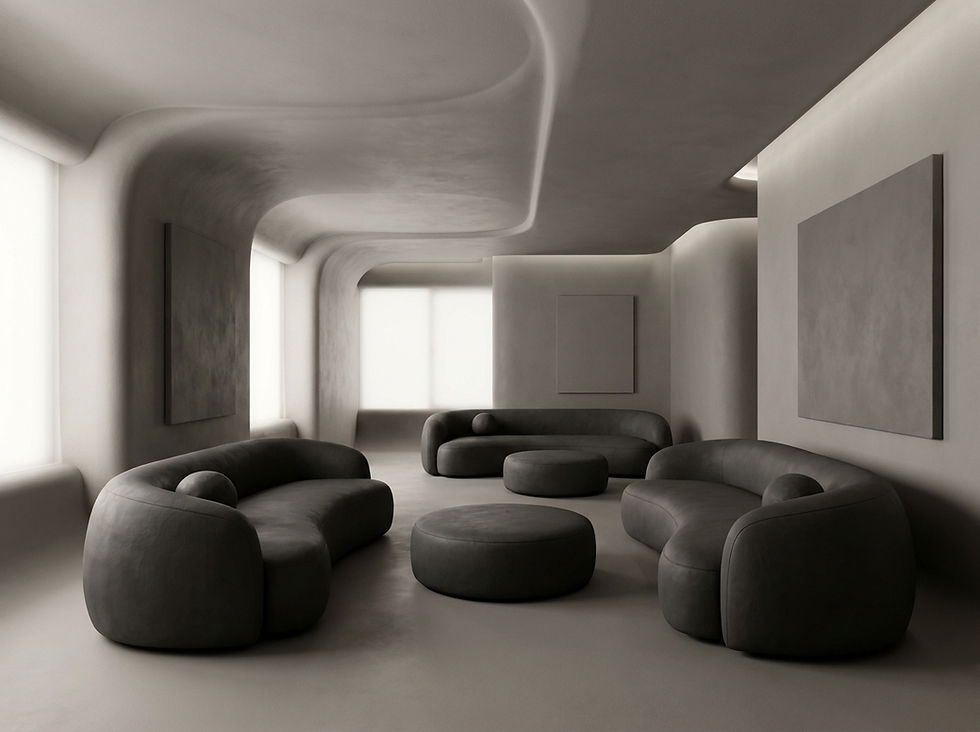
Individuals exhibiting High Resonance in Agreeableness value connection, comfort, and emotional warmth above all else. They view the home as a nurturing entity designed to put inhabitants and guests at ease. An environment that is highly sterile, excessively sharp, or structurally intimidating is processed by their nervous system as hostile. They require an architecture defined by tactile softness, warm color temperatures, eased edges, and forgiving materials that absorb sound and invite human touch.
Self-Discovery Inquiries
Review the following scenarios. Answering "Yes" or agreeing with the first option in these statements indicates a High Resonance with Agreeableness, signaling a biological need for spatial empathy:
The Tactile Test: When you interact with the surfaces of your home, do you want them to feel soft, warm, and texturally forgiving, rather than the sleek, cold, unyielding perfection of polished stone and glass?
The Formality Test: If a guest spills a glass of wine during a gathering, is your immediate internal reaction concern for the guest's embarrassment, rather than panic over the porous marble countertop?
The Edge Test: Do you find peace in rooms where the edges of furniture and walls are rounded, eased, and smooth, rather than the razor-edge precision of strict 90-degree angles?
Aligned Design Principles
The Meridian Engine™ design principles required to mathematically solve for the High Agreeableness Resonance mind.
Aligned Aesthetic Compositions
The curated compositions that best align with the High Agreeableness Resonance mind.

Form & Geometry
Geometric Language:
Level of Articulation:
Surface Character:

Pattern & Application
Pattern Source:
Pattern Structure:
Pattern Character:


Light & Atmosphere
Light Source:
Light Quality:
Light Temperature:

%20A%20modern%20California%20Mediterranean%20loggia%20with%20clean%20stucco%20arches%2C%20a%20white%20outdoor%20sof.jpg)
TIER TWO
LOW Resonance
"The Analyst"
The Resonance Profile
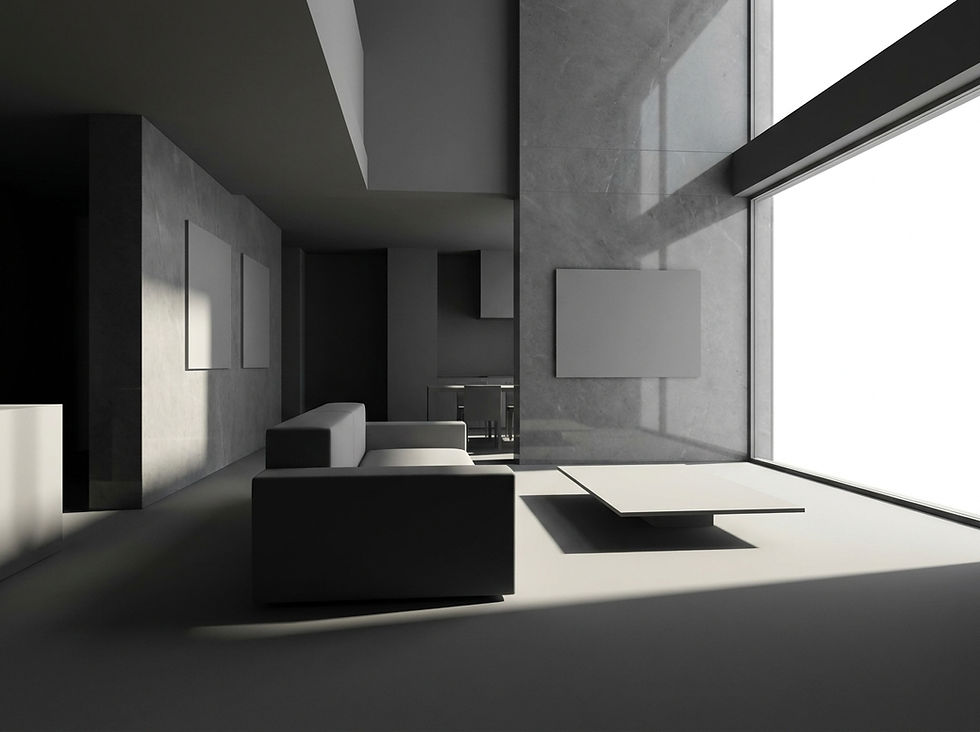
Individuals exhibiting Low Resonance value logic, precision, and objective standards of excellence above emotional accommodation. They view the home as a statement of capability and structural truth. Environments that are overly sentimental, heavily "cozy," or excessively soft feel sloppy, undisciplined, or intellectually weak to their nervous system. They require an architecture that prioritizes crisp engineering, high visual contrast, and unyielding materials (like glass, steel, and polished stone) to project a baseline of uncompromising structural dominance.
Self-Discovery Inquiries
Review the following scenarios. Answering "Yes" or agreeing with the first option in these statements indicates a Low Resonance with Agreeableness, signaling a biological need for analytical precision:
The Authority Test: Do you prefer spaces that project a sense of imposing, formal authority and strict perfection, rather than spaces that feel entirely casual and overly forgiving?
The Materiality Test: Are you drawn to the cold, flawless, and unyielding nature of polished metals, heavy glass, and lacquered surfaces over warm, textured, and "worn-in" materials?
The Lighting Test: Do you prefer crisp, bright, highly directional lighting (like a spotlight in a gallery) that defines sharp shadows, over hazy, dim, and entirely diffused amber lighting?
Aligned Design Principles
The Meridian Engine™ design principles required to mathematically solve for the Low Agreeableness Resonance mind.
Aligned Aesthetic Compositions
The curated compositions that best align with the Low Agreeableness Resonance mind.
Form & Geometry
Geometric Language:
Level of Articulation:
Surface Character:
Pattern & Application
Pattern Source:
Pattern Structure:
Pattern Character:
Light & Atmosphere
Light Source:
Light Quality:
Light Temperature:
%20A%20grand%20Axiom%20Modern%20room%20at%20dusk%20with%20a%20multi-layered%20wood-plank%20ceiling%2C%20a%20luminous.jpg)
%20A%20breathtaking%20Sensory%20Modern%20living%20room%20with%20a%20book-matched%20Calacatta%20Viola%20marble%20.jpg)
The Synthesized Household
The architectural compromise when an environment requires accommodation of multiple individuals.
The Clinical Friction
The pairing of a High-Agreeableness partner (who requires empathetic warmth and soft edges) with a Low-Agreeableness partner (who requires sharp precision and objective excellence) creates immediate atmospheric friction. Without intervention, the Analyst feels the house is too casual, unstructured, and intellectually weak, while the Harmonizer feels they are living in a cold, sterile museum devoid of comfort.
The Methodology of Compromise
We resolve this conflict by strictly decoupling the architectural envelope from the tactile touchpoints, a protocol known as "The Core & The Comfort." We engineer the foundational architecture—the structural massing, the flooring expanses, the built-in millwork—with absolute geometric precision, high-end machined materials, and sharp architectural lines. This satisfies the Analyst's biological need to exist in an environment projecting objective excellence.
Conversely, the tactile layer—the upholstery, the rugs, the lighting color temperature, and the specific daily touchpoints (door hardware, plumbing fixtures)—is engineered to be overwhelmingly soft, warm, and inviting. We deploy deep, plush seating, brushed metallic finishes, and strictly warm (2700K) illumination. The Analyst respects the architectural rigor of the home's "bones," while the Harmonizer feels physically embraced by the surfaces they actually interact with daily. Both neurochemistries co-exist in perfect equilibrium.
COGNITIVE ARCHITECTURE NAVIGATION
Explore the other traits within the O.C.E.A.N Neuro-Aesthetic System
Or return to previous pages
Intellectual Property of Meridian Atelier
Current Read
N | THE METHOD | Cognitive Architecture
Agreeableness: Defines the neurological need for spatial empathy. We analyze whether a mind requires the tactile softness and emotional warmth of forgiving materials (High Resonance), or the unyielding, objective authority of sharp precision and stark perfection (Low Resonance).
