C
N | The Method | N-A Cognitive Architecture | Conscientiousness
Conscientiousness
The measure of biological requirement for zero-tolerance alignment, integrated systems, and absolute visual order.
The Trait Interpretation
The Clinical Definition
In psychometrics, Conscientiousness quantifies an individual’s degree of organization, discipline, goal-directed behavior, and preference for planned rather than spontaneous action. According to foundational peer-reviewed research published by the American Psychological Association, this trait dictates the nervous system's sensitivity to visual clutter and spatial friction, directly correlating an individual's mental bandwidth to the structural order of their physical surroundings.
Architectural Translation
In the Meridian Engine, Conscientiousness dictates the architectural necessity for hidden systems, precise alignments, and materials that maintain their exact intended state without deviation. It defines whether a space must be engineered with zero-tolerance, monolithic perfection to silence the mind, or if the environment can embrace fluid, unscripted, and functionally exposed elements without inducing anxiety.
States of resonance
Human psychology does not exist in a binary of absolute light or dark; it operates on a frequency. We utilize the term Resonance because we are measuring the vibration of a client’s mind against the structural vibration of a room. No personality is exact. By diagnosing whether you resonate highly or lowly with Conscientiousness, we calculate the precise architectural approximations required to regulate your nervous system.
TIER ONE
High Resonance
"The Optimizer"
The Resonance Profile
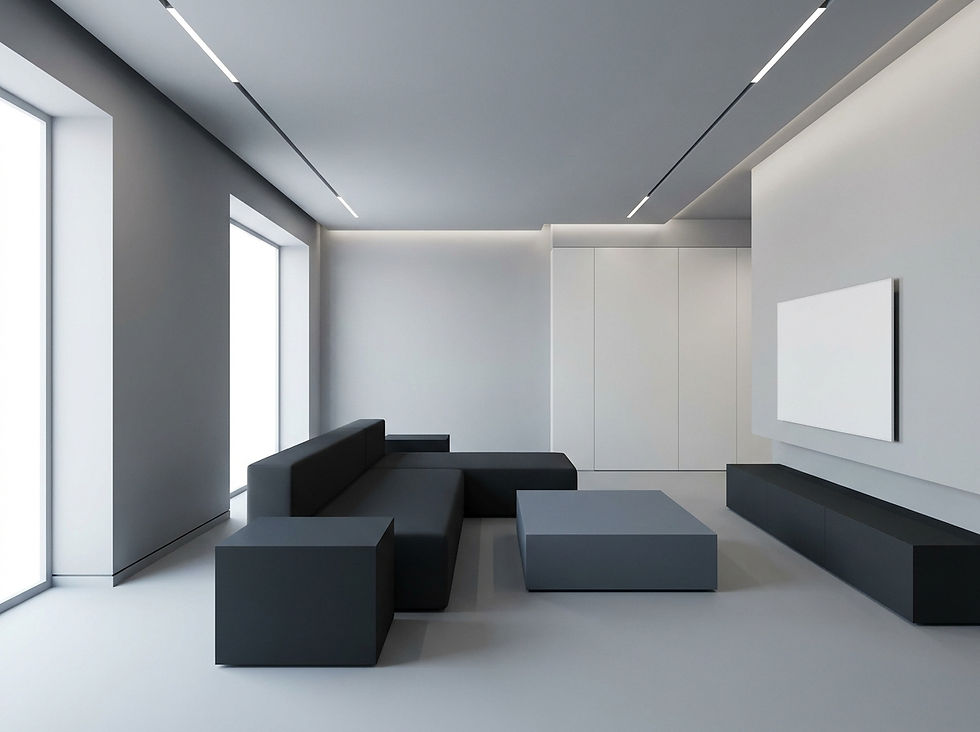
Individuals exhibiting High Resonance in Conscientiousness require environments where the "visual grid" is absolute. They possess a zero-tolerance threshold for clutter, misalignment, or spaces that require constant physical intervention to look "correct." Their nervous system interprets visual noise—such as exposed cords, open storage, or asymmetrical, rumpled layouts—as a loss of control, leading to chronic background stress. To achieve sanctuary, they demand architecture with fully integrated systems, flush-mount detailing, and flawless, predictable operation.
Self-Discovery Inquiries
Review the following scenarios. Answering "Yes" or agreeing with the first option in these statements indicates a High Resonance with Conscientiousness, signaling a biological need for absolute visual order:
The Storage Test: When you enter your kitchen, must every appliance and culinary tool be entirely concealed behind flush, floor-to-ceiling cabinetry to feel at peace, or do you enjoy open shelving displaying your items?
The Upholstery Test: Do you require a tight-back, tailored sofa that maintains its exact architectural shape when you stand up, rather than a loose, down-filled sofa that requires constant fluffing?
The Alignment Test: If a tile grout line is slightly thicker in one corner due to a natural stone's variation, do you view that as a frustrating, unacceptable error rather than charming, organic character?
Aligned Design Principles
The Meridian Engine™ design principles required to mathematically solve for the High Conscientiousness Resonance mind.
Aligned Aesthetic Compositions
The curated compositions that best align with the High Conscientiousness Resonance mind.

Form & Geometry
Geometric Language:
Level of Articulation:
Surface Character:

Pattern & Application
Pattern Source:
Pattern Structure:
Pattern Character:


Light & Atmosphere
Light Source:
Light Quality:
Light Temperature:
%20A%20breathtaking%20Sensory%20Modern%20living%20room%20with%20a%20book-matched%20Calacatta%20Viola%20marble%20.jpg)
%20A%20grand%20Axiom%20Modern%20room%20at%20dusk%20with%20a%20multi-layered%20wood-plank%20ceiling%2C%20a%20luminous.jpg)
TIER TWO
LOW Resonance
"The Naturalist"
The Resonance Profile
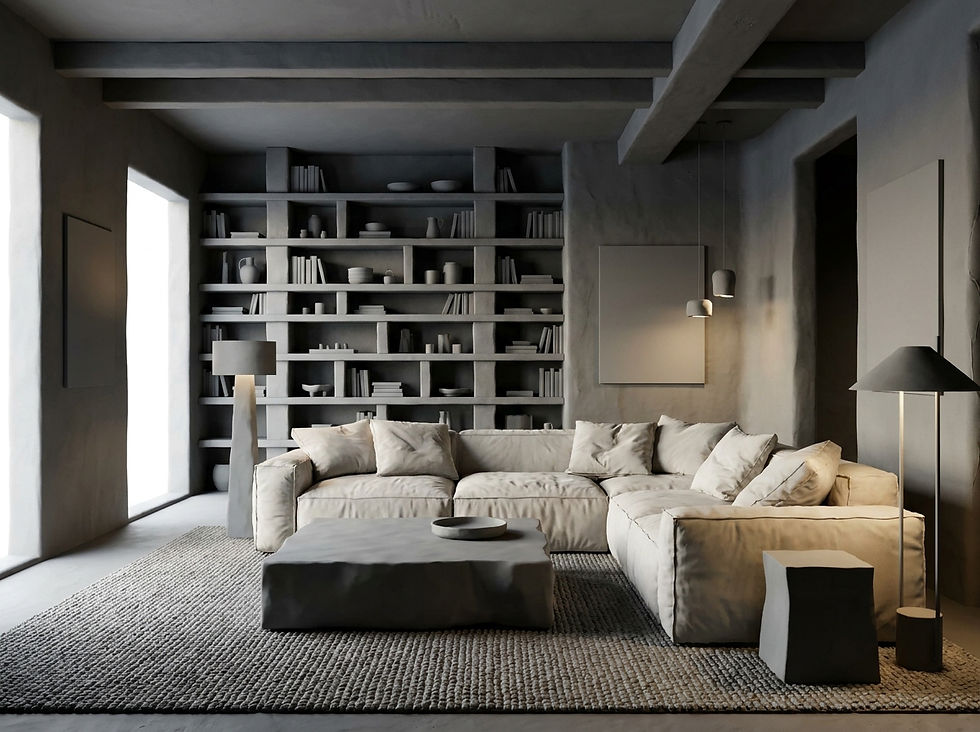
Individuals exhibiting Low/Moderate Resonance prefer environments that feel unscripted, functionally exposed, and deeply "lived-in." Their nervous system categorizes extreme perfection, hidden systems, and rigid organization not as calming, but as sterile, clinical, and overly demanding. They find comfort in visible objects, organic arrangements, and a degree of acceptable imperfection. They require a space that forgives daily life, prioritizing tactile warmth and accessibility over machine-like precision.
Self-Discovery Inquiries
Review the following scenarios. Answering "Yes" or agreeing with the first option in these statements indicates a Low Resonance with Conscientiousness, signaling a biological need for relaxed fluidity:
The Exposure Test: Do you prefer open shelving where your books, ceramics, and daily items are visible and easily accessible, feeling that hidden, blank walls lack soul?
The Forgiveness Test: Do you gravitate toward deep, plush, rumpled seating and materials that show the wear of daily life, finding rigid, perfectly tailored furniture uncomfortable and uninviting?
The Asymmetry Test: Does an organically arranged, slightly off-center room layout feel more relaxing and authentic to you than a room perfectly mirrored on a rigid grid?
Aligned Design Principles
The Meridian Engine™ design principles required to mathematically solve for the Low Conscientiousness Resonance mind.
Aligned Aesthetic Compositions
The curated compositions that best align with the Low Conscientiousness Resonance mind.
Form & Geometry
Geometric Language:
Level of Articulation:
Surface Character:
Pattern & Application
Pattern Source:
Pattern Structure:
Pattern Character:
Light & Atmosphere
Light Source:
Light Quality:
Light Temperature:
%20A%20serene%20Wabi-Sabi%20bathroom%20featuring%20a%20carved%20river%20stone%20sink%2C%20a%20live-edge%20cypress%20v.jpg)

The Synthesized Household
The architectural compromise when an environment requires accommodation of multiple individuals.
The Clinical Friction
When a dual-occupant household features a High-Conscientiousness partner (demanding perfect, hidden order) and a Low-Conscientiousness partner (demanding relaxed fluidity and visible objects), the domestic friction is immediate and severe. The High-C partner experiences chronic anxiety regarding perceived "clutter" and disarray; simultaneously, the Low-C partner feels they are living in a hostile, sterile museum where they cannot truly relax or exist naturally.
The Methodology of Compromise
We resolve this conflict through an architectural protocol known as "Structured Relief." We engineer a highly rigid, zero-tolerance architectural shell to act as a container for fluid contents. The primary architecture—built-ins, hardscapes, and lighting—is executed with absolute precision: cabinetry is floor-to-ceiling with touch latches, appliances are panelized, and baseboards are flush. This unyielding shell satisfies the High-C partner's biological need for control.
Within this pristine container, the furnishings and textiles are heavily biased toward the Low-C partner: deep, rumpled linen sofas, heavily textured rugs, and asymmetrical styling. Furthermore, we architect dedicated "Hidden Mess" zones—such as a concealed, fully equipped Scullery or Butler's Pantry. This allows the Low-C partner to leave appliances out and maintain a functional, exposed workspace out of sight, preserving the High-C partner's need for a pristine primary kitchen. Both neurochemistries are accommodated without shattering the estate's overall cohesion.
COGNITIVE ARCHITECTURE NAVIGATION
Explore the other traits within the O.C.E.A.N Neuro-Aesthetic System
Or return to previous pages
Intellectual Property of Meridian Atelier
Current Read
N | THE METHOD | Cognitive Architecture
Conscientiousness: Defines the neurological tolerance for visual noise. We analyze whether a mind requires the absolute precision of hidden systems and a zero-tolerance grid (High Resonance), or the unscripted fluidity of exposed, lived-in, and relaxed environments (Low Resonance) to achieve true sanctuary.
